

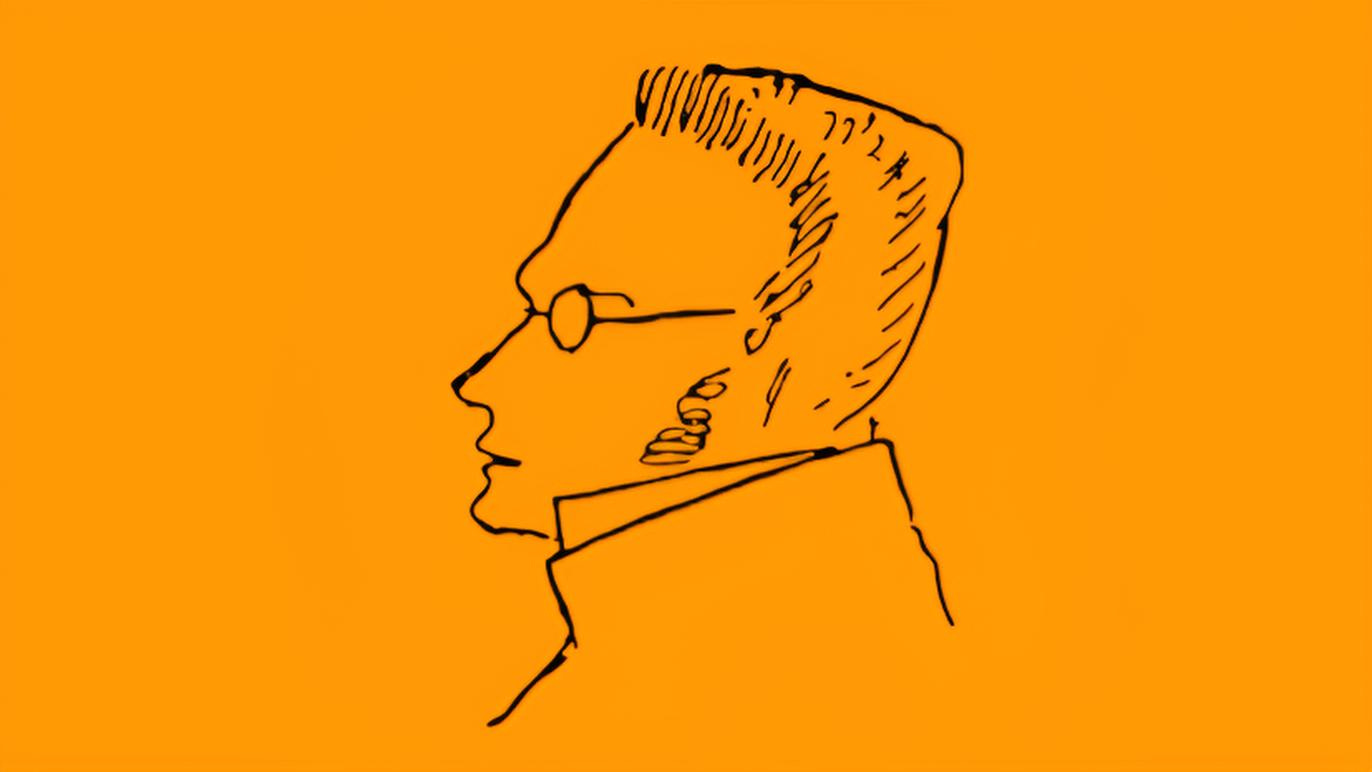
Michael Kumpmann examines how Peter Töpfer’s concept of Depth Truth converges with Max Stirner’s challenge to Enlightenment rationalism and the modern therapeutic state.
Peter Töpfer recently presented his philosophy of depth truth1 comprehensively in a new book. The work opens quickly with the phrase: “We need a new Enlightenment.” This is an old cliché in German politics. One of the first in the German-speaking world to raise this demand was the CDU politician Heiner Geißler in his 2012 book Sapere Aude. [CDU = Christian Democratic Union, Germany’s major center-right party. “Sapere Aude” (“Dare to know”) is the Enlightenment motto used by Immanuel Kant.] The book emerged in the context of the Stuttgart 21 protests [a large protest movement against a controversial railway and urban redevelopment project in Stuttgart] and addressed the alienation of citizens from politics, which Geißler saw as dangerous and in need of remedy.
The book was critical of capitalism and described a situation in which people could theoretically access all information through the internet, yet lacked the educational capacity to understand the complexity of the world well enough to make responsible, informed decisions. As examples, he cited the Fukushima disaster, the financial crisis of 2008, and a scandal in China involving poisoned baby formula, which later contributed to the introduction of China’s Social Credit System. Overall, he advocated greater civic participation and direct democracy in order to prevent nihilistic, desperate masses—frustrated by a system that ignored them—from blocking everything out of rage. However, he supported meaningful, constructive protest.
Much later, in 2018, Steven Pinker published Enlightenment Now, arguing against scientific skepticism and panic narratives such as those surrounding 5G technology. Although it appeared after the German debate, there are thematic overlaps.
In Germany, however, another development from the same period was more decisive. What Alexander Dugin described in “Liberalism 2.0” as an intra-liberal spiritual civil war between classical liberals and postmodern left-liberals also applied here. This conflict was particularly visible between the FDP [Free Democratic Party, Germany’s pro-market liberal party] and the Greens, who struggled over the meaning of “true” liberalism. (Many remember the jokes about the FDP on the satirical TV program Heute Show [a German political satire show similar to The Daily Show], which contributed to the party’s temporary loss of representation in the Bundestag [German federal parliament], or comedian Stefan Raab exaggerating Philipp Rösler’s self-introduction as “Bundesfurzenden” [a mocking pun meaning roughly “Federal Farter,” parodying the title “Bundesvorsitzender,” federal chairman].
During this phase, André F. Lichtschlag and Frank Schäffler introduced the term “libertarian” (libertär) into German political discourse for the first time in a sustained way. [Lichtschlag = founder of the libertarian magazine eigentümlich frei; Schäffler = FDP politician associated with anti-Euro positions.] The singer Xavier Naidoo’s ideological shift in that direction also began around that time.
The FDP politician Hasso Mansfeld from Bingen wrote his “Liberal Confession of Faith” (Liberales Glaubensbekenntnis), warning against postmodernism and an emerging therapeutic state in which “stupid, will-less, drive-controlled schizoid masses” would be manipulated by “experts” into the “healthy” direction instead of thinking for themselves. This text was widely shared, copied, and plagiarized in AfD [Alternative for Germany], CDU, and FDP circles. Many declarations of a “new Enlightenment” in German politics stem from this context. The problem: it remained superficial, losing itself in day-to-day controversies over banal statements by the Greens that generated outrage yet lacked substance. There was no fundamental engagement with political questions—only noise and agitation.
Moreover, a contradiction remained unresolved. On the one hand, Kant served as a model of Apollonian pure reason [“Apollonian” referencing Nietzsche’s contrast between rational order (Apollo) and ecstatic instinct (Dionysus)], ignoring feelings and drives and following logic alone. On the other hand, the level of debate resembled “peak Boomerism” (i.e., stereotypical baby boomer rhetoric), such as “The Greens want to take away our schnitzel,” closer to kindergarten than rational discourse.
Sexuality reflected the same pattern. A typical Boomer attitude, caricatured by internet personalities Schlomo Finkelstein / Aaron Pielka [German right-wing satirical figures] as “The tits should be out.” Everything was permitted and encouraged rather than restricted by religion or values: from the most disgusting internet pornography to topless pictures, vulgar songs like “Layla” [a 2022 German party song criticized for sexist lyrics], hook-up culture, provocative schoolgirl fashion, and Christopher Street Day parades (CSDs) [German term for LGBTQ Pride parades, named after Christopher Street in New York, site of the 1969 Stonewall riots]—the main thing was laissez-faire. Only postmodern developments such as xenogender identities, fluid gender self-definitions, or Judith Butler’s queer theory were rejected as distasteful and disruptive to private fantasy.
That Kant was among the most conservative philosophers—accepting sex only for procreation and condemning all else, stricter in this respect than Dugin (who associated with the writer Eduard Limonov) or Julius Evola (who condoned orgies and sex magic)—was ignored. Likewise absent was Aleister Crowley’s principle of sexual freedom with dignity rather than indulgence “like wild animals.” Instead of Evola’s view of sexuality as veneration of the partner as goddess and life-force, there was crude objectification. The idea that beautiful clothing ennobles—or, in Evola’s words, deifies—the human being never appeared. Instead: “The more revealing and naked the women, the freer.” (From similar milieus later came the embarrassing AfD campaign slogan “bikinis instead of burqas.” In comparison, even Jeffrey Epstein seemed more dignified.
No one asked why everything ended in postmodernism or why the first Enlightenment failed. Instead, participants congratulated themselves on their intelligence. Rather than a detailed engagement with Kant and Voltaire, it remained superficial. Critics such as Theodor W. Adorno [German philosopher of the Frankfurt School, critical theorist] were dismissed as “evil cultural Marxists” without serious discussion.
Peter Töpfer’s concept of depth truth as a path towards a new Enlightenment represents a deeper approach than these low-level debates, focusing more on psychology than on surface politics. He is influenced by Bernd Laska [German thinker influenced by Wilhelm Reich] and adopts Laska’s LSR project [La Mettrie–Stirner–Reich project, identifying these three thinkers as key Enlightenment radicals], which views Julien Offray de La Mettrie [French materialist philosopher], Max Stirner [German individualist anarchist philosopher], and Wilhelm Reich [psychoanalyst and student of Freud who emphasized sexual energy] as central figures of a new Enlightenment.
Reich’s inclusion stands out compared to other concepts. While Mansfeld, Weidel [Alice Weidel, leader of the Af], and others invoked Kant—the Prussian duty-bound moralist criticized by Nietzsche, Ayn Rand, Jacques Lacan, and others as life-denying—Reich sought to allow creative and sexual energies to flow.
Töpfer first examines the counter-Enlightenment thinker Vincent Reynouard [French Holocaust revisionist], who, referencing La Mettrie, argues that the Enlightenment abandoned God and thus meaning, reducing the human being to a “higher-developed animal” or biological machine. La Mettrie, however, envisioned self-created meaning in the manner later articulated by Jean-Paul Sartre. Reynouard claims that most people reject this path—not because thoughtlessness is easier, but because nihilism permits primitive freedom while meaning-creation demands renunciation. The example of drive-dominated sexual morality among liberal “new Enlighteners” illustrates this. Such reduction of the human to unrestrained desire-machines, as in Deleuze and Guattari [French post-structuralist philosophers who described desire as productive “machines”], produces the perfect subject for the therapeutic state feared by Mansfeld. With no higher purposes and only impulses, a psychiatric society like B. F. Skinner’s Walden Two [1948 novel depicting a behaviorally engineered utopia] would fit perfectly.
Töpfer introduces an intriguing idea: Enlightenment and counter-Enlightenment alike deconstruct higher religions and ideologies, leaving only pure drives—which are equally hollow. Everything comes from nothing and returns to nothing. From this arises a void, a feeling of nothingness as the primal ground. This nothingness frightens people.
This recalls the Kyoto School [20th-century Japanese philosophical movement integrating Western philosophy with Zen Buddhism], especially Keiji Nishitani, who studied under Martin Heidegger. They connected Heidegger’s existential anxiety with the Zen-Buddhist concept of absolute nothingness (śūnyatā). Relative nothingness is the absence of something; absolute nothingness is undefined ground. Questions of birth, death, and meaning revolve around this absolute nothingness, which is the source of all being and action. As in Zen: form is emptiness, emptiness is form. Töpfer reaches a similar conclusion.
He then turns to psychology and psychoanalysis. The “terrible insight of śūnyatā” is not merely natural but reveals something about us and our culture. Drawing on Freud’s Civilization and Its Discontents and the Unabomber, he argues that from childhood onward humans are manipulated to fit the system: instead of hunting to meet needs, they attend school, pursue careers, and become compliant citizens. Everywhere there is manipulation; the will is ignored. Even the idea “A good job and money will bring you a girlfriend” contains a manipulative structure.
Töpfer concludes that Western religion and occultism (e.g., Freemasonry) teach ego-transcendence to discover the true self—yet systemic manipulation has destroyed that self. Nothing authentic remains to discover. Crucially, not only the superego but many drives are socially constructed; thus the 1968-era “vulgar psychoanalysis” slogan “Let your drives run free” achieves little. [“68ers” = the generation of left-wing student movements in 1968 Germany.] According to Töpfer, this anti-authoritarian imperative created a distorted superego comparable to Puritanism. Ironically, laissez-faire later produced feminist “rape culture” panic, resulting in similar rigidity to earlier prudishness.
The central thesis: the first Enlightenment understood the human being primarily as a rational being and attacked religion, superstition, and emotion to free pure reason. Many psychotherapies function similarly: Freudian analysis interprets feelings to remove them as obstacles; cognitive therapy trains self-manipulation towards “more productive” thoughts. Töpfer argues that affects and emotions must be regarded as equal to reason.
He proposes that after deconstructing the irrational, a new Enlightenment should not impose something “more rational” but teach living with the void. If values are subjective and rationalizations of drives, rational advice becomes merely an attempt to steer the “patient” towards the therapist’s drives rather than towards freedom. His key solution draws on Max Stirner’s theory of the “owner” (Eigner) and property, interpreted through psychoanalysis and Gestalt therapy (explicitly referencing Fritz Perls [founder of Gestalt therapy]).
Instead of classifying thoughts as rational or irrational, one asks: Does this thought originate from me? If not, from where? In this awareness lies salvation. In a postmodern age of “bodies without organs” [Deleuze & Guattari’s concept of deconstructed subjectivity] and Nick Land’s “hyperstitions” [self-fulfilling future myths], this approach makes sense.
The book continues with an extended discussion of psychological theories, focusing on Gestalt therapy, Reich’s students, and psychoanalysts. It also examines why Freud initially interpreted symptoms as consequences of abuse and later revised that thesis. There are excursuses on the Frankfurt School, German “culture of guilt” (Schuldkult), and the Haskalah [Jewish Enlightenment movement in 18th–19th century Europe], which I characterizes as ethnomasochistic. Also: Jewish intergenerational trauma transmitted through upbringing. (Note: the Old Testament story of the binding/sacrifice of Isaac [Genesis 22, where Abraham is commanded to sacrifice Isaac]; Yahweh is symbolically linked with Saturn—via the “El” syllable, and the Sabbath as Satur(n)day [the author is making an esoteric/etymological association here; “Saturday” is named after Saturn in English, while “Sabbath” derives from Hebrew Shabbat and is not etymologically from Saturn]. The god Saturn devours his children [a Greco-Roman myth: Cronus/Saturn eats his offspring], which can be interpreted as trauma/abuse. Jesus sacrifices himself, saving human siblings from the Father.)
Overall, I very much like the book despite its length. It touches central themes for me. Long before Dugin, my philosophical journey began with Xenogears and Neon Genesis Evangelion [Japanese video games/anime exploring existentialism and psychoanalysis], leading directly to existentialism and psychoanalysis: Freud, Reich, Jung, Kierkegaard, Nietzsche. I never liked the Enlightenment; Kant seemed to me a tyrant who wanted to break humans into robots (Lacan’s “Kant avec Sade” reinforced this view). As a teenager, I felt neurotic panic before Yahweh. Friends showed me that Christ brings grace rather than strict law.
Thus I identify more with this new Enlightenment than with Mansfeld’s or Weidel’s neo-Kantianism. It feels closer to postmodernism than to classical rationalism. My criticism: a strong rejection of religion and tradition. Yet Töpfer’s approach may allow reevaluating tradition as tested practice. Perhaps the book itself can be seen as a practice of the left-hand path [esoteric term for spiritual self-deification through transgression], liberation from the Demiurge [Gnostic creator-god associated with illusion and bondage] through contemplation and a monastic way. As in Korean Buddhist existential philosophy: explore suffering (han [Korean concept of deep, collective sorrow]) intellectually, recognize yourself through it, and thereby liberate yourself.
(Translated from the German)
Kannst Du das vielleicht bitte unten drunter setzen?:
You can order the physical book here; the digital one here.
Also see here.
Töpfer understands depth truth analogously to depth psychology.

Thanks for your great work Michael!
We've restacked and shared this link on 'The Stacks'
https://askeptic.substack.com/p/the-stacks
By the way: What I described about the FDP and their "drive based nihilism". That liberal party really ran that commercial here, narrated by a porn star:
https://www.youtube.com/watch?v=JKx_ItakX1I
I think this is a good example about what I described