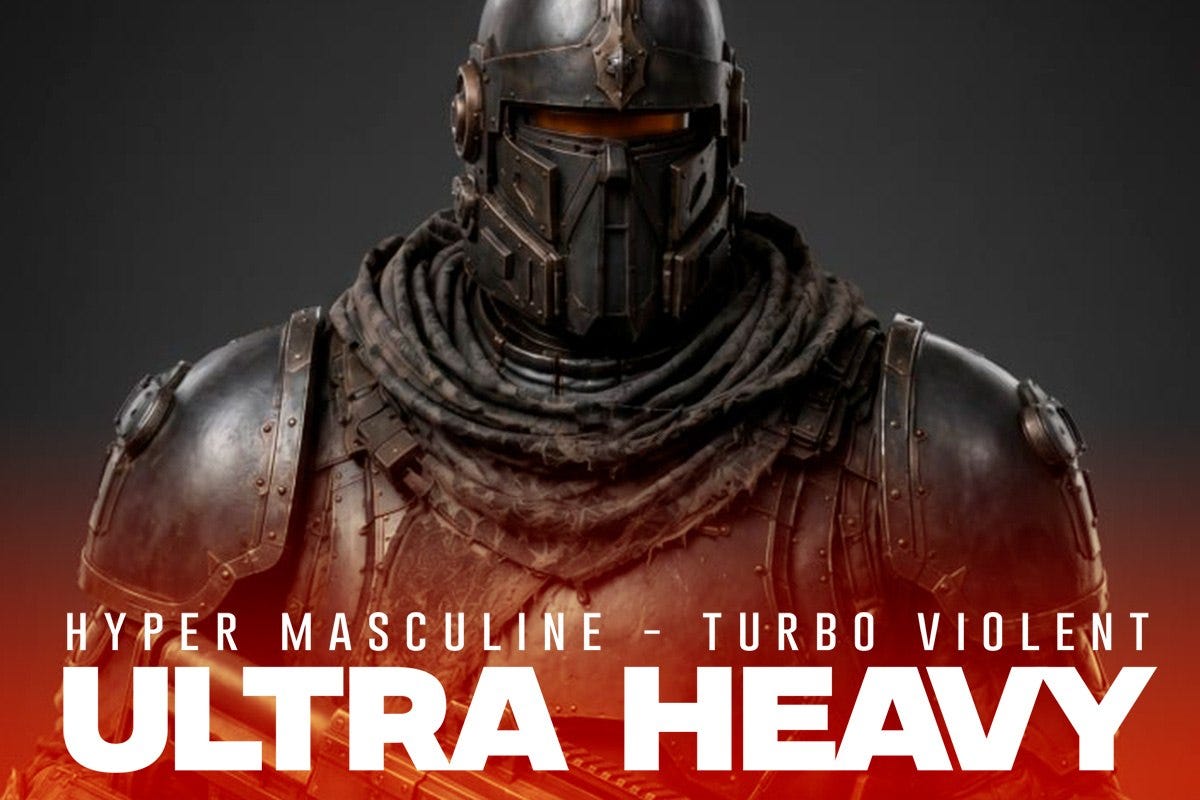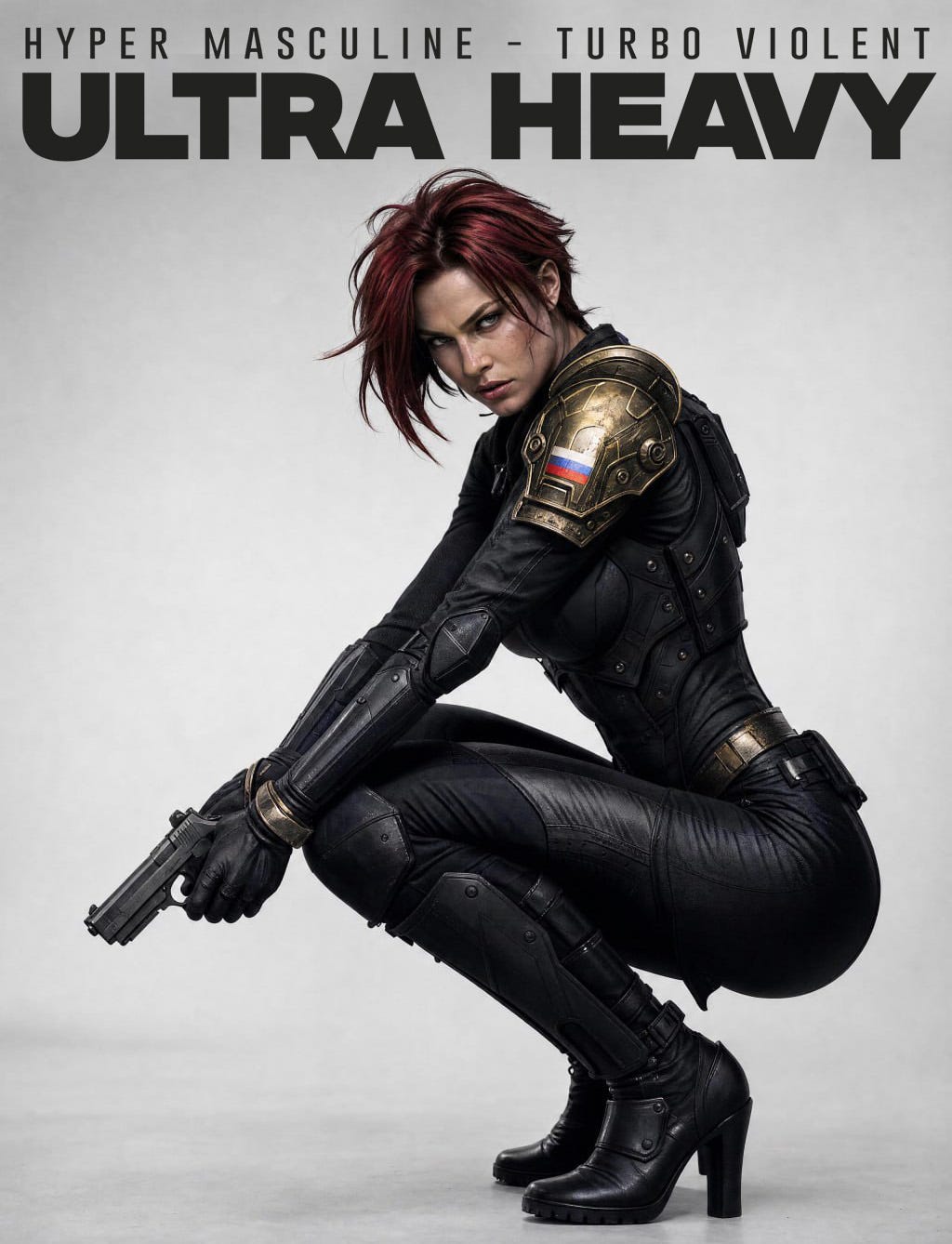
Tim Kirby explores how Alexander Dugin’s concept of Dasein informs the futuristic Holyrussian Empire depicted in Kirby’s science-fiction novel series Ultra Heavy, where sex, marriage, and traditional gender roles become weapons of civilizational survival.
In the previous article, at the behest of the publisher, I broke down the much more traditional view of sex and feminism in Ultra Heavy Book 1, and since people enjoyed that article, let’s take a look at Book 2. But I think I failed to explain why there is this particular presence of, and attitude towards, sex in these books that cannot be ignored, so let’s start with that.
Now, before we go forward, it must be said that globally, as of now, despite our currently large numbers, humanity is dying out. Besides Sub-Saharan Africa (supposedly), we are all bearing children below the replacement rate. This grand issue of our times is very much why the futuristic Holyrussian Empire, featured in the books, has a very traditional, almost medieval view of sex with a slightly more positive spin.
According to the lore, at some point in the near future, the Russians, having rejected democracy/liberalism, socialism/communism and nationalism/fascism, will be forced to create something “new.” In a personal conversation that I had with Alexander Dugin, he told me that the newest of ideas would be for us a return to that which was old and once was. This “return to what was,” with some updates for modern technology, hopefully comes across in Holyrussian society. In his book The Fourth Political Theory, he says that we are in quest to find a new subject for a political system. The previous ones: the individual, the working class, and the race/ethnicity, have all failed. Dugin’s offer for a new subject would be the concept of Dasein. Here is a summation of what Dugin means by Dasein… and don’t worry, this all ties into futuristic sex in sci-fi action novels:
Dugin appropriates the German philosopher Martin Heidegger’s term to construct a “Russian Dasein,” a unique and fundamental “Russian being” rooted in the collective, national experience and the “people” (narod), rather than in individual existence. This “Russian Dasein” serves as the metaphysical subject of a new political ideology meant to oppose Western liberalism, which Dugin sees as an inauthentic and nihilistic mode of being. Dugin reinterprets Dasein as being situated in a specific place and as a collective, rather than individual, reality, which he then employs to justify a distinct Russian civilizational identity and geopolitical expansionism, a move critics argue is a profound distortion of Heidegger’s original meaning.
Now, often in our world, very dynamic and big ideas get boiled down to an elevator pitch. The majority of dead communist revolutionaries probably never actually fully read any one book by Marx. It is the slogans that the masses can understand that get them to march. Essentially, in the book series, at some point in the future, the Russians choose a vastly more dumb, blunt but understandable option as the subject of their political theory, a common man’s Dasein if you will: survival.
When one prioritizes survival above everything, immediately the mind wanders to find what works and what does not, with little fear of mixing and matching in ways that would violate other dogmas.
It is a simple fact that our highly religious ancestors, who put in place the traditional values we gave up on, had vastly more children per couple than we do now. Their willpower was stronger. They were tougher. And they certainly knew how to stick their dick in a hole unlike modern “men.” The fact that later on, the ‘hand of God’ became visible in 3D chemistry also helps add to the religiosity of the futuristic times.
Thus, this “survivalist” civilization prides family, numbers, and a healthy but controlled sexual appetite as being core to their success. In the first book, it even mentions that their prime directive (as opposed to Star Trek’s prime directive) is to survive by “fighting, fucking, or fraternity.”
This absolute dumb, blunt, unyielding will to breathe as the universe chokes us is what puts Russia in the place it is in today. In the face of the death of humanity to globalism, Russia said “no.” This is by far the loudest “no” ever stated in history that few have directly heard. Hopefully this grand “No, we will not go quietly” is reflected in their way of war, lifestyles and Orthodox religiosity in these books.
Book 2: Tower of Death
In Book 2, there are essentially two relationships that go throughout the story between men and women…
SPOILER ALERT: there is no way to discuss this without major spoilers.
The main sort of plot line that moves throughout the story is a battle of egos between two of the Ultra Heavies who are essentially jealous of each other. Part of this jealousy comes from one having an extremely successful family and ideal marriage, while the other, despite his incredible combat capacity, is scared to put his chips down on one woman and embrace fatherhood. In short, one is successful on the field, the other is successful off the field.
The marriage between #970, the Dead Man, and Lilia is a somewhat “Norman Rockwell” painting if the artist had lived in the year 3900 in a futuristic Russian empire. Lilia is a hypersexualized housewife, but, unlike what feminists would say, she certainly gets a lot of happiness out of this position. She is well aware of the long, brutal and dangerous work of her husband to give her and her many children a safe, comfortable life. She lives in a society that propagandizes both genders to be extremely grateful for the actions of the other. In the book, you will note that the Dead Man is truly grateful for everything that his wife does. And at the very beginning, Lilia is quietly aware that if he dies, her life is over and this is not by random chance, but thanks to state indoctrination. These two characters are deeply bonded and both of their contributions to the family, though vastly different, are of great value. They both want to make the other content in life, and men find a lot of happiness in sex. For this futuristic society, giving the other what they need is good for it creates stronger bonds that hold society together and produce more children.
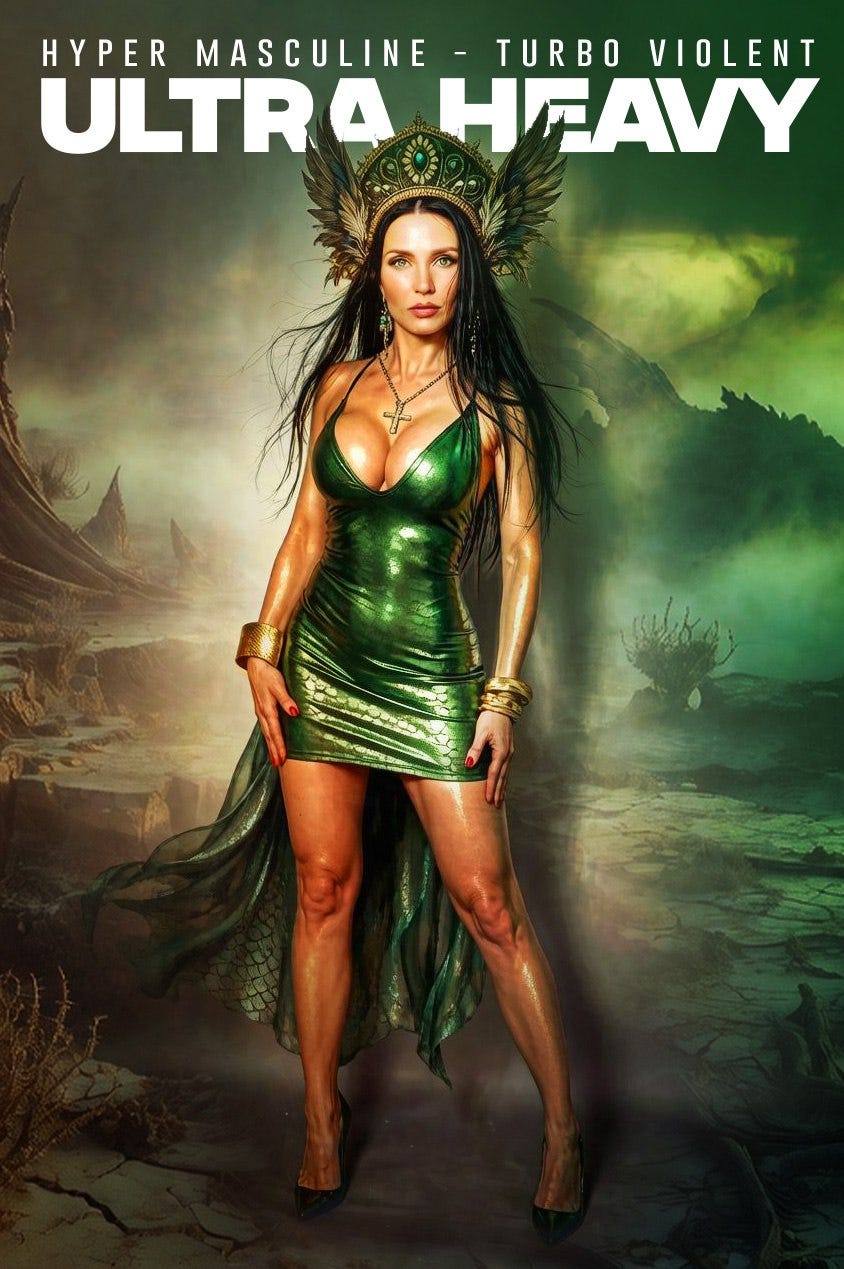
Thus, as you can see from this image of Lilia, she is quite geared to give her elite-status husband everything he “wants.” There are two types of men: those who want a sexy wife but keep that to themselves, and those that want a trophy wife to show off—Lilia is much closer to the trophy wife category.
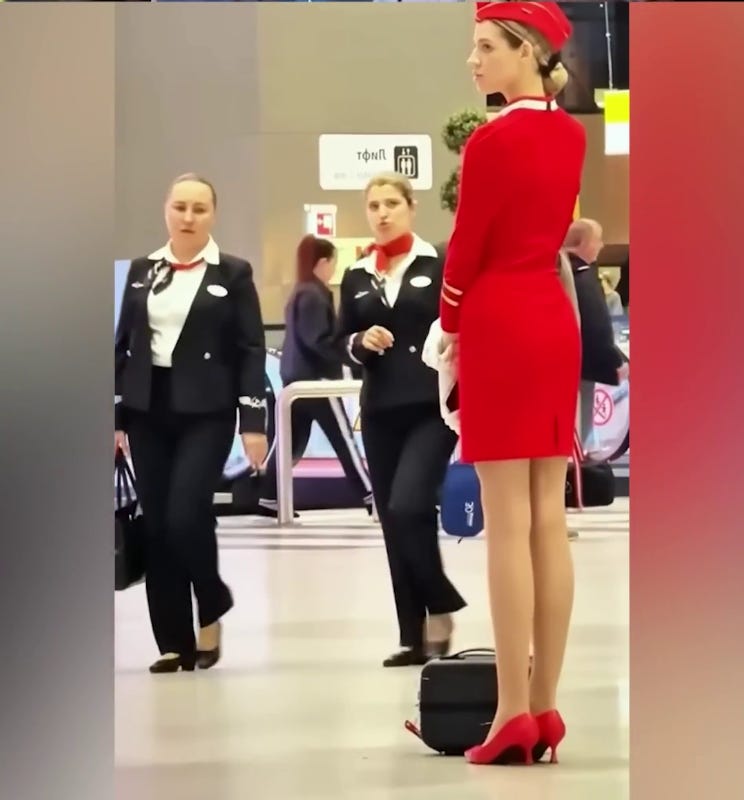
Recently, there was a video popularized by Asmongold (tell him I said hi in the greatest of Russian traditions) where an elegant woman in a Russian stewardess’s outfit merely stood in silence, causing “foid rage,” as Asmongold put it, among all women who passed by. This woman did nothing at all, yet her overwhelming presence of feminine softness absolutely dominated the landscape. This again goes back to female power and how to “win at life,” as mentioned in the previous article. Do you think this “stewardess” can get whatever she wants from life? She absolutely can, and so can the character Lilia. She was raised in a world where women know they can get what they want through men, especially through sex and manipulation, rather than trying to turn into men and combat them as feminists want. Holy Rus’ in 3900 AD would say that this stewardess is doing well. She is an obvious example of success for others to follow, as is the hypersexualized Lilia, but in 2026 in the West these “pick me” girls are evil slaves of the male gaze and patriarchy.
In contrast, the character Lada fell in love with the wrong man and, at the start of the book, is “alpha widowed,” as they say in modern parlance. That is to say, she fell in love with one man that no others can compete with—he is the best and she could not find better. But this was not at random. It is noted in the book that her father died some time ago and that her brothers are too busy with their own children to look after her affairs. She is a victim of a lack of male guidance in dealing with… men. In this world, there is one man at the head of the household who always looks out for everyone, acting as the leader much like in medieval times. Perhaps her brothers are lazy or dumb but they ignored her and thus she has sort of gone down the path of today’s modern woman with some “daddy issues” from being abandoned. She is getting “old” by Holyrussian standards and is working in research rather than having a family. Lada certainly hears plenty of propaganda pushing her towards a proper life, even directly from her own mother, but the circumstances of her heartbreak are just too powerful; thus she has escaped from her failed love life into the world of men—she has rejected her femininity.
A big part of the story is that Lada, going on her first true research mission of massive importance and danger, realizes just how awful the male world is. We men must go out into the world and take; we must brave the cold and the dirt while women have always been part of the internal world of the home. The Ultra Heavies, although risking their lives and living a life of blood, guts, and suffering, to some extent love what they do. There are women boxers out there and MMA fighters but I have never heard a woman say that the best feeling on Earth was slamming full force into a blitzing linebacker. Lada quickly finds out that playing with the boys is on another somewhat disgusting level. At the end of the book, she embraces her femininity and mostly realigns with female prerogatives, but not entirely, finding a compromise position that suits both parties involved in the relationship.
Order the Ultra Heavy series here.