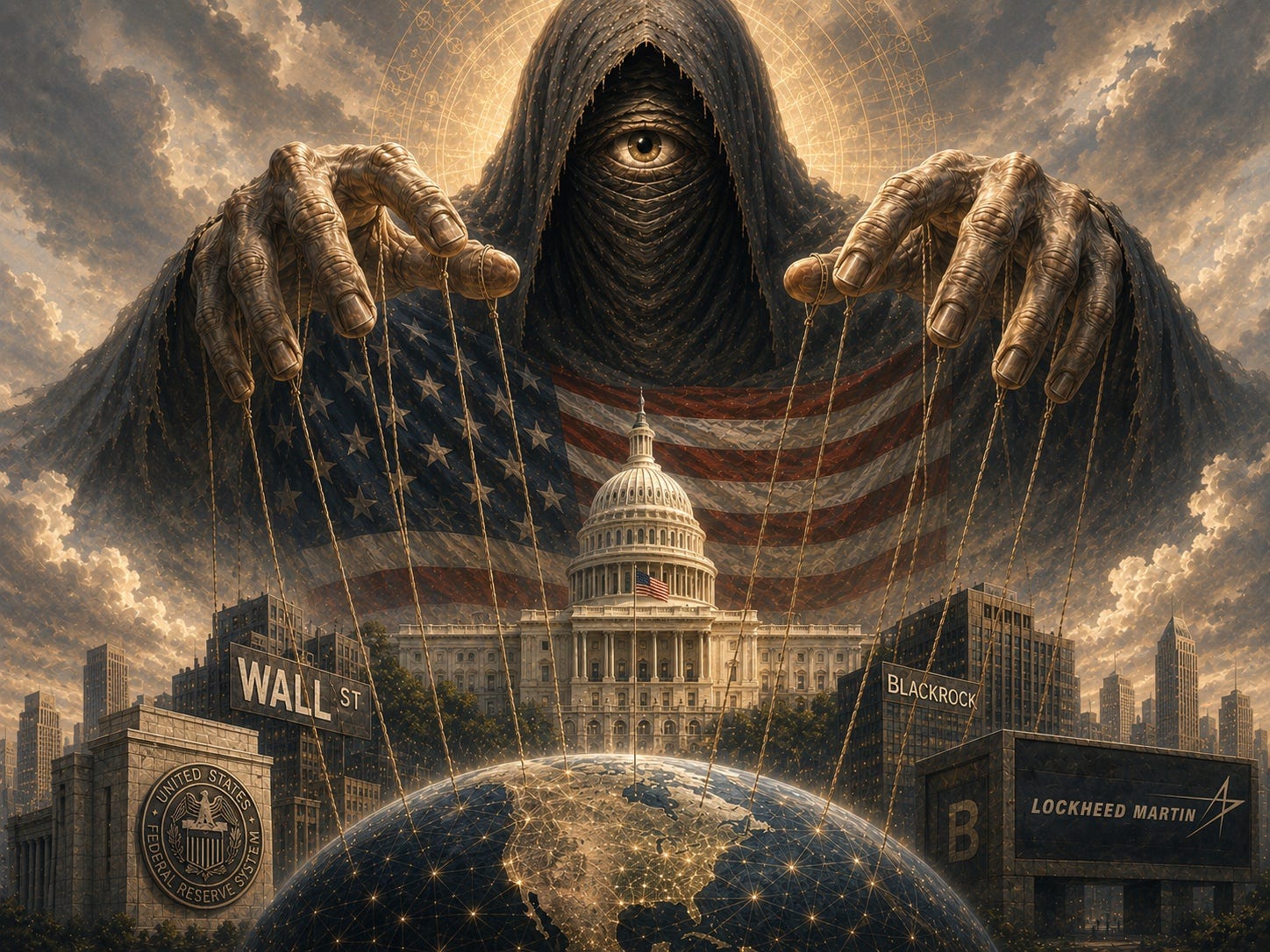
You Don’t Negotiate with Dajjal
Escalation must be mutual.
Alexander Dugin reveals why escalation must be mutual or negotiations with the West become a trap.
As expected, no peace between Iran and the United States ever materialized. The US resumed bombing Iranian territory. Tehran struck American military bases in Bahrain and once again closed the Strait of Hormuz. It didn’t work, and it could never have worked. You don’t make deals with Dajjal.1 That is a basic tenet of Shia metaphysics.
Delaying the war and maintaining the mere appearance of negotiations always and in every circumstance plays into the hands of the West.
In Iran, just as in our own war with the West, there is an ironclad rule: escalation must be mutual. The enemy escalates, we escalate. Only then can we influence the process. Otherwise, the enemy escalates unilaterally, entirely in its own interests, while we are left merely reacting in a passive, follow-the-leader mode. In essence, this kind of one-sided escalation during wartime creates a system of external control.
By the way, why aren’t statues of Baal being burned in Russia? Why aren’t we raising a storm over the criminal networks connected to Epstein? Why do we fail to respond in any meaningful way to the direct participation of Western countries—the Baltic states, Britain, and Germany—in the war against us, even though we ourselves report on it?
Iran goes to the negotiating table and ends up with nothing. For outsiders, this is obvious. Sometimes you see things more clearly from the outside.
Incidentally, right after the first US and Israeli strikes on Iranian leadership, the IRGC eliminated a significant part of the sixth column. Apparently, some still remain.
Negotiations can be held, but only in your own interests and never publicly. As soon as they become open and public, they instantly turn into an information weapon that only the West uses, and exclusively for its own purposes.
That’s why any mention of Witkoff, Kushner, or even Kirill Dmitriev, at a certain point, becomes a blow to the morale of the soldiers at the front and to the patriotic mood of the country. Just one mention is enough. It’s the same with the seemingly harmless broadcast of an old Vladimir Pozner program on Channel One.2
The same thing is happening with the Iranians. At the funeral of Imam Khamenei and his family, furious curses were hurled at the negotiators with Dajjal: Pezeshkian and Araghchi. I don’t think they are personally to blame. This is simply how the laws of information warfare work. The West sets these rules, and it is the only one that uses them unilaterally.
(Translated from the Russian)
Translator’s note (TN): Dajjal is the one-eyed false messiah and ultimate deceiver in Islamic eschatology. In Shia tradition in particular, he embodies absolute evil and deception, making any form of compromise with him impossible.
TN: Dugin refers to reruns of old programs by Vladimir Pozner, a well-known Russian television journalist with liberal and pro-Western leanings. Even seemingly harmless broadcasts of this kind are viewed by many patriots as subtle instruments of information warfare that erode public morale and the will to resist.


