
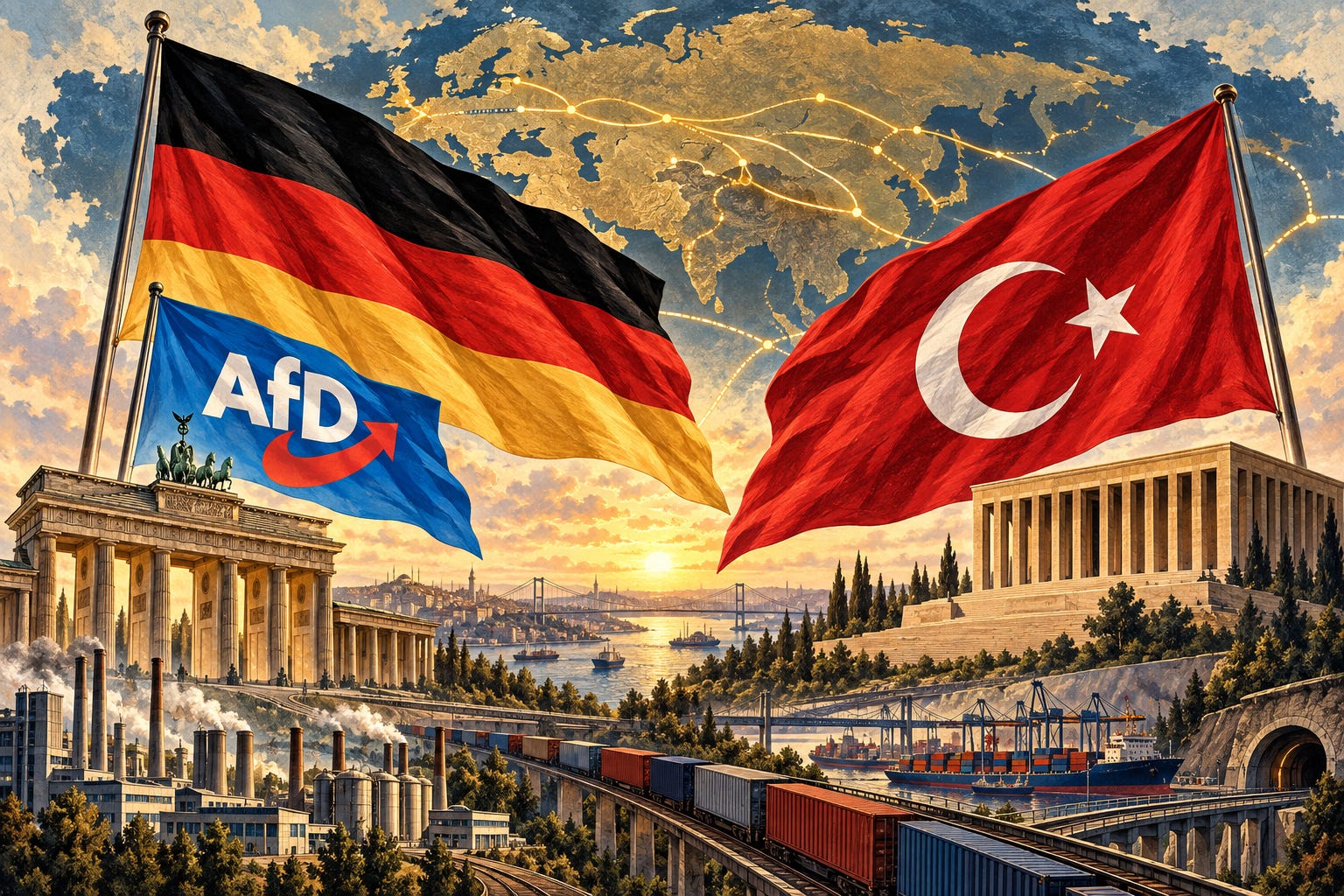
Santander Wallaby examines the unexpected common ground between German and Turkish patriots and what it could mean for the future of Eurasia.
The AfD’s victory in Saxony-Anhalt on September 6 gave the Fatherland Party (Vatan Partisi) in Turkey good reason to celebrate. According to provisional results, the AfD won 43.8 percent of the vote, which makes the attempt to dismiss its supporters as a passing disturbance look absurd. The following day, Özgür Bursalı, general secretary of Vatan Partisi, congratulated the AfD and denounced descriptions of it as far-right as American propaganda. His response deserves a serious hearing. A German party of the right and a Turkish party with roots in the left can recognize a shared interest when both want their countries to recover freedom of action. National independence creates the ground for such cooperation. Germany should be free to defend its borders, preserve its industries, and negotiate with Russia; Turkey should be free to develop its economy and choose partners without waiting for approval from Washington. These aims can support one another. Those who insist on dividing every dispute into approved ideological camps must answer a more awkward question: why should German and Turkish interests remain subordinate to an Atlantic strategy devised elsewhere? Bursalı’s support for the AfD points to a politics in which states base their relations on concrete interests and mutual respect.
The political history of Doğu Perinçek, chairman of Turkey’s Fatherland Party, helps explain this judgment.
