
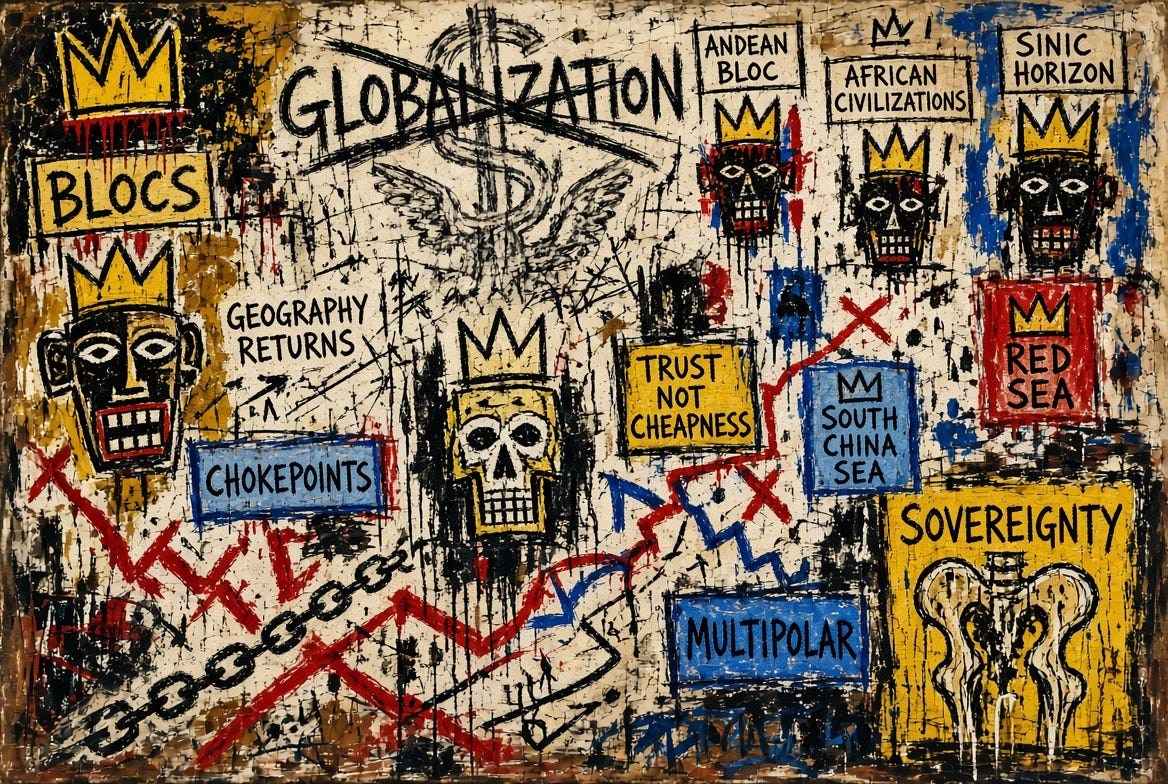
Santander Wallaby explains why the age of seamless globalization is giving way to a harder world of regional blocs and strategic trade.
Globalization was never the natural condition of the world economy. It was a political system built under very specific historical conditions after the Second World War. The United States emerged from the war with an intact industrial base, the world’s strongest navy, control over the main financial institutions, and a currency that gradually became the chief means of international settlement. Washington had both the power and the interest to protect maritime trade, keep major sea lanes open, deter piracy, guarantee access to distant markets, and create a framework in which goods could move across oceans at relatively low cost. This system depended on American power. A container ship could cross half the world because someone else bore much of the strategic cost of keeping the route open. A factory in Europe could rely on components from East Asia, fuel from the Middle East, raw materials from Africa, and financial services from New York or London because the global system assumed that these links would remain available. What appeared to be a universal economic order was therefore the product of one particular age: the age of American supremacy.
