

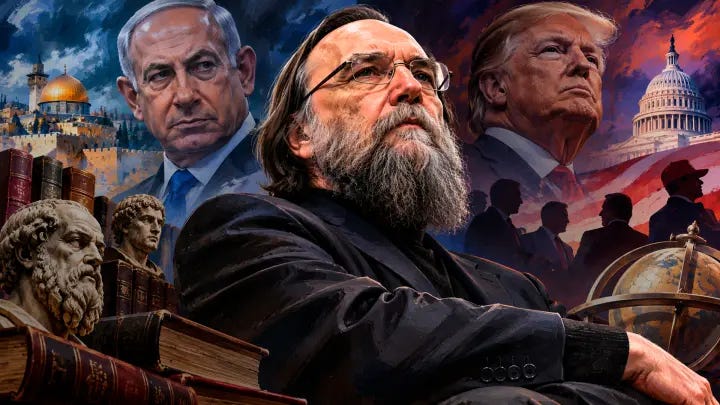
Israeli Prime Minister Benjamin Netanyahu called Alexander Dugin a “terrible person” who is “poisoning young American conservatives.” Significantly, Netanyahu subsequently lost the election, and his opponent, Gadi Eisenkot, is now forming a government. In an extensive interview with Tsargrad, the philosopher explains why he became a target, discusses the future of Donald Trump and the MAGA movement, explores the “Dark Enlightenment,” and addresses his dispute with the Institute of Philosophy of the Russian Academy of Sciences.
(Translated from the original Russian interview, available here.)
“When They Call Me an Enemy of the West, I Agree”
Tsargrad: Alexander Gelyevich [Dugin], let us begin with Netanyahu’s outrageous statement. Although he lost the election, he remains prime minister for the time being. In the middle of the election campaign, he called you a “terrible person” and accused you of fueling antisemitism among the American right. Why did he decide to attack you in particular?
Alexander Dugin: First, if a man who is hated by half of humanity and responsible for genocide (and that genocide has been officially recognized!) calls someone terrible, it means that person must be very good indeed.
Second, knowing what Israel does to those it accuses of real or imagined offenses—eliminating its opponents and killing them—this is rather alarming.
Third, I really do have influence over a considerable number of people in America, throughout the West, and across the world. My books have been translated into numerous languages. Supporters of the unipolar world have long regarded me as “the most dangerous philosopher”: I deny the West the right to impose universal values upon the world, insisting instead that every civilization possesses its own values. I have systematically developed this argument in nearly a hundred books. That is my principal offense: I reject Western domination and the “end of history.” When they call me an enemy of the West, I agree. Everyone who rejects Western hegemony—and that means the majority of humanity—sooner or later discovers my books in their own language.
My influence on the American right is merely one particular example. When Trump came to power, I saw in the MAGA program an opportunity to build a multipolar world without war, and I supported it. I examined Trump as a political figure and published a book about him with an American publisher. Despite the sanctions, the book reached a wide readership. This created a mutual understanding between me and influential MAGA figures, as well as younger generations.
There are few conservative and traditionalist thinkers with a worldwide audience. I am one of them, and perhaps Alain de Benoist [French philosopher and founder of the New Right. — Tsargrad] is another. Among Americans, there are prominent journalists and commentators such as Tucker Carlson and Alex Jones, as well as politicians, but hardly any philosophers. There is Nick Land [British philosopher who coined the term “Dark Enlightenment.” — Tsargrad], with whom I maintain a dialogue. Peter Thiel [American entrepreneur and co-founder of PayPal and Palantir. — Tsargrad] also took an interest in my ideas long ago. My influence within conservative circles is far greater than people in Russia acknowledge, so the accusation is not entirely absurd.
Tsargrad: Yet today Trump is clearly moving away from the MAGA vision he originally presented to the American people…
Alexander Dugin: Exactly. Trump has departed from his original political course in three respects. The first concerns the Jeffrey Epstein affair: Trump refused to release the files or initiate criminal proceedings when it emerged that he himself was implicated. The second was his decision to shut down DOGE [a special department established to oversee US government spending. — Tsargrad], which he had entrusted to Elon Musk, bringing an end to what I consider Musk’s excellent work. The third, and most serious, was his rapprochement with the neoconservatives, Lindsey Graham, and Christian Zionism, which dragged America into a war with Iran. Support for the genocide in Gaza, the abduction of Nicolás Maduro, and the elimination of Iran’s leadership—all of this shattered the political agenda of Trump’s early presidency.

Practically all the political figures I once sympathized with have turned against Trump: they saw his actions as a repudiation of his own principles.
When Carlson was in Moscow, he told me that the greatest danger was the influence of the neoconservatives. Unfortunately, that is exactly what happened. The entire healthy, ideologically coherent wing of MAGA has gone into opposition and is fiercely criticizing Trump’s devotion to Israel. Jeffrey Sachs [influential American economist. — Tsargrad], Andrew Napolitano [American legal expert and former judge. — Tsargrad], and Larry Johnson [former CIA analyst. — Tsargrad] have taken the same position. I have been in dialogue with all of them, appeared alongside them on various programs, or met them personally. These figures may not belong to the younger generation, but they are genuine ideological thinkers with audiences numbering in the millions.
I share their criticism of Trump, but among his critics, I have probably criticized Netanyahu less than anyone else. I see nothing positive in his policies: what he is doing in Gaza is genocide, while the assassination of Iranian leaders and this entire war constitute war crimes. Yet criticism of Israel occupies a minuscule place in my books, social media posts, and interviews compared with other subjects. What troubles me far more is that Trump squandered the opportunity to establish a stable multipolar world, bring the conflict in Ukraine to an end, and build an America founded on traditional values. Fight illegal immigration—excellent. Fight the Democrats’ pathological notions of gender politics—and we will applaud. Israel and Netanyahu are very far down my list of priorities.
“I Hate Racism in All Its Forms”
Accusing me of antisemitism is nonsense. Semitic peoples include not only Jews but also Arabs, Amharas, and Ethiopians. I have no sympathy for the Zionist interpretation of “Greater Israel,” but I generally seek to understand and describe it rather than refute it. I have written a balanced study of the Semitic peoples, covering the Arameans, Akkadians, Chaldeans, and the Islamic, Sabian, and Jewish traditions.
One of my favorite authors is Gershom Scholem [Israeli historian of Judaism and Kabbalah. — Tsargrad], and I am also interested in Martin Buber [Jewish religious philosopher. — Tsargrad]. An antisemite is someone who claims that a Jewish conspiracy is behind everything; there are plenty of such people today. Most critics of Israeli aggression are not antisemites but opponents of Zionism. I am not pro-Zionist, but anti-Zionism is by no means my principal concern either. Incidentally, many anti-Zionists criticize me for precisely that reason.
Tsargrad: Where, then, did this accusation come from?
Alexander Dugin: I think Netanyahu was simply fed this line by Laura Loomer and Mark Levin, both of whom are deeply immersed in pro-Zionist politics. They see my name and my social media posts; they know that I am acquainted with Netanyahu’s critics in the United States. They decided that blaming everything on the Russians might work. It is some kind of intelligence operation. Loomer is a reckless adventurer who is mentally ill. She went from taking a Russia-friendly position to joining the Russophobic camp, met with Zelensky, and now considers it her duty to uncover a “Russian connection” everywhere.

I have no intention of justifying or defending myself. This is a death mark: we know what happens to those whom Netanyahu calls enemies of Israel—they are killed. Incidentally, Gadi Eisenkot [former Chief of Staff of the Israeli military. — Tsargrad] is the architect of the “Dahiya Doctrine,” which effectively recognizes Israel’s right to kill anyone it designates as an enemy. This is a dangerous ideology, not merely Netanyahu’s personal position. But we live in sovereign Russia, and this death sentence does not apply to us.
If I were an antisemite, I would say so openly. I have defended many politically incorrect positions that subsequently became widely accepted. But I am neither a fascist nor an antisemite, and I hate racism in all its forms. Am I a supporter of tradition, empire, Orthodoxy, and Russian civilization? Am I an anti-liberal who rejects the West’s claims to universality? Yes, absolutely. Those are the positions you are welcome to challenge. If anyone in Russia attempts to repeat these insults or threats against me, there will be legal consequences.
“They Say of the Palestinians: They Are Animals”
Tsargrad: Among Russia’s opponents, we are now witnessing a paradoxical alliance of ultraliberals, Western racists—outright fascists—and Zionists. This is evident in figures such as Argentine President Javier Milei and Palantir CEO Alex Karp. They aggressively support Kiev and are consumed by hatred of Russia. Why have so many Jewish politicians aligned themselves with fascists?
Alexander Dugin: Many people, myself included, believe that Netanyahu has squandered the legacy of the Holocaust. After the Second World War, humanity felt compassion and solidarity towards the Jews because they had been victims. Netanyahu has turned the Jews into aggressors. Whereas they were once loved out of compassion, they are now feared and hated. I associate this with deep archetypes within the Jewish people.
In Kabbalah, there is a teaching about two messiahs: Mashiach ben Yosef, the suffering messiah, and Mashiach ben David, the triumphant, victorious messiah. One inspires compassion; the other inspires fear. We are witnessing this transition between archetypes, from the suffering Jews of Holocaust remembrance to triumphant Jews who inspire fear. Until a certain point, Jews were perceived as the principal force opposing fascism, but now they are merging with a form of radical ethnic racism. They say of the Palestinians: these are not human beings; they are animals.
One can simply condemn this, but for me, understanding is what matters most.
Netanyahu sees himself, or someone who would come after him, in the context of the triumphant Mashiach ben David. This is connected to “Greater Israel” and the idea of Noahide law: that all peoples must accept Judaism within the framework of the Laws of Noah and serve the Jews. And in a certain sense, they are proving themselves right: the way they have subordinated Trump and compelled him to serve their interests demands that we take them seriously. No previous president started a war with Iran; Trump did, which means their power is growing.
This is an eschatological war. From a rational standpoint, they cannot win: a small, recently established country has challenged the Arab and Islamic world and is confronting European leaders and the United Nations. Morally, this deserves condemnation, but I will leave that condemnation to others. What matters more to me is that the transition from the suffering messiah to the victorious messiah is a sign of the times. Israel and the Middle East are a screen upon which global eschatology is projected. Everything happening with Israel, with pro-Israel elements in America, and with anti-Zionist circles within MAGA is charged with symbolic meaning that must first be understood and properly interpreted.
“Civil War Is Approaching in the United States”
Tsargrad: The American anti-Zionist MAGA intellectuals who have turned against Trump have effectively been knocked out. Yes, they have reputations and audiences, but the Republican establishment does not support them, while Trump himself is increasingly aligning with the neoconservatives. Does this mean the movement has lost? Who will represent it? The intellectuals are there, but political representation is not.
Alexander Dugin: In a certain sense, you could put it that way.
But the intellectuals were not the main driving force behind MAGA. They broadened the Republicans’ influence and gave them the decisive votes. These people had previously rejected both sides: the Republican neoconservatives and the liberals with their LGBT agenda, the entire “Epstein civilization.” Trump relied partly on Republicans and partly on radical MAGA supporters, and it was thanks to the latter that he won. But once he had won, he renounced them and effectively cast almost all of them aside. Thiel, who played a very important role in this movement, recently condemned all these wars and acknowledged that the war with Iran was a mistake.
They have no political organization of their own, and a third political force is impossible in America. They do have one potential trump card: JD Vance. After the midterm elections, he may begin developing a post-Trump strategy. But not everyone trusts him. After so much betrayal, few people will be willing to place their faith in someone again. Trump turned out to be very different from what he appeared to be. He shows clear signs of dementia, something both his opponents and supporters have noticed.
The Republicans and neoconservatives have discredited themselves by supporting the war with Iran, which genuinely enjoys the support of only a tiny fraction of Americans. The Democrats will grow stronger and demand a reckoning with the Republicans, Trump, and his supporters. We are approaching a civil war in the United States.
One potentially important participant in such a war would be neither the elites nor the globalist Democrats, but the American heartland, the authentic MAGA movement. I am not saying they would necessarily win, but they are a serious force. I had thought they had become disoriented and were fighting among themselves, but now they have regrouped.
There are also signs of a possible alliance with nonconformists on the left, such as Ana Kasparian [host of the popular show The Young Turks. — Tsargrad] and Cenk Uygur [activist and founder of The Young Turks. — Tsargrad]. They strongly oppose the global elite, the deep state, and the “Epstein civilization,” and are close to Bernie Sanders and Alexandria Ocasio-Cortez. Some MAGA figures are proposing an anti-globalist alliance between the right and the left.
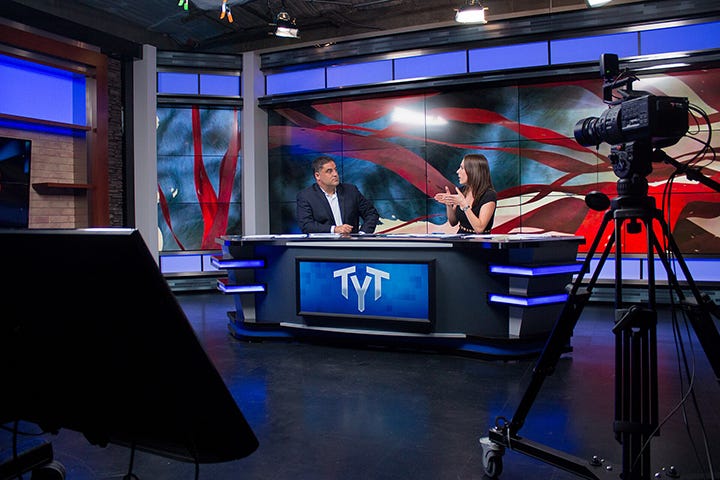
Tsargrad: With the genuine leftists, who are not concerned with the liberal “agenda,” cancel culture, and a hundred genders, but with the interests of working people?
Alexander Dugin: Yes, these are leftists who stand for the people and social justice. This would be precisely my Fourth Political Theory: uniting the right and the left against the liberals, because liberalism is the greatest evil.
To break out of this vicious circle, right-wing and left-wing anti-globalists must unite, dismantle this system, and build another.
“We Have Long Been Living in a World Ruled by Monsters”
Tsargrad: Global liberalism is the immediate enemy. But what about the “Dark Enlightenment”? What about Thiel, whom you mentioned, and who is developing utterly infernal visions of a technological future in which human beings are unequal and must be divided into masters and slaves? Might it turn out to be an even more dangerous enemy?
Alexander Dugin: We have two clearly defined enemies: liberal globalism and the neoconservatives, who represent American hegemony in its purest form. The “Dark Enlightenment” has not yet emerged as a new challenge. First, we must deal with globalism, which staged a comeback in the US congressional midterm elections, and with neoconservative hegemonism. These are two concrete enemies with established infrastructures.
The “Dark Enlightenment,” by contrast, is an unknown quantity.
It is something frightening that promises us nothing good, but it belongs to the next stage. It cannot be identified with the Democrats or the liberals, nor does it coincide with the neoconservatives. Christian Zionism is one thing; Thiel’s “Dark Enlightenment” is another.
Something tells me that we will eventually have to confront the “Dark Enlightenment.” It is a third force on the opposing side. Thiel emerges from the neoconservative milieu, but he goes further and deeper.
Tsargrad: And Thiel is also an outright racist…
Alexander Dugin: There is certainly an element of that. But Western civilization is racist through and through. Even its anti-racism is racist: they force everyone to repent for racism, including those to whom it is entirely alien, as in Russia. Racism is simply not part of our nature.
Western empires were built on the exploitation of their colonies, whereas ours was built on the exploitation of the center: in our case, the periphery enjoyed better living conditions. Every Westerner is convinced that Western values are universal, and that is racism. That is why Thiel is a racist, and so are Joe Biden, Trump, Musk, Ocasio-Cortez, Sanders, and the Marxists. They all believe there is only one path of development. I am convinced that we must recognize the existence of multiple civilizations.
There is an important point here. It sounds horrifying, but everything else is just as horrifying: allowing children to undergo sex reassignment at their own request and stripping parents of their parental rights—that is the position of the liberal left; eliminating Iran’s leadership and killing children—that is the position of the neoconservatives.
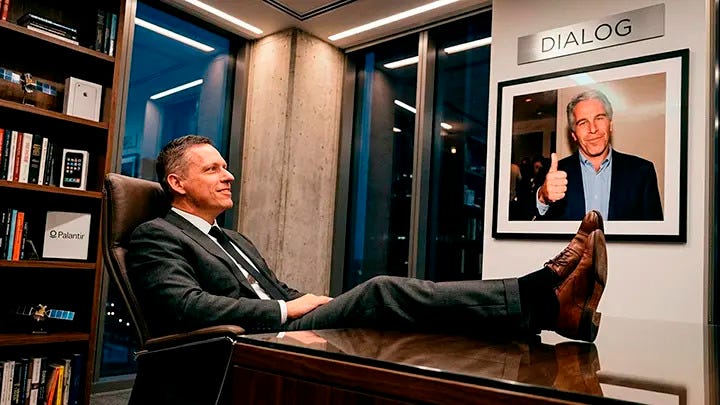
We have long been living in a world ruled by monsters. They simply take different forms: centaurs and minotaurs. These are the creatures we are forced to choose between. The “Dark Enlightenment” is a third kind of monster, less familiar and less predictable, and it may yet reveal an unexpected side of itself. But they all belong to the same infernal bestiary.
Netanyahu, incidentally, is a typical example of such a creature, a monster in the truest sense.
“This Kind of Opposition Is Deeply Dishonorable”
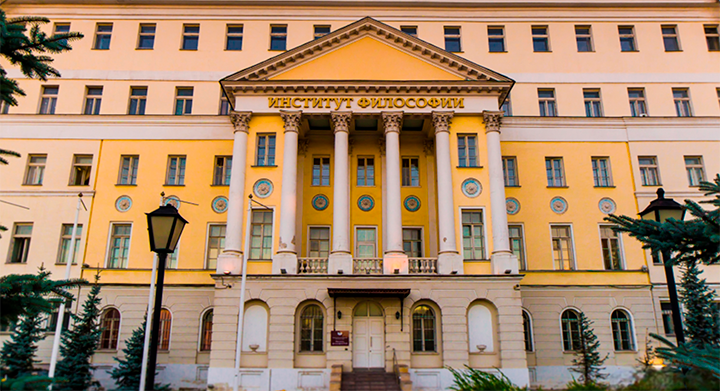
Tsargrad: Netanyahu’s remarks have also provoked reactions within Russia’s philosophical community. Would it be fair to describe your relations with certain members of the Institute of Philosophy of the Russian Academy of Sciences as contentious? Correct me if I am wrong. On social media, they enthusiastically supported the Israeli prime minister. What is behind this conflict?
Alexander Dugin: I do not think there is any such conflict.
There are a few designated foreign agents, former employees who fled the country and now support the broader Russophobic narrative from abroad. My ideas are gaining increasing influence among important circles in Russia. These people react to that, but it is all part of a general directive, and their voices are not particularly loud. There are also people who simply do not know me. When they finally meet me, they say, “Are you really like this? We thought you were a completely different person.”
I used to engage in extensive polemics with Sergei Karaganov [political scientist and academic supervisor of the Faculty of World Economy and International Affairs at the Higher School of Economics. — Tsargrad], for example, but now we participate in debates on the same side. Dmitry Trenin [academic supervisor of the Institute of World Military Economy and Strategy at the Faculty of World Economy and International Affairs of the Higher School of Economics, and professor. — Tsargrad] wrote a book against Eurasianism, yet today we find ourselves on the same side of the barricades. People know very little about me and, instead of reading my work, pay attention to memes.
It seems to me that the Institute of Philosophy is focusing on the wrong things. We are living through a unique historical moment when we must devote ourselves to Russian philosophy and sovereignty, and mount a serious metaphysical challenge to the West’s claims to universality.
The institute is not doing this, which I regret, but that is all. If it believes it should pursue other priorities, and the president and the relevant authorities tolerate such an institution, then perhaps they are right and I am wrong.
Tsargrad: In essence, they are adopting a covert opposition stance, engaging in a kind of intellectual rebellion against the establishment…
Alexander Dugin: This kind of opposition is deeply dishonorable, even contemptible.
Your country is at war, people are dying, and you ought to have a sense of patriotism. But to me, the Institute of Philosophy of the Russian Academy of Sciences is a far less significant adversary than Zionism and Netanyahu, and even those are not my primary concerns. I do not see the institute waging any systematic campaign against me. I have known Abdusalam Guseynov [member of the Russian Academy of Sciences and acting director of the Institute of Philosophy. — Tsargrad] for many years, and I hold him in very high regard. He personally organized discussions and meetings with me back in the 1990s. I have no conflict with him.
As for the people who relocated to the West and the designated foreign agents who were once associated with the institute, they are merely incidental figures. When you actually speak to most of them, they turn out to be decent people. They are not really agents of anything; they simply failed to understand the situation in time or continue acting out of inertia. Wherever there is no deeply entrenched hostility, I am inclined to seek mutual understanding, especially when the country is at war. If we are Russians who care about victory, then whatever our disagreements, we are on the same side.
I propose that we talk.
Come up with something original, and I will be the first to engage in debate. So far, all I have been offered are attacks and insults, which I consider beneath my dignity to answer. Anyone who presents a meaningful argument will find in me a friend and a willing interlocutor. One man spent a long time writing insulting remarks about me, then eventually asked, “May I attend your lectures?” I replied, “Yes, of course. Come along.” People change.
“A Liberal Can Be Forgiven If He Repents”
Here is an example. I have finished work on a four-volume study of Russian philosophy and have reassessed late Soviet philosophy. For a long time, I believed that both liberalism and intellectual dissent had emerged from this milieu, but it turns out that this was not the case. Late Soviet philosophers were predominantly conservatives and phenomenologists. I have revised my position accordingly.
There were such diverse thinkers as Sergei Averintsev, Alexander Piatigorsky, and Yevgeny Schiffers. There were Orthodox Christians, Hesychasts, Heideggerians, and phenomenologists. Virtually the entire spectrum of worthwhile ideas was represented—and not a single liberal! Soviet philosophers had no interest in figures such as George Soros, Ayn Rand, or Karl Popper [British philosopher and proponent of Western rationalism. — Tsargrad].
Tsargrad: Where, then, does the myth come from that the intelligentsia has supposedly always opposed a strong state, whether Soviet, imperial, or any other kind?
Alexander Dugin: There is some truth to this perception.
But among the leading and second-tier philosophers of the late Soviet period, I did not find a single figure who defended liberal philosophy. They may have been liberal in their aesthetic sensibilities, but their ideas revolved around structuralism and tradition. None of them advocated individualism, the free market, or the Global West.
Alexander Solzhenitsyn was not a liberal either.
The traitors were Mikhail Gorbachev and Boris Yeltsin. The intelligentsia involved in their betrayal consisted of their advisers, the people who wrote their speeches, not philosophers or genuine thinkers. Philosophers had nothing to do with it.
We must eliminate liberalism and, beyond it, open up a vast horizon of free philosophical inquiry. Instead of resorting to cutting insults, we should engage in substantive discussion.
To be a liberal is shameful, immoral, and repugnant. But even that can be forgiven if a person repents, becomes a patriot, and embraces the only correct position: love for Russia. That is the minimum requirement for beginning a discussion, along with honesty and intellectual depth.
Everything else can follow from there. We are ready to begin.
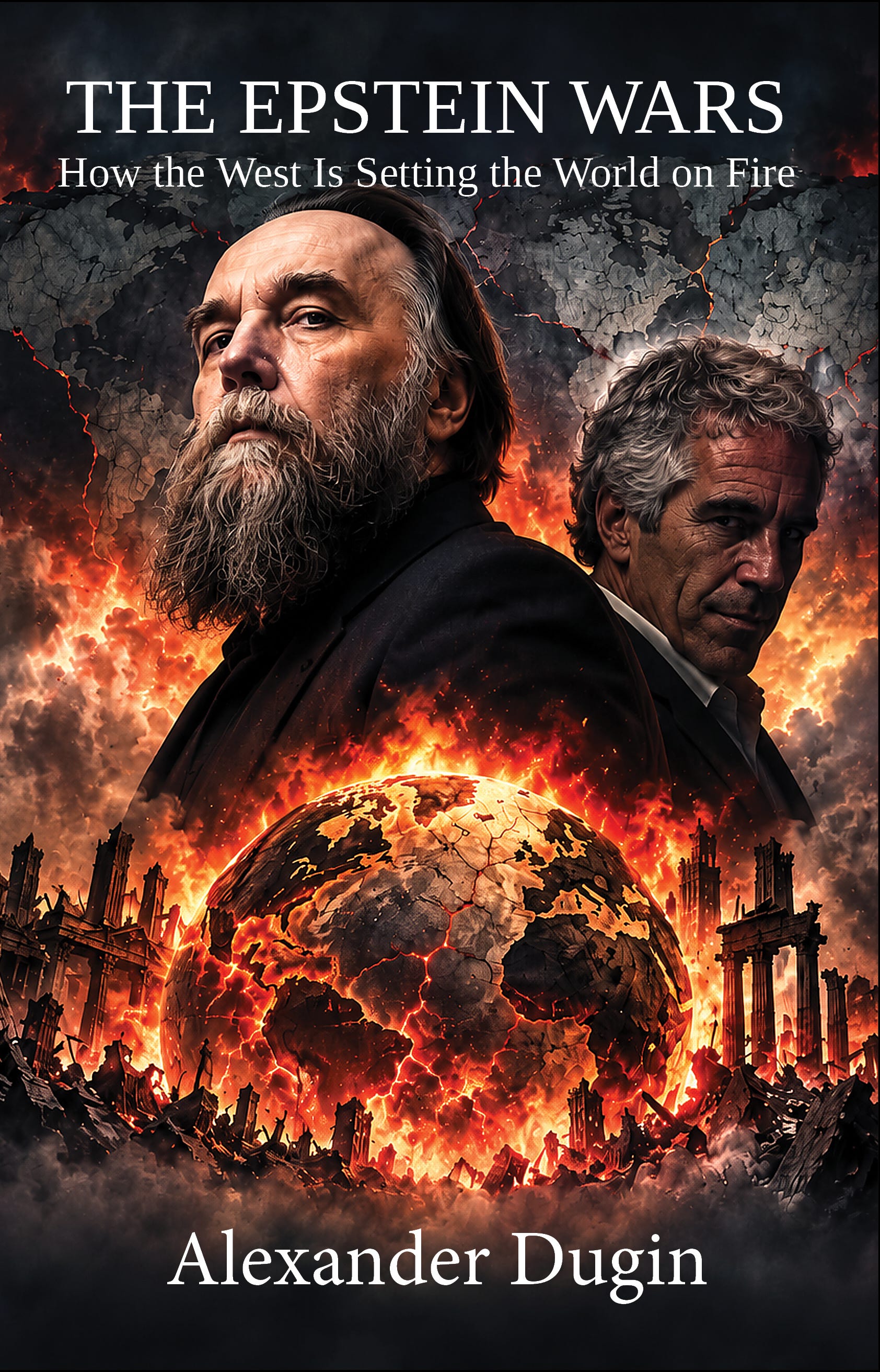
New Book from Multipolar Press!
Alexander Dugin — THE EPSTEIN WARS: How the West Is Setting the World on Fire
Get it here.

It is absurd to accuse you of anti-semitism. Unfortunately many Jews resort to that accusation when confronted with arguments with which they disagree. It is idiotic. That said, to speak of an Epstein class to classify millions of people is a bit of an exaggeration.
The Enlightenment was nothing more than an Endarkenment...