

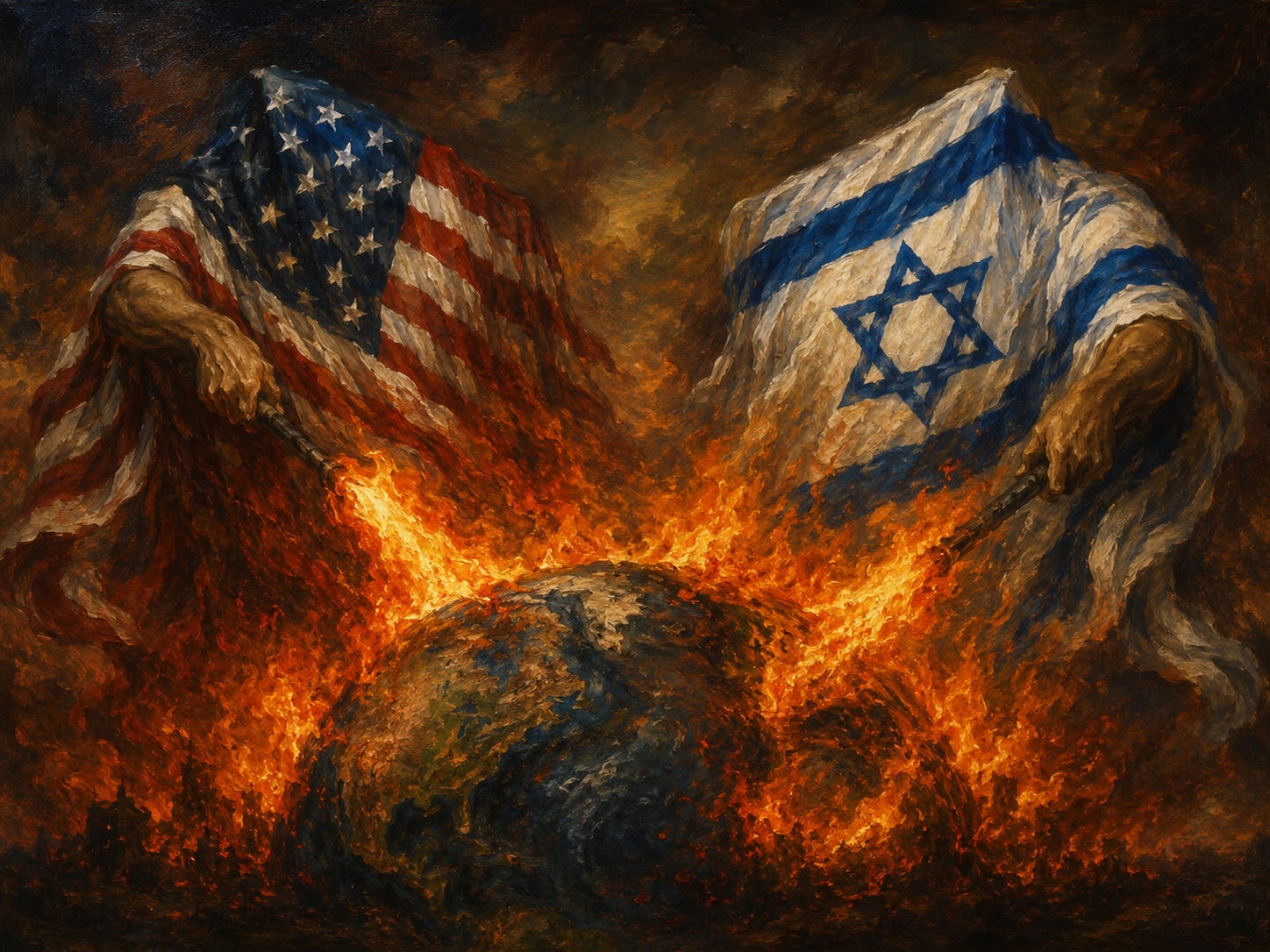
Callum McMichael examines the growing intersection of Noahide institutions and U.S.–Israeli strategic cooperation, asking where their convergence may ultimately lead.
Delegates from distant continents will soon converge on Jerusalem for the First International Congress of Noahides, scheduled from November 2 to 6 this year. Hosted by the Brit Olam Noahide World Center, the event aims to transform scattered followers of the Seven Noahide Laws into a cohesive global movement with real institutions and authority. Participants will ratify the Brit Shalom codex, a detailed fourteen-chapter document translated into twenty languages, and adopt the Brit Olam Siddur as their prayer resource. Rabbi Oury Cherki plans to distribute personally signed copies. They intend to launch an international Beit Din (religious court) featuring judges from Jerusalem and every continent, elect regional councils, grant special status to select individuals, and establish funding streams to support ongoing operations. The gathering culminates at President Isaac Herzog’s official residence, where continental representatives will sign the founding charter and proclaim declarations in their native tongues.
These Noahide Laws, drawn from rabbinic interpretations of ancient texts, outline seven requirements for non-Jews: setting up courts of justice, avoiding blasphemy, rejecting idolatry, refraining from sexual immorality, prohibiting murder and theft, and banning the eating of flesh from living animals. On paper they promote basic ethics. In practice, the idolatry rule creates immediate friction with Christianity. Major rabbinic voices, including Maimonides, have classified Trinitarian worship and devotion to Jesus as forms of idolatry, essentially dividing the divine or assigning improper form to it. Though some opinions offered limited accommodations for Gentiles, the underlying framework questions the validity of Christian belief and practice at its root. As this congress builds courts and structures, that theological conflict moves from abstract debate into organized reality.
The program unfolds with deliberate steps. Attendees begin with arrival and orientation, move into workshops paired with tours of ancient Jerusalem, then travel to Shiloh to connect with the tabernacle heritage. Later sessions focus on governance details, the gala dinner fosters bonds, and the presidential ceremony seals commitments. Registration involves substantial fees covering full access, heritage experiences, and participation in foundational decisions. Organizers stress that individuals will leave as part of one unified body equipped with a syllabus, membership protocols, ritual patterns, and coordinated regional plans. Jerusalem emerges not just as a venue but as a permanent center for this developing order.
Parallel actions in Washington deepen the stakes. The House recently approved the 2027 National Defense Authorization Act (NDAA), a trillion-plus dollar measure that passed on a tight 216-212 vote. Embedded within it, Section 219 launches the United States-Israel Defense Technology Cooperation Initiative. This creates a dedicated Pentagon role to drive joint research, co-production, technology integration, and supply chain linkages across missile defense, counter-drone systems, subterranean warfare, AI, cyber, and emerging fields. Israeli capabilities embed more firmly into American platforms while funding streams support expanded collaboration. Though framed as a partnership, the arrangement raises questions about independence and priorities, binding defense infrastructures in ways that prove hard to separate.
Together these threads reveal a coordinated direction. The religious congress supplies the moral and judicial vision for Gentiles. The military legislation furnishes the strategic and material backbone. Christians encounter a system that redefines their worship as idolatry, pressuring conformity or exclusion. Talmudic sources discuss severe penalties for violations under such codes, adding gravity to how this might unfold as influence spreads. The congress timing, shortly after the defense bill, underscores how ideological and power structures reinforce one another.
Noahide adherence has expanded quietly over the years, drawing thousands worldwide, including former Christians attracted to its monotheistic simplicity. The Jerusalem gathering shifts this into formalized global presence with charters, courts, and state recognition. Materials in multiple languages, heritage site visits, and financial mechanisms ensure longevity and reach. Prophetic phrasing about nations uniting frames the project as an inevitable destiny. Yet for Christianity this means sidelining Christ as central, redirecting loyalty toward a different covenant centered elsewhere. The incompatibility runs deep.
Defense ties have accumulated through many agreements, but this NDAA provision advances permanent integration. It eases Israeli industry access to US programs, standardizes technology transitions, and reduces certain oversight barriers. Billions allocated to joint projects lock in dependencies. This has voiced sovereignty worries, yet momentum carried the measure forward amid shifting public attitudes. The result strengthens a singular bilateral axis at the expense of broader national flexibility.
If Jewish authorities can impose such frameworks on Christians, reclassifying core elements of the faith as idolatry while building parallel institutions and alliances, nothing prevents applying similar approaches to any other religion or belief system. The mechanism does not depend on the target’s identity. It operates through selective interpretation of universal laws, institutional control, and aligned power. Buddhists, Hindus, Muslims, or secular groups could face equivalent redefinition and marginalization whenever their practices conflict with the established code. This precedent extends the risk universally, regardless of one’s convictions.
Believers must confront these realities directly. Study the primary sources, from Talmudic tractates to Maimonides’ rulings and contemporary Noahide publications. Track the congress outcomes and the defense bill’s Senate path. The faith’s emphasis on Christ leaves no neutral ground. Dilution or compromise abandons essential truth. Preparation involves teaching congregations the distinctions, fostering resilience, and maintaining clarity amid encroaching structures. History shows pressures on Christian witness take many forms. This one combines ancient legal traditions with modern organizational and strategic muscle.
The congress builds more than meetings. It constructs enduring authority through Beit Din oversight, regional implementation, and symbolic ties to Israeli leadership. The defense initiative similarly embeds long-term commitments in procurement and technology. Both processes prioritize the same partnership, creating an environment where dissenting faiths navigate narrowing paths. Christians, holding to Scripture’s claims, recognize the trajectory. Awareness alone proves insufficient. Active faithfulness becomes necessary as these developments unfold.
America and Israel advance along this shared course with clear intent. The great Satan takes shape in their convergence. Two nations, one being.
