
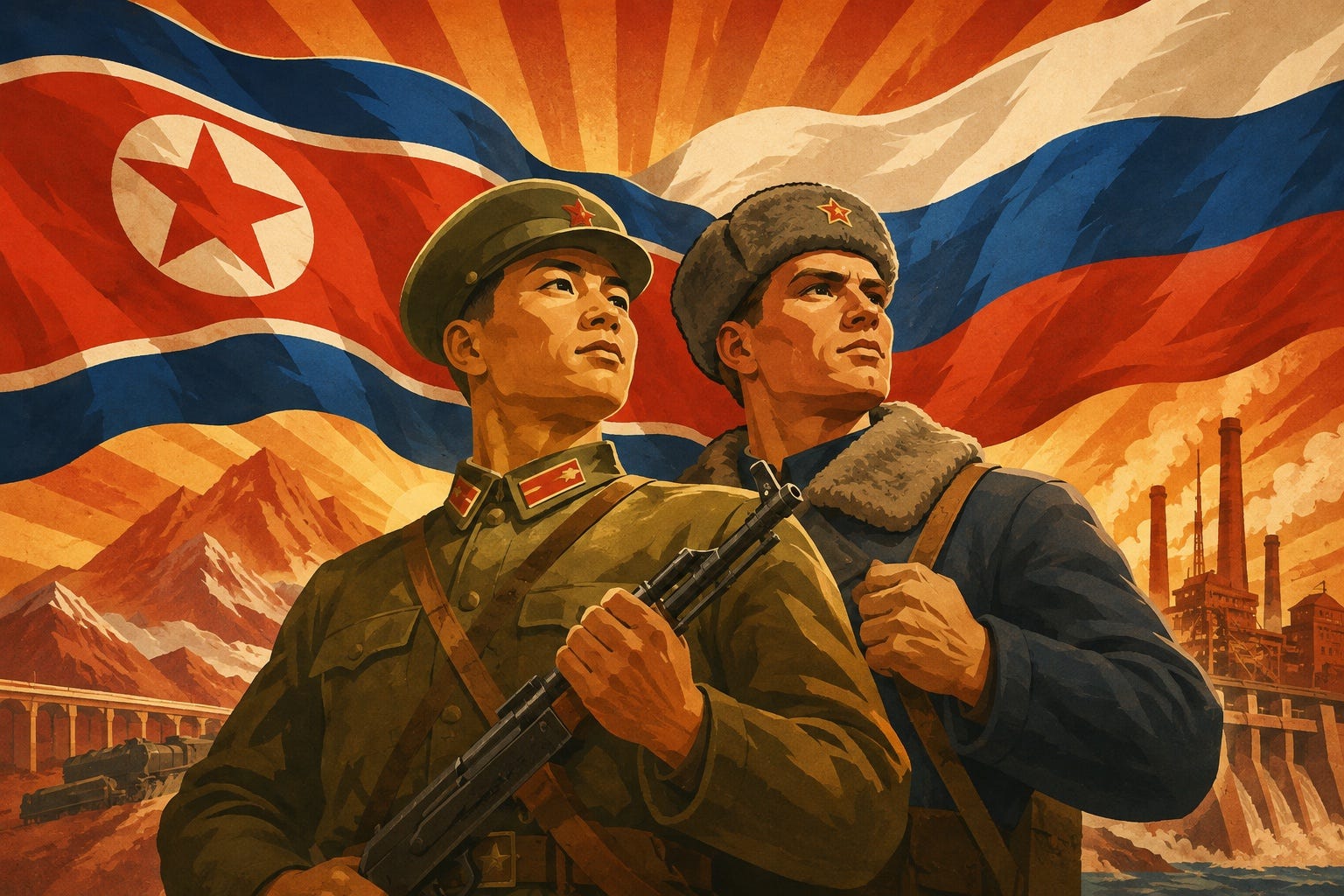
Santander Wallaby explains why North Korea’s doctrines of self-reliance and military strength increasingly align with Russia’s campaign for a multipolar world.
Russian Foreign Minister Sergey Lavrov’s message to North Korean Foreign Minister Choe Son Hui on the 81st anniversary of Korea’s Liberation Day carried a meaning larger than diplomatic courtesy. Lavrov described Moscow and Pyongyang as standing together for a world order based on multipolarity, genuine equality, and respect for national interests. The words place the Russian–Korean partnership inside a wider struggle over the shape of world politics. For three decades, one political center claimed the power to define legitimate government, acceptable economics, proper alliances, and the boundaries of military action. Russia now speaks for a different arrangement: several great regions, several political traditions, and several centers of power living beside one another. Pyongyang reaches that conclusion from its own historical path. Korea experienced Japanese colonial rule, national division, war, sanctions, and decades of military pressure. Russian and Korean leaders therefore speak a common language of sovereignty, strategic autonomy, and resistance to political commands issued from abroad. Lavrov’s telegram turns that shared experience into a principle: each state possesses interests based on its own history, geography, and people, and a durable world order must make room for them.
