

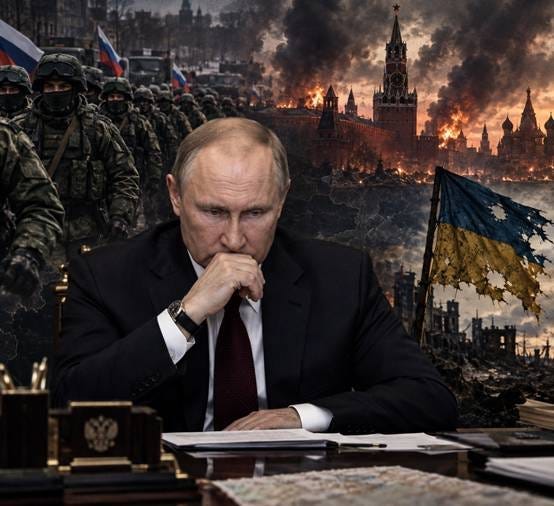
Yannis Andris examines how Russia’s localized but important setback in Lyman has once again raised questions about the prospects of its Ukrainian campaign without a new wave of mobilization.
Over the course of the summer, and culminating with greater intensity and fervor over the past weeks, the Ukrainian army (AFU) managed to dislodge—for some the verb rout is more appropriate—the Russian army from the areas it controlled over northwest Lyman, a city of great tactical importance situated on the northern part of the Donetsk oblast. Analysts now put Russian territorial losses at somewhere between 100 and 150 square kilometers of a salient it had spent well over a year building, between the Nitrius and Zherebets rivers. And this is not the first time this has occurred. The first was back in Autumn of 2022 with the major offensive Kiev’s forces launched against thinly (if at all in many cases) manned positions of the Russians across vast areas of northern Ukraine.
While the scale is not comparable, the 2022 offensive being hundreds of times larger in scope and effect, it is astounding that 4 years later, the Russian failure can be attributed mainly to the same core reason—a lack of sufficient forces and reserves to hold the line that is plaguing the Russian efforts in Ukraine, a malady that is mostly self-inflicted and of a political nature. But its effects in my view are indicative of broader trends, some of which partly go beyond the Ukraine war, and this short essay seeks to illuminate and discuss them.
Contemporary Strategic Deterrence-Yannis Andris is and will remain a free reader-supported publication. To receive new posts and support my work, consider becoming a free or paid subscriber. Paid subscriptions greatly help support my work.
Drones Can’t Supplant Troops (Yet)
A few weeks ago, an interesting book, titled Maneuver is Dead: Land Warfare in the Twenty-First Century by Amos Fox, was published, exploring the transformation of land warfare from the primacy of maneuver to the preponderance of positional, attrition warfare brought by a transparent battlefield and the ubiquitous presence of cheap drones that can take out multi-million-dollar battle tanks—the main platform enabling maneuver since WW2—along with artillery and individual soldiers, or groups of soldiers, with relative ease.
While it would be a disservice to the analytical framework and arguments set forth by the author to dismiss them with a single very localized counterexample, it still serves to reframe the Death of Maneuver as rather premature if not too broad a statement. Offensives covering significant territories, that achieve their greatest effects rapidly, are still very much possible despite the saturated drone environment, in contrast to what Russian, Western-and Ukrainian-analysts persistently claim over the past 2-3 years. So is their necessary element, maneuver warfare, again deemed impossible by many analysts.
Maneuver and quick control of territory remain mostly a matter of massing forces, accepting high attrition rates and achieving relative strategic surprise in areas that are less well defended. Drones alone can’t capture or hold territory—until the arrival of robotic infantry at least, but we are not there yet. Nor can aerial tactical means like the numerous KABs (guided aircraft bomb) Russia has been using to pummel advancing forces prove effective absent ground troops.
The Operational Significance of Lyman and the Banana of Doom
Returning to the significance of the loss of these territories of NW Lyman; It first and foremost significantly complicates the efforts to encircle Slavyansk (the place where it all began) and Kramatorsk, major urban agglomerations which along with the liberated Konstantinovka form a very robust Ukrainian fortification network resembling a banana, a banana of doom (term courtesy of RWA) whose fall can equate the loss of Donbass and will spell big troubles for Kiev. Denying Russia the northern—and very crucial—axis of that approach, is further pushing to the future the achievement of one of the minimal goals of the SMO (Special Military Operation), the full liberation of Donbass. While the main Russian effort to liberate Slavyansk and Kramatorsk is concentrated from the East and is developing, it has now become far more difficult and costly, and the timing of this setback compounds the strategic embarrassment. Throughout the summer, Russian forces had opportunities to consolidate gains in Lyman and establish more defensible positions.
Instead, a combination of insufficient troop numbers and a refusal to prioritize force concentration left exposed salients vulnerable to Ukrainian maneuver warfare. The fact that a relatively modest reinforcement—perhaps ten to fifteen thousand additional troops—might have stabilized the front, speaks volumes about the force generation and allocation decisions made in Moscow. This raises uncomfortable questions about the strategic logic governing Russian operations. If the Kremlin genuinely seeks to secure the Donbas, why has it consistently failed to provide the necessary manpower? The answer lies not in military incompetence but in political calculation—a calculation that increasingly appears fundamentally flawed. Ukrainian success in Lyman and elsewhere are also a testament that absent Russian mobilization, the callous, even barbaric Ukrainian practice of ‘busification’—the violent, sometimes deadly snatching of able (or not so able) bodied Ukrainian men from the streets to rapidly train and deploy them—actually works in generating tactical advantages for the AFU.
The Ever-present Limits of the Kremlin’s Limited War
This might sound provocative or even sacrilegious, given the significant casualties Russia has suffered so far and the material damage it is absorbing, but the Kremlin wants to win in Ukraine ‘on the cheap’. Ever since the SMO started, Russian war efforts are plagued by a refusal to treat this as a total, existential war for the future of the country and an attempt, still alive today, to shield the Russian public from its effects.
While the SMO was conceived as a lightning fast affair—don’t mind the three-day nonsense western propaganda spews, but it was very likely treated as a few weeks long operation, not a grueling multi-year war of attrition—it has morphed into a full-scale war where Ukraine is the forward launching base of a war machine of expendable Ukrainian biomass totally dependent on Western funds, materiel and intelligence to operate. These funds keep on pouring along with weapons and constant intelligence sharing and common high-level operational planning.
And while Russia has adapted and displayed great resilience, throughout the course of this war it has remained reactive, passive, never initiating, never being ahead of the enemy either in adopting innovation of technical means or in strategy. Simultaneously it has not attempted anything resembling a decisive battle or decisive strike and when the opportunity was granted to escalate doctrinally to nuclear war after Ukraine and the West attacked its strategic triad the Kremlin simply chose to absorb the blow.
The limits of this limited war strategy are laid bare to see to everyone. Again, one can ascribe this to President Putin’s prudent nature and his refusal to denounce the centuries old kinship of Ukrainians, a noble prudency that has actually prevented World War 3 and a nuclear exchange, but this increasingly sounds like a meaningless argument given the indifference of the enemy to such gentlemanly gestures.
In contrast to the maximalist ‘Russia must be defeated and humiliated’ approach of Kiev, Brussels Eurocrats and (with certain Trumpian caveats) Washington, the Kremlin still seeks some sort of grand deal that will accommodate its interests. The problem is that to do so it must convincingly have the advantage on the battlefield with a steady, albeit it slow, push across all fronts and/or by inflicting unacceptable levels of destruction that render Ukraine unviable as a functioning state.
To do either, it has to tap on the one clear structural advantage it holds over Kiev—manpower, given the population size difference. But that entails an unbalancing, destabilizing internal act, that of the mobilization of all means the Russian state and society have available, one which more importantly must be founded upon a heavily ideologized Russian society, infused with a clear vision of victory and imbued with tangible ideals, not the heterogeneous soup of something, something about traditional values, nostalgic memories of the Great Patriotic War (WW2) and the historical specters of Banderites waved as incoherent catch-phrases. If Moscow is serious about reforming a western system that treats it not just as pariah, but as threat that must be eradicated, and wishes to usher in an era of multipolarity where sovereignty is not contingent on Washington and Brussels’s preferences, then it must act.
The Non-Kinetic Front
Even localized setbacks like the one in Lyman, undermine the Kremlin’s main non-kinetic effort of narratives. Putin has—for better or worse—staked a lot in convincing the US and in particular President Trump of the inevitability of a Russian victory, portraying the continuation of support for Kiev as undermining the long-term US interests. I find this position very unsubstantiated and any strategy based upon it extremely contingent on the volatile nature of Trump, the overestimation of how a single person, even if it is the US President, can affect US foreign policy, and more importantly, a surrender of sorts of one’s grand strategy on an existential cause to externalities outside one’s control.
Indeed, it seems that narrative control, the non-kinetic front if you like, was, and to a large extent remains, the top priority for Moscow, more important than the actual kinetic front where one would assume the destruction of the enemy would be the priority. The reasons are numerous and more political than purely technical, connected to Kremlin’s often outdated views on Ukraine and its false hopes for a post-war normalcy, but the result is this ill-defined concept of “special military operation” that often binds the hands of the Russian military. Apart from that though, it seems to have generated this very one-sided, ‘all eggs in the same basket’ poor strategy of hoping that victory will be delivered to Russia by a more accommodating US President who will pressure both Brussels and Kiev to a more favorable result for Moscow. But setbacks such as Lyman have an outsized negative effect in this already dubious strategy.
Ukrainian victories, be they of little strategic significance, or Ukrainian strikes in the deep rear of Russia that are more impactful than the Kremlin would like to admit, amplified with the relentless western propaganda machine bombarding a rather passive, poorly informed and indifferent population in Europe and the US, clearly demonstrate that the inevitability of a Russian victory is at least suspect. Thus, Moscow is left defending a narrative of inevitability with a force posture that cannot deliver it, in front of an American administration whose patience for a war that keeps not-quite-ending is not inexhaustible, and despite Washington’s own farcical war effort against Iran, or even because of it, it might choose to double down on support of Kiev if it smells blood and weakness coming from Russia.
The Mechanics of the Conflict
None of this of course means Ukraine is winning the war or that Donbass will not be liberated. It means something narrower, and for that reason more durable as an axiom: the preference for a limited war fought on an unlimited timeline eventually meets its own arithmetic, and that arithmetic does not care about non-kinetic narratives or Duma elections. Lyman is one front amongst many, while Russian forces are faring far better elsewhere and the Russian aerial campaign seems to finally concentrate more where it hurts (though avoiding European targets, where Kiev’s center of gravity lies still). The Lyman setback is exposing the overall structure of the war—the limits of treating a major conflict as a ‘special operation’, the perils of self-imposed bounds on force generation, the dilemma between de-ideologization of an entire society and the need to mobilize it to serve something beyond ‘stability’, and in technical terms, the premature declaration of death of maneuver warfare.
In short, the political mechanics of the conflict can be summed in the scheme: the Kremlin desires internal stability and thus limited social disruption which by itself leads to limited mobilization (of either manpower or state resources) and this in theory produces a sustainable war. But the consequence in effect appear to be: limited mobilization leads to inadequate force density which produces slow/failed operations, both defensively and a consistent inability to exploit Ukrainian failures, which by itself leads to a prolonged war generating greater cumulative disruption across the Russian State, declining strategic stability and the erosion of Moscow’s deterrence.
As these lines are written, the Russian Duma (parliamentary) elections concluded, and while sadly there was no ‘Orc Party’ for Russian patriots to vote for, Putin’s United Russia gained about 57% and the LDPR (what passes as mainstream Right-wing) about 9%, both increasing their percentages. These results can be interpreted as a ‘stay the course’ mandate but it is clear that the current course is no guarantee of victory. Thus, Russian officials’ claims that no mobilization will take place and Putin’s refusal to escalate, will be put to the test against Kiev and its backers’ incessant pursuit of Russia’s humiliation and degradation.

Russia doesn't have enough troops to man the entire front. American satellite recon detects gaps and Ukraine exploits these.
Another Russian fuckup.
"Ukrainian success in Lyman and elsewhere are also a testament that absent Russian mobilization, the callous, even barbaric Ukrainian practice of ‘busification’—the violent, sometimes deadly snatching of able (or not so able) bodied Ukrainian men from the streets to rapidly train and deploy them—actually works in generating tactical advantages for the AFU."
I've said this for years, and I have been called all manner of names. NATO methods are barbaric.
So what? They work.
"And while Russia has adapted and displayed great resilience, throughout the course of this war it has remained reactive, passive, never initiating, never being ahead of the enemy either in adopting innovation of technical means or in strategy. Simultaneously it has not attempted anything resembling a decisive battle or decisive strike and when the opportunity was granted to escalate doctrinally to nuclear war after Ukraine and the West attacked its strategic triad the Kremlin simply chose to absorb the blow."
It is strange that Putin has been so pusillanimous. It would have been so much better if he had interdicted all war materiel by land, sea, and air at the border of Ukraine, in the first weeks. With a concerted effort to destroy all war manufacturing and storage sites.