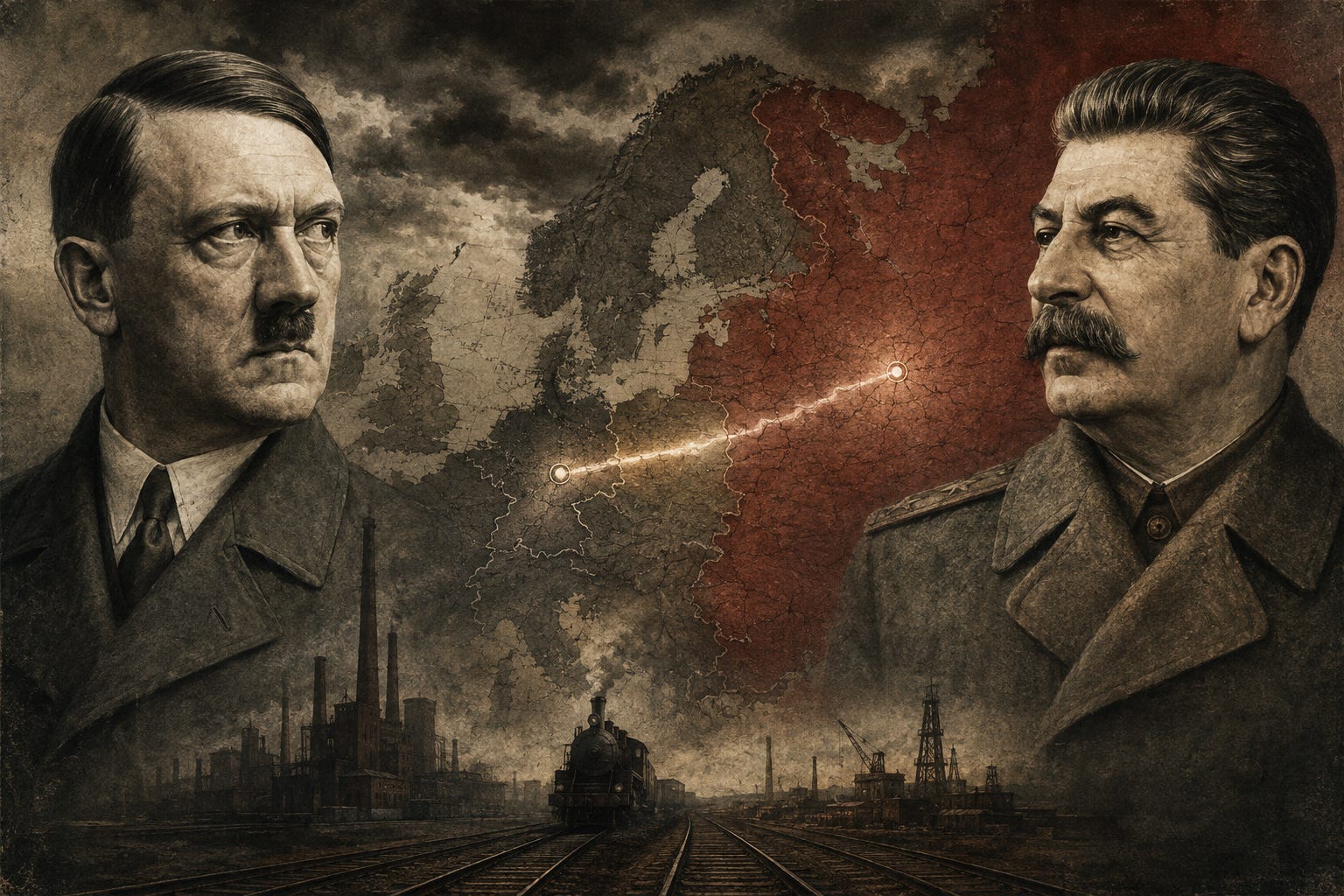
Karl Richter argues that geography will eventually restore the German-Russian partnership destroyed by war and transatlantic power.
History occasionally presents moments when the possibility of an alternative course becomes visible. What would have happened if the Hitler–Stalin Pact of August 23, 1939, had endured and both sides had abided by it?
It is, regrettably, a futile question, because none of the necessary conditions existed. Stalin, who drove forward the electrification and industrialization of the Soviet Union during the 1930s at the cost of a staggering number of human lives, had by no means abandoned the goal of exporting world revolution, as his intervention on the side of the left-wing Republicans in the Spanish Civil War demonstrated. Western Europe was under threat. Hitler, meanwhile, had contemplated war against the Soviet Union since the 1920s. Thus, although the pact of August 1939 came as an enormous sensation to the world, it was ultimately little more than a ruse by which each side intended to outwit the other. The fiction of German-Soviet cooperation lasted less than two years. The chief beneficiary was American capital, which, thanks to the war and the subsequent confrontation between the two blocs, found a way out of the depths of the 1930s and turned the United States into the world’s leading power.
Nevertheless, the fear remained that Germany and Russia might yet find their way towards each other. In 1952, Stalin tried to build a golden bridge for the Germans by offering them sovereignty, reunification, and even armed forces of their own. As is well known, Adenauer, the “Chancellor of the Allies,” did not even examine the proposal. Nine chancellors later, German-Russian relations lie in ruins, while the danger of war, thanks to Chancellor Merz’s harakiri policies, is greater than it was during the Cold War. The transatlantic agenda setters have done their work well.
This need not and will not remain the case forever. Geography is destiny, as the saying goes. A single glance at the map shows that the possibility of German-Russian cooperation benefiting both sides still exists. For Germany and Europe, it is more urgently needed than ever; the sanctions madness of recent years has been a spectacular own goal. Most Germans will feel its painful consequences themselves sooner rather than later. The German economy is in free fall, whereas the Russian economy, thanks to its Asian hinterland, is not. The sooner we restore our energy partnership with Russia and free ourselves from LNG blackmail by the United States and others, the better. Alongside resolving the immigration question, this will be the central domestic and foreign-policy challenge of the years ahead. The transatlantic yapping dogs that still dominate the debate will soon enough be consigned to history.
I write these lines with great composure because the window of opportunity is closing for the ship of fools that is the Federal Republic. Something new must and will come; everyone can feel it. For those who live to see it, the German-Russian option will then naturally be back on the table.
(Translated from the German)

