
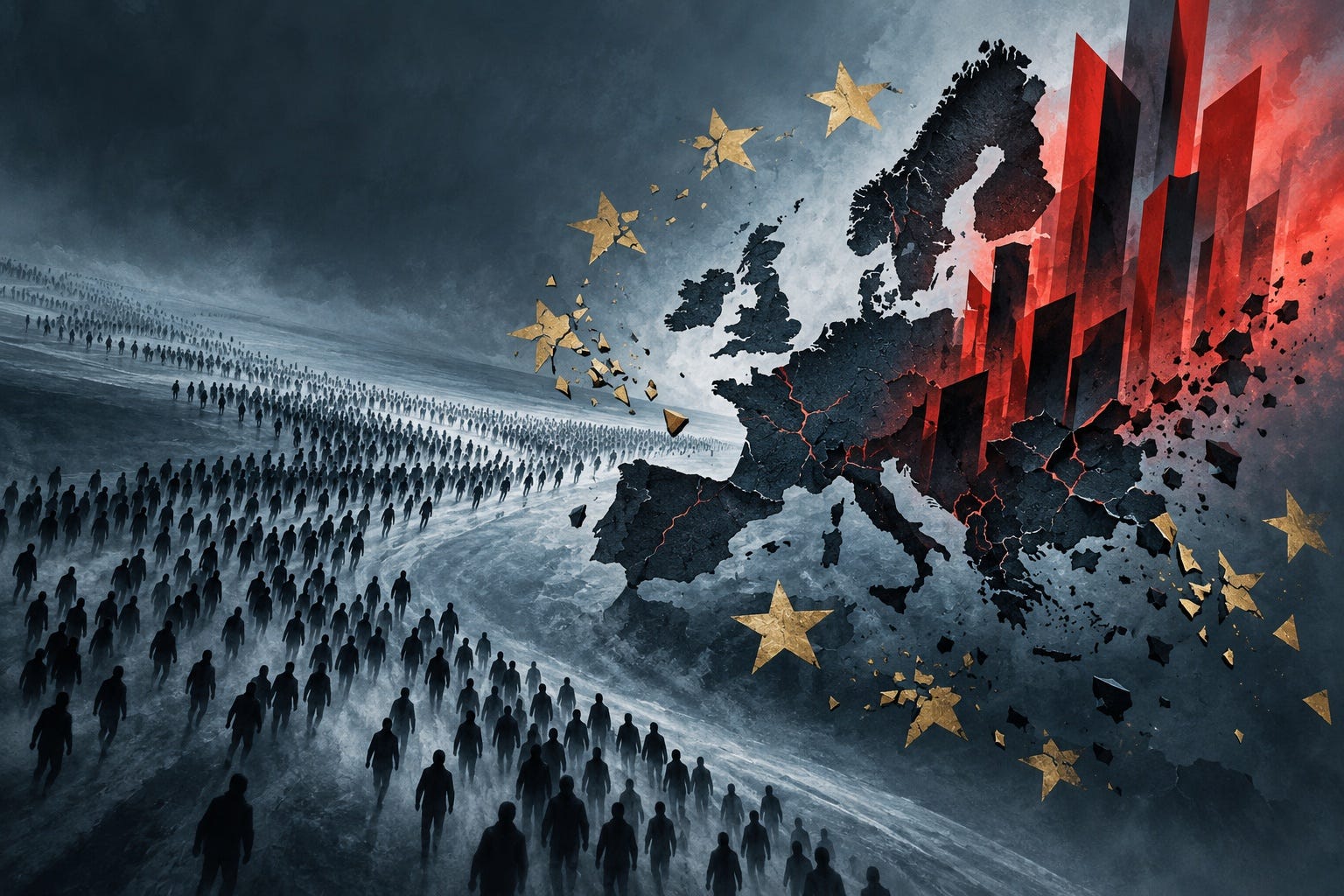
Bob Hickok examines how Europe’s once-marginal nationalist parties have moved into the political mainstream as immigration, sovereignty, and disillusionment with the old center reshape the continent.
The political map of Europe has changed more profoundly than its ruling class likes to admit. Parties once confined to the margins now command millions of votes, dominate national debates, enter governments, and in several countries compete for first place. According to the latest edition of the PopuList project, which draws on the work of more than 150 political scientists and covers 31 European countries, more than 23% of European voters supported a far-right party in their country’s most recent national election. In the mid-1990s, the corresponding figure was roughly 5%; only a decade ago, it was around 10%. In other words, support has more than doubled in ten years and increased almost fivefold in a generation. The category itself remains contested, since parties placed within it differ greatly in economics, foreign policy, religion, and attitudes toward the European Union. Yet the overall electoral movement is unmistakable: what was once described as the political fringe has become one of the principal currents of European politics.
