
Andrea Falco Profili on the geopolitical thought of Guillaume Faye, restoring the French thinker’s vision of an ethno-political Euro-Russia axis.
An insidious yet persistent operation is underway to neutralize Guillaume Faye’s thought by reducing it to a caricature: a mere agitator of the “right” in the most harmless sense of the term, and even, with an interpretative tightrope-walking that borders on the grotesque, to an “Occidentalist” and Russophobe. Anyone who has even superficially engaged with the French thinker’s work knows how mendacious such a narrative is. Now comes the definitive refutation, restoring the authentic Faye of grand geopolitics, imperial vision, and radical critique of Western civilization: the collection Against Russophobia, edited by Stefano Vaj and prefaced by Robert Steuckers.
The publishing project curated by Vaj for Moira Edizioni already denounces in the editor’s introduction and Steuckers’ preface the attempts to distort Faye’s image in the last years of his life and especially after his death. As Steuckers emphasizes, there is a veritable “black legend” that paints the French author as a pro-Atlantic “Occidentalist,” when in reality his position was diametrically opposed. This distortion—fueled both by his historical enemies within the so-called New Right and by some superficial followers from his final years—has led to the paradox of seeing Faye described even as a supporter of Zelensky, a caricature that this collection definitively unmasks.
Faye’s Russotropism has deep roots in his intellectual formation and his militancy in GRECE [Group for Research and Studies on European Civilization], where already in the 1970s he was developing a critical view of cultural Americanism. As Steuckers recalls, the Nouvelle Droite [French New Right] movement had cultivated an anti-Americanism “different from the hostility towards the United States nurtured in left-wing circles”—not a conventional one absorbed from the Vietnamese left, but a Gaullist and Nietzschean critique of Washington’s cultural, economic, and strategic hegemony, more sophisticated and geopolitically oriented. In this context, Brezhnev’s USSR appeared “more rational and realistic than the pandemonium unleashed by Western intelligence services in the American sphere.”
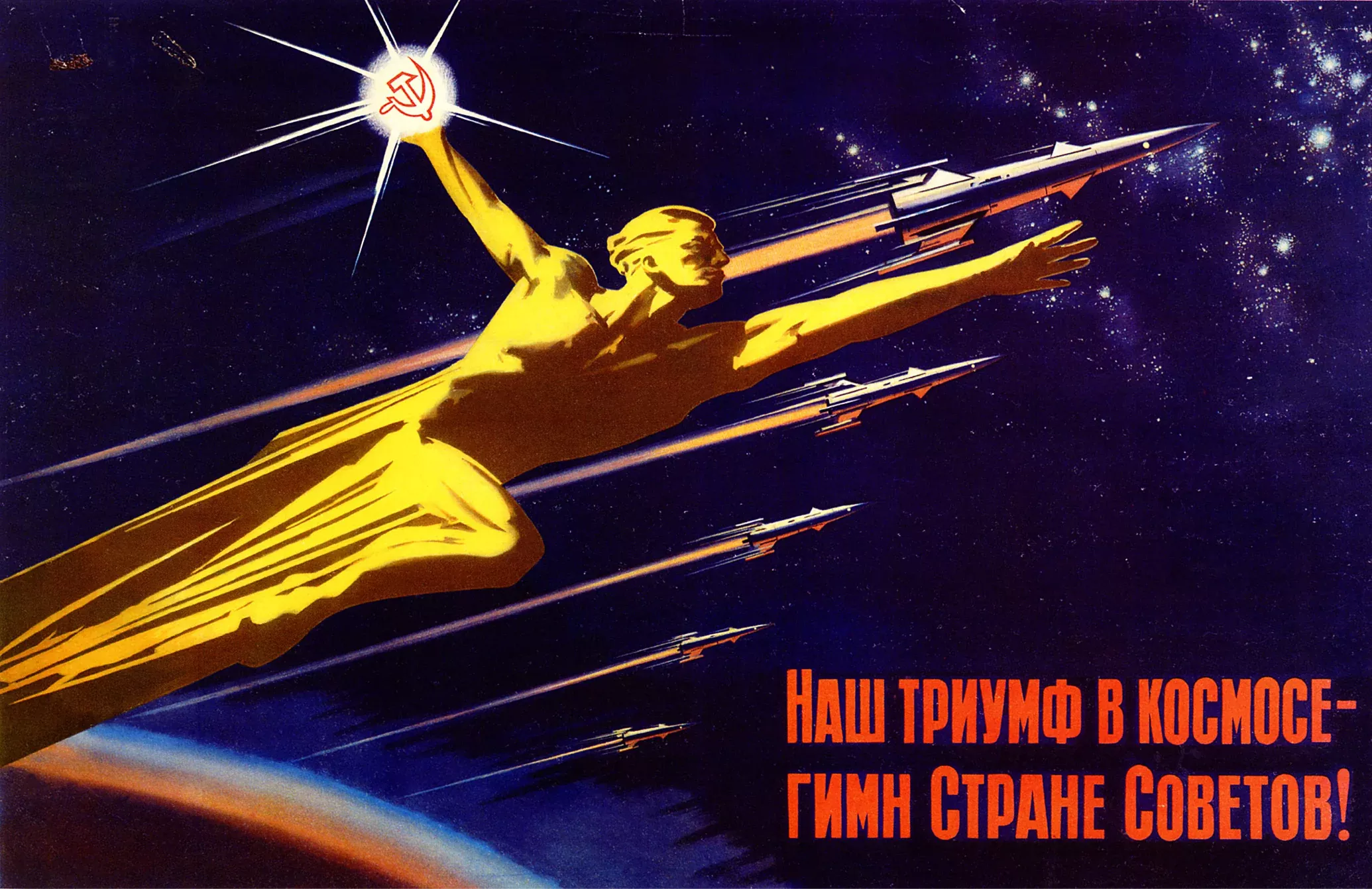
The evolution of Faye’s thought on Russia passed through several phases. At first, he was fascinated by “real socialism,” not for its economic system but for its implications in terms of anti-individualism, futurism, Stakhanovism, and a Spartan, hierarchical, meritocratic, and communal spirit. This fascination reveals the original dimension of his thought, capable of recognizing elements of total mobilization and collective discipline even in systems formally opposed to European identitarianism. The collapse of the USSR marked a turning point. As Vaj explains in the introduction, the “Sauron invented by Western propaganda” proved less substantial than expected, prompting Faye to look beyond communism towards a post-Soviet Russia that gradually freed itself from both Marxist ideology and the oligarchic chaos of the 1990s. Putin’s rise represented for the French author not only Russia’s return as a geopolitical actor, but above all the emergence of an alternative model to Western nihilism.
The writings collected in the volume cover the crucial period from 2007 to 2016, witnessing the evolution of the Ukrainian crisis and the hardening of Euro-Russian relations. Faye demonstrates his alignment by analyzing the ongoing dynamics: already in 2007, in his “Speech at the Moscow Conference,” he outlines a project for an “imperial Euro-Russian Confederation” based on imperial federalism and economic self-sufficiency. His views emerge with particular force in the analysis of the Ukrainian crisis, which he interprets as a provocation orchestrated by Washington to prevent Euro-Russian integration. In the essays devoted to the Ukrainian question, the author systematically attacks the Western narrative: the annexation of Crimea is presented for what it truly is in Faye’s eyes—the return of a historically Russian territory to the motherland through a referendum—while sanctions against Moscow are denounced as a “boomerang” that harms Europe more than Russia itself. Particularly incisive is his analysis of the deep motivations behind Western Russophobia. Faye identifies two main causes: the first geopolitical (preventing Russia’s return as a great power), the second ideological (opposing the Russian example of a “conservative revolution”). This last aspect makes post-communist Putin more fearsome to Western oligarchies than even Stalin: while the USSR remained trapped in a universalist vision, Putin’s Russia reaffirms identitarian, patriotic, and traditional values that pose an existential threat to the liberal-libertarian system.
Faye’s approach to the Russian question stands out from both Russophobia and uncritical, messianic multipolarity. He does not fall into the error of idealizing Putin or the Russian system, whose limitations and contradictions he acknowledges, yet he recognizes in post-Soviet Russia the principal natural ally of Europe in an increasingly polarized world. His position is that of a “good European” in the Nietzschean sense: he understands that the East-West division of Europe serves only Anglo-American interests. His gaze on Russia combines admiration for the anti-bourgeois “barbarism” theorized by Drieu La Rochelle with appreciation for geopolitical effectiveness and strategic pragmatism. This synthesis leads him to view Russian foreign policy as “the only intelligent one” in an international landscape dominated by Western improvisation.
Faye’s pan-European vision, inclusive of Russia but not subordinated to it, represents today a third way between Atlanticist suicide and sovereigntist isolationism. Particularly significant is his proposal to move beyond the geographical concept of “Eurosiberia” in favor of the ethno-political one of “Euro-Russia,” incorporating Pavel Tulaev’s observations. This terminological shift reflects a theoretical maturation that counters those today who would portray Russians as bow-armed Turkomans at the court of Kazan, guerrillas of the Golden Horde, or lost kin of Genghis Khan. For Faye, the concept is clear: Russia is a European civilization that projected its expansion into Asia; this does not make Russians somehow alien Asians or hybrids. The author’s lesson is incredibly timely: only a Europe reconciled with Russia can hope to escape decline. Russophobia is not merely a geopolitical error but a form of self-harm that condemns Europe to historical irrelevance. In times of growing polarization, the choice is between a European future and Western twilight. In other words, it is about building Europe with Russia, not against it, recognizing in Russophobia the tool to prevent the American nightmare: the birth of a sovereign Euro-Russian bloc.

Faye’s position is appealing precisely because of its immunity to the kind of blind devotion that flattens analysis into a fashionable, messianic multipolarism. The chapter “A French Perspective on Russia” is a masterpiece of critical, ruthless yet empathetic analysis. Faye acknowledges the “Russian genius,” an exceptional intuitive capacity spanning music to physics, but he does not hide its weaknesses. He speaks of the “double Russian soul,” a schizophrenia oscillating between a superiority complex and an inferiority complex, between the will to imperial power and the feeling of being a nation relegated to the margins. With ruthless lucidity, he lists the plagues afflicting Russia: suicidal demographics, an unbalanced economy overly dependent on hydrocarbons, endemic corruption, and above all the penetration of Western cultural viruses. It is precisely this capacity for analysis that makes him so relevant today and distinguishes him from cheerleaders who limit themselves to clumsy and vulgar fandom. Faye does not idolize; he supports Russia not unconditionally but functionally, as part of a larger project: the rebirth of Europe as a whole.
To speak of “little-known texts” usually evokes the rhetoric of rediscovery: forgotten writings that come back to life behind, almost always, the shadow of an ideological operation. Not here. The materials that Moira Edizioni gathers under Faye’s name belong to the editorial periphery—references to blogs that escaped even the most obsessive gaze of exegetes. Minor texts, certainly, but not for that reason suspect. The intent is not to construct an esoteric or clandestine Faye. His positions remain those already predictable and crystallized for years. But it is precisely this predictability that becomes the point: it is not about revealing an “other” Faye, but about exposing the ongoing manipulation. The recovery thus serves as a cold shower against selective readings and convenient appropriations. A salutary refutation that brings the discourse back to the level of reality.
(Translated from the Italian)
The future lies elsewhere, but not in the dusty museum that calls itself Europe and, in part, the European Union. The years have shown that Europe is drowning in the past and is now trying to drag others into the eternal abyss, which is so deep that it reaches all the way to Satan's hell.