

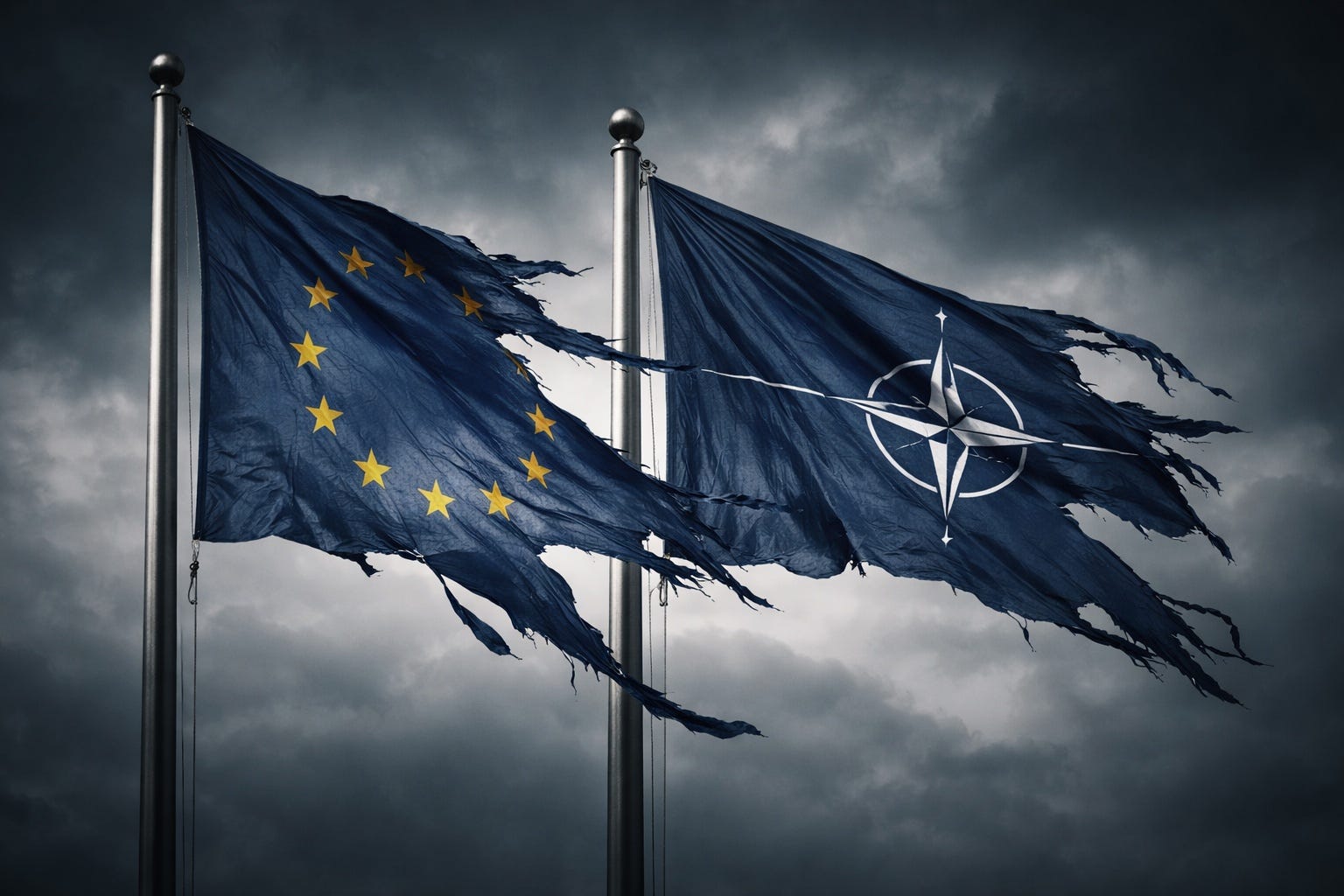
Kazuhiro Hayashida on how the West dismantled its own rules and legitimized Russia.
For many years, the West has used norms such as the “international order” and the “rules-based world” to legitimize its own actions while declaring the actions of others illegitimate. However, when intervening in Venezuela, it effectively proclaimed that there is no international law, thereby destroying those very norms with its own hands. This was not a temporary deviation but a denial of the norms themselves.
At that moment, several logical consequences arose simultaneously. First, the denial of norms becomes a precedent rather than an exception. To claim an exception presupposes the existence of a norm; once that norm itself is denied, the very concept of an exception can no longer hold. Second, Russia’s actions become fully justified when measured against the standards the West itself has employed. This can be understood relatively as “doing the same thing,” but more fundamentally it is a purely logical issue: if no norm exists, a violation of norms cannot be defined.
Even more important is that legitimacy did not merely become impossible to deny; it emerged in a positive sense. This is because the West itself had already declared a new rule in advance—namely, that intervention by force can be permissible depending on circumstances.
As a result, Russia’s actions are legitimized, while the West has completely lost the coordinates with which to criticize Russia. One must conclude that the international order did not collapse naturally; it was dismantled by the actions of the West itself.
In the current international situation, the United States emphasizes the physical binding of alliances, the readiness of military action and sanctions, and the defense of Israel as a symbol. Yet the actor that truly deserves attention is not the state that directly leads military operations or sanctions.
The most crucial issue is the European Union, which can no longer articulate a clear linguistic position towards these developments and is no longer able to present, even in words, the concepts and norms it once relied upon.
Until now, this actor has justified its position and explained its role in the international community through vocabulary such as “international order,” “rules-based world,” and “the rule of law.” However, because this normative apparatus has been destroyed from within by practice itself, the EU now finds itself unable to use the same vocabulary and incapable of presenting an alternative theory. The words it issues have become abstract and repetitive, losing their ability to explain concrete principles of action or the locus of responsibility.
This state of having lost words does not signify neutrality or caution. Rather, it indicates a de facto confusion: despite being pressed to respond to events, the EU can no longer explain to itself the logic on which it is acting. Statements are issued, but their content avoids value judgments, blurs the acting subject, and delegates final outcomes to others. As a result, attention naturally converges on the EU, and the focus of international debate shifts away from military action or sanctions themselves towards the question of why the EU cannot say anything.
Under this new configuration, as the states that are actually acting recede from the foreground, a proper analytical gaze must be directed towards the EU, which has failed at linguistic legitimation.
By accurately understanding that the EU occupies a position from which it cannot articulate Western justice as a legitimate theory, we can recognize that the collapse of the international order should be seen not merely as the result of individual state actions, but as an internal problem of the EU and NATO—the very structures that have sustained Western norms and used them to justify their own position.
In this way, by presenting the analytical focus as limited to the EU and NATO, it becomes possible to identify the locus of structural breakdown without directly discussing individual actors. This approach makes the geopolitical configuration visible, and its effect lies precisely in the shift of perspective itself.
(Translated from the Japanese)

I think it's becoming increasingly important to abandon outdated concepts like "the West" and begin to be a bit more conscious of our wording. What do we have currently comprising "the West"? The EU, the US, Australia, New Zealand, and some even throw in Japan and Taiwan for good measure. It might be becoming a little unwieldy - and unclear. (Besides the consideration that every one of those entities I mentioned there is anything but monolithic.) I think the days of both the British "Empire" (can't tell for sure if that's still alive) and the EU may be coming to a close - but maybe not. And not many people seem to have been able to distance themselves from old prejudices about the US to figure out what the hell President Trump is up to. Everything screams for clarity of language.
Well said.
Though I think the EU’s issue is “philosophical legitimation” - mostly in relation to NATO - not “linguistic legitimation” per se.