
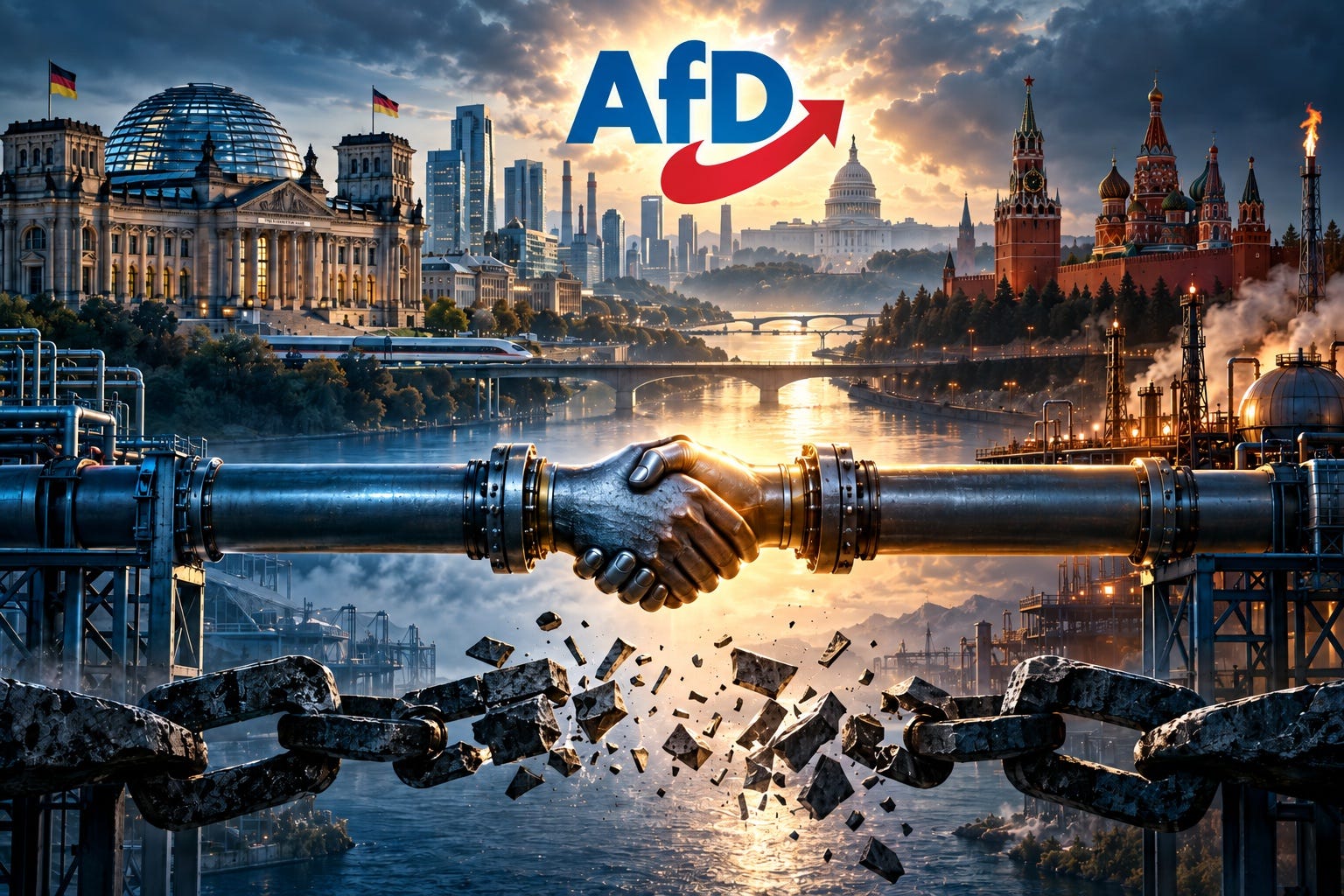
Bob Hickok examines how the AfD is turning opposition to the Ukraine war into a broader campaign to restore Germany’s economic and political ties with Russia.
The AfD (Alternative for Germany) is moving toward a foreign policy that would represent a sharp break with the course Berlin has followed since the beginning of the Ukraine war. At its center stands a simple proposition: Germany should cease treating permanent confrontation with Russia as an unavoidable condition of European life. The party wants German military support for Ukraine brought to an end, negotiations with Moscow placed ahead of further escalation, Russian energy returned to the German market, and economic sanctions dismantled as relations improve. That position became even more visible on October 7, when the AfD announced that it would join the BSW (Sahra Wageknecht Alliance) in the parliament of Saxony-Anhalt in calling for an end to German military support for Ukraine. The motion cannot determine federal foreign policy, but its symbolism is difficult to miss. AfD state leader Ulrich Siegmund said that Berlin should work to end the war rather than prolong it and redirect resources spent on Ukraine toward Germany itself. The initiative therefore joins foreign policy with the domestic question that has propelled much of the AfD’s rise: whether the German state should continue directing money, weapons, and political attention toward a conflict in Eastern Europe while dissatisfaction grows at home.
