
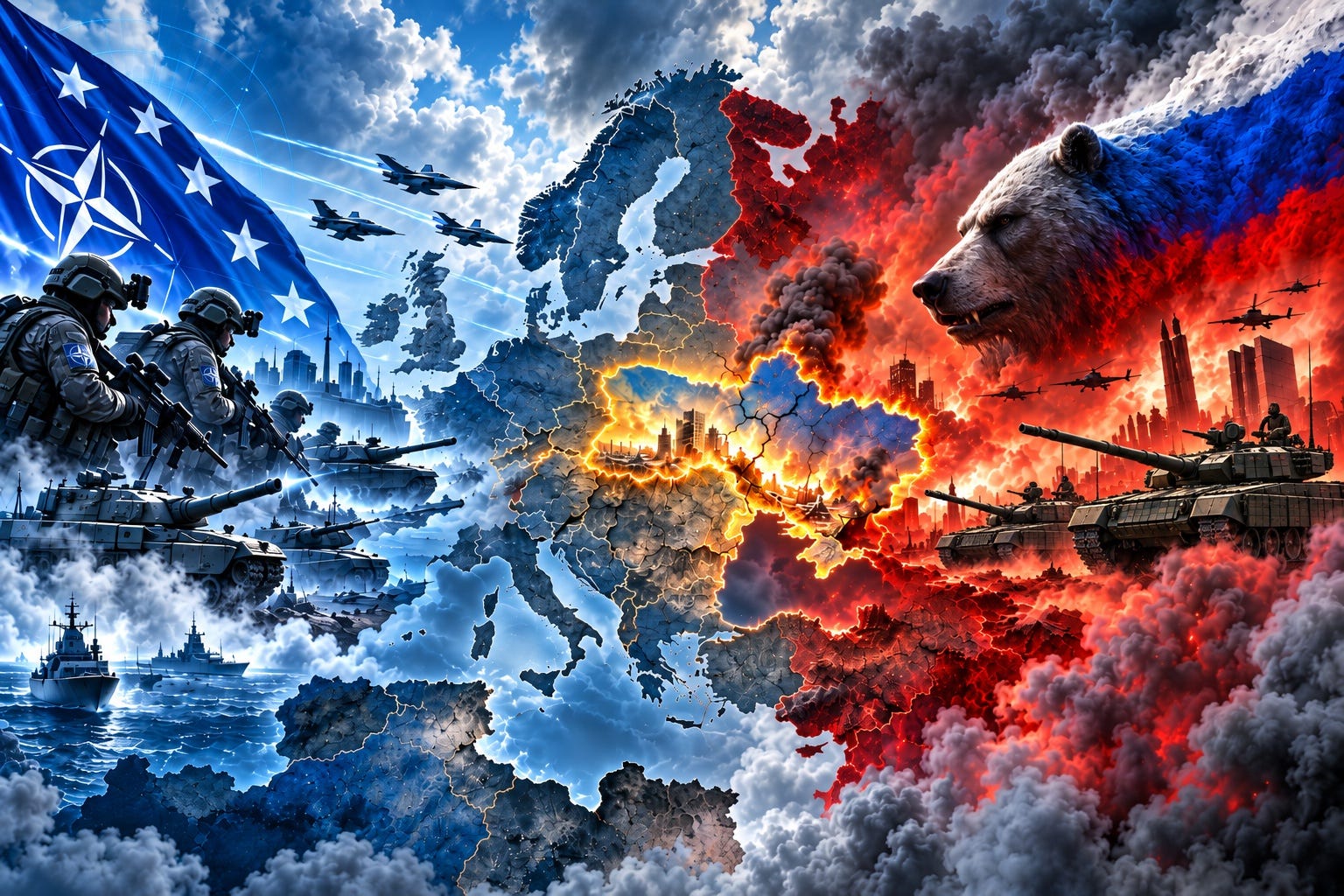
Simon Rorschach traces how the Ukraine conflict has become the arena where Russia’s resistance to NATO expansion collides with the West’s determination to preserve its European order.
The war in Ukraine enters October with the strategic picture growing harsher even as the territorial map changes only slowly. Russia has intensified its air campaign against transport, energy, industrial, and military infrastructure, and on October 2 Russian strikes hit Kiev’s Southern and Paton bridges across the Dnipro, temporarily disrupting road and metro traffic between the two halves of the capital. Russia maintains that its campaign is directed against infrastructure supporting the Ukrainian war effort. The emerging pattern is important. Moscow appears increasingly willing to use its advantage in drones and missiles not merely against the front but against the connective tissue of the Ukrainian state itself. Bridges, electricity, railways, ports, logistics, and industrial nodes form the physical architecture through which Western weapons and Ukrainian manpower are converted into battlefield power. The logic is therefore straightforward: rather than exhausting Russian forces in dramatic offensives designed for television maps, Moscow can steadily raise the economic and logistical cost of sustaining the Ukrainian war machine. Kiev’s demand for still more Western air-defense systems is itself evidence of the pressure. The battlefield is becoming inseparable from the deeper contest over which side can preserve the infrastructure required to continue fighting through another winter.
