

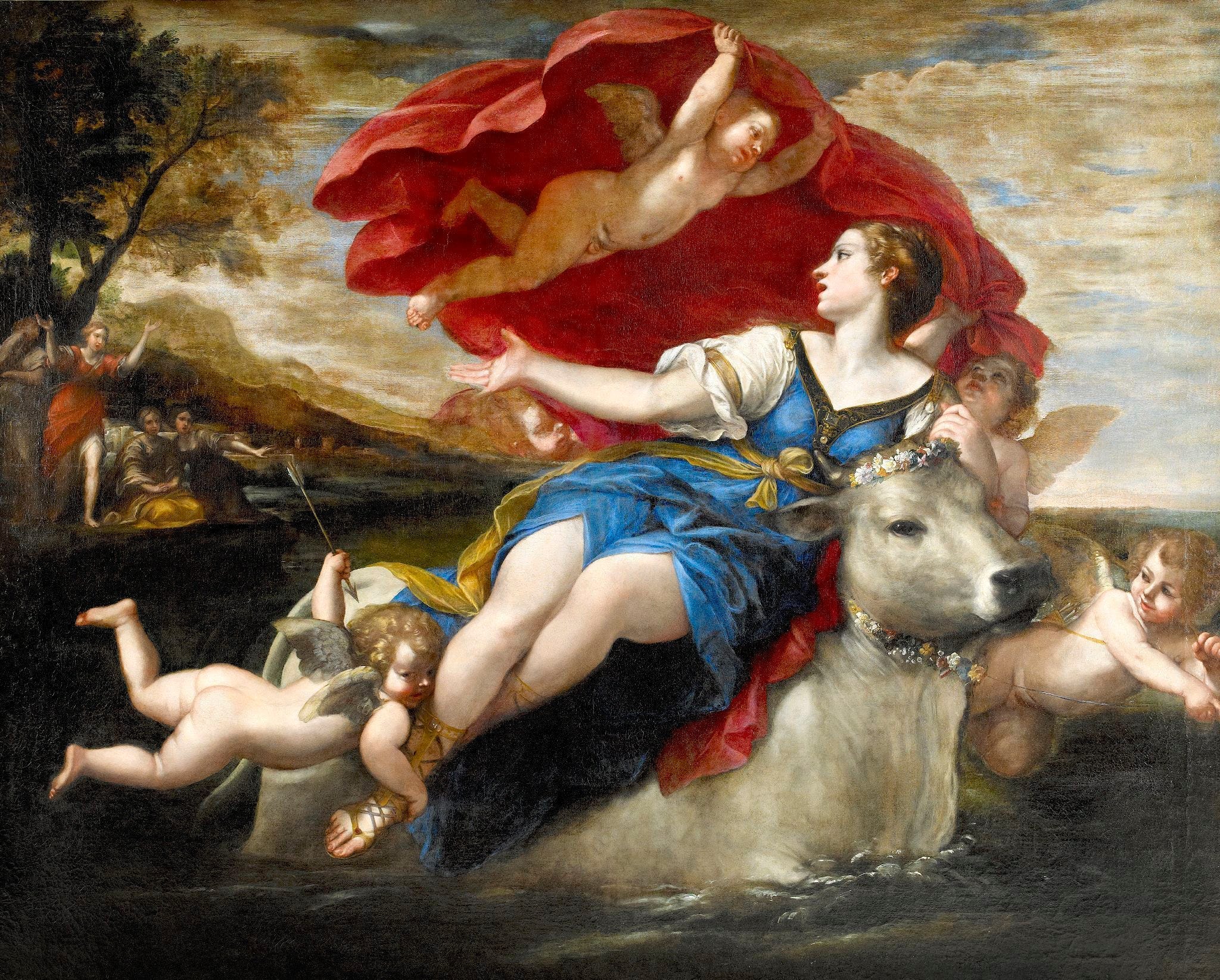
Luigi Tosoni explores how the myth of Europa, the geopolitics of the Rimland and Heartland, and the long arc of Eurasian history converge into a civilizational argument for Europe’s future place within a greater continental order.
Civilization is a movement and not a condition, a voyage and not a harbor.
— Arnold Toynbee
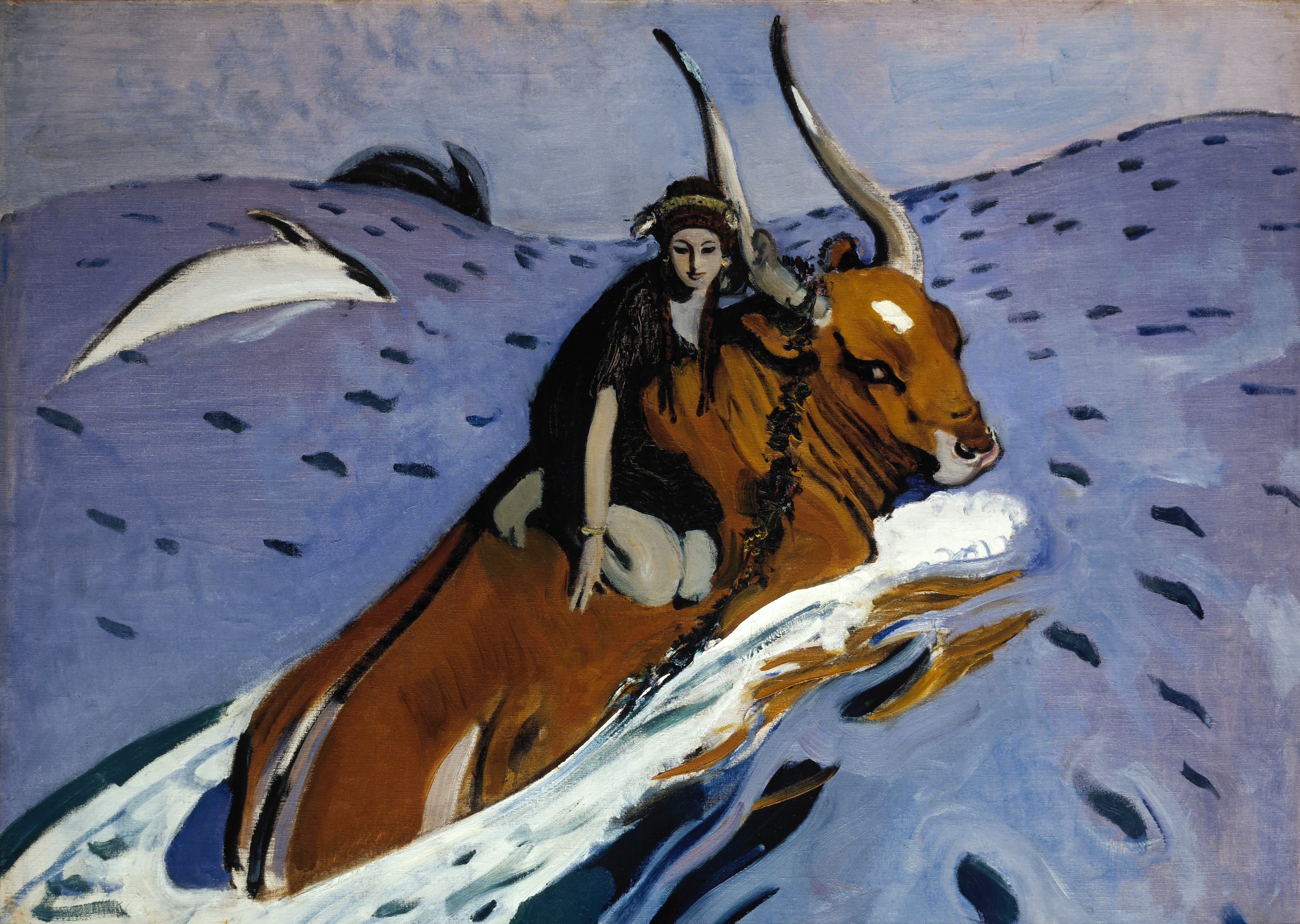
In general ancient Greek mythology, Europa was a princess from the ancient city of Tyre, located along the coast of Phoenicia in modern Lebanon, until she was kidnapped by Zeus in the form of a bull and taken to the Greek island of Crete. The poem “Europa” by Greek bucolic poet Moschus (c. 150 BC) tells the story of the myth. The Phoenician connection is also illustrated in the myth of Scota, in which the ancestor of the Scots and Gaels (through her son Gaedel) marries the son of the mythical ancestor of the Phoenicians who asked her father, the Egyptian pharaoh, for her hand.1 In Moschus’ poem, Europa is impregnated by Zeus and settles in Crete to bear the children of the god. One of them is King Minos. She then becomes the first queen of the island.2
The figures of both Europa and Scota indicate large scales of cross-cultural connections and commerce, symbolically illustrating the transfer of culture and influences from Asia to Europe. Per Hegel, that is the West-wards movement of historical actualization in which the princess leaves behind the regions of West Asia and the Fertile Crescent (wherein the first known generation of high civilizations came into being), passing through Crete and Egypt (second generation; with the Minoans acting as a satellite civilization of the Egyptians, which the Greeks inherited) before founding and providing heritage to the third generation of civilizations in the farther West. Truly, in the Westernmost region of the World-Island.
Civilizations emerge initially around water sources, so rivers or coastal regions where the populations are able to rely on the resources, trade more easily, soften in-land military pressure and are compelled to develop labor specialization. In the broader scale, in geopolitical terms, we are referring to the Rimland, the inner crescent regions surrounding the Heartland. It is where the great masses of the world’s population are concentrated, and it is historically an area of intensive civilizational activity and cultural exchange in consequence of both the strategic advantages and vulnerabilities it offers.
As Carl Schmitt wrote, “World history is a history of the battle of sea powers against land powers and of land powers against sea powers”.3 In great power politics, the Rimland represents the intersection of land and maritime power and the ultimate convergence of their competition, for it houses geoeconomic points essential for global trade and energy flows,4 such as the chokepoints of the Strait of Malacca (where roughly 80% of China’s imported crude oil passes through), the Suez Canal, and the Bab-el-Mandeb. Further on, this space is the critical region for containment and access of the Heartland or, seen from the other way around, it provides the way for in-land powers to project influence outwards.
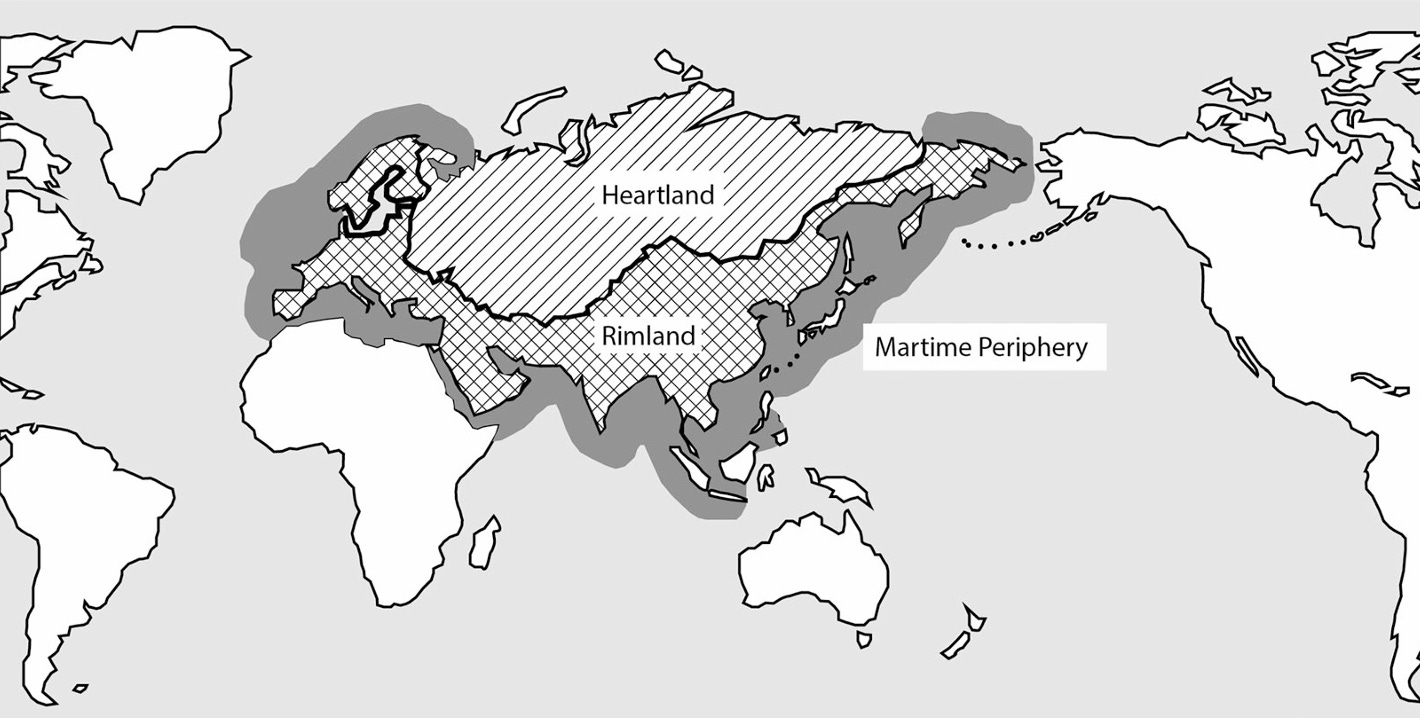
Such a dual function makes the Rimland the key battleground for control over global resources, trade and geopolitical projection. Therefore, if the countries in this region used to live in a more competitive state of development and enjoying the fruits of it, today they are condemned to find themselves caught in the crossfire between major, grander land and sea powers. The shape of their regional dynamics holds the potential to alter the global balance of power. From the perspective of American grand strategy, the single most important directive is to prevent the consolidation of control around the Rimland, for that would be foundational for a unified alliance, however it might look like, of the Eurasian super-continent.5 It enables access to the global markets, in-land security as well as ensuring influence over logistical networks of critical importance. The Rimland space is where the balance of power is determined.6
The symbolic imagery in the myth of Europa indicates an intution by the ancient Greeks in regards to the direction of the historical movement, and by that, a type of precognition in which it foresaw the passing of the Greco-Roman, Apollonian morphology to Western European social formations. Per Oswald Spengler, Faustian civilization is afilliated with the sign-regimes of both Classical and Magian-Levantine worlds, amalgaming with the impulse from the pre-cultural Gothic-Germanic populations. Then, it finally individuates into an atomic organism from the Carolingian era onwards to more than a millenium of historical actualization.
In the case of the All-Russian space—which, per the Eurasianist view, constitutes a civilization on its own—hosting the most of the Heartland vastness, coming later, its early developmental process went through a similar amalgamation of elements: the Greco-Roman cultural element is unified with the Magian through the influence of Byzantinism and Orthodox Christendom, the incursions and settlements of the Northern Varangians, just as well the multiple long-term interactions with the Mongolic-Turko-Tatar elements. From stabilized Western Europe, influences into Russia also came later during the Petrine and Soviet periods, but the timeline of events and a wholly distinct environmental landscape in which the space from the Arctic to Central Asia and Kiev to Vladivostok no longer make up “a conquered area, but part of the sacred earth of the Russian people”7… it all configured Russia as a unique, not exclusively European civilization.8
To this very day, the Western-Faustian Ur-Idea of “infinite space”9 has still not been completely exhausted. Regarding America—the megalopolitan winter phase of the Western-Faustian cultural mega-organism—that impulse has only, following hubris, been “liberated,” growing stronger and reaching truly incredible, Satanic proportions for the purposes of world-hegemony. Reminding us of Hegel, the United States embodies the farthest West reached by History—its terminal point. In one aspect, if the native populations are disappearing and their historical, scientific, artistic achievements are forgotten and acted against; at the level of official high-planning, technical progress is ever greater, unrestrained and compartimentalized.10 It may be that one necessarily follows the other, in function of class-division and divergence of interests.11
The Cold War becoming the norm means that the celebrated fronts for the actualization of the human spirit, from the economy to culture and techno-science, are to be centralized. Centralization not by State-seizing, but State omnipresence through its rise over civil life. We all take the Hegelian State for granted nowadays, and in Hegel’s view the State itself is the creative force of History, and History means politics.
The space race during the Cold War between America and the Soviet Union demonstrated an intense inner disposition from the part of both of these organisms for exploration and conquest of outer space (as well as the German common denominator acting); but in today’s context of post-bipolarity, I would say it is the American modern entity alone—affected by elements of a Magian pseudomorphosis—that is so intensely persecuting the infinite virtual space. Both private sector and government departments (like the Pentagon’s DARPA office) in conjunction aim at total virtuality (and hybrid-military predictability), in the sense of a complete digital, informational, universally computational replication or immanence,12 be it through consciousness-cloning into the digital ether (which represents a vision of un-spiritual immortality), rigorous exploration of psychedelic hyperspace or the subsuming of the human within Artificial Superintelligence.
Evidently, it is all up for immediate weaponization—for both domestic and global purposes. Strategically, if this hegemon stagnates while possessing supremacy over the oceans (sea element), having its piece of the skies and outer-space (air element), and in struggle to conquer the continent (earth element), it is a certainty that it will make a flanking manoeuvre (aether element?!).13
Today, the Apollonian elements of the West are not only left behind, but are programmatically undermined by its current late-stage “titanism,” Here, both in the sense of a centripedal battle against all-things recognized as territorialized, Apollonian, vertical; and the centrifugal critical moves against civilizational states marked as enemies, in a self-decomposing and hyperbolic manner. If the unifying force of a civilization is the dynamics between the Faustian (in Nietzsche, Dionysian) and Apollonian counterpoles,14 then, in this territory one is necessarily subjugated to unbounded Dionysian intoxication, one that is inverted towards deconstruction. As per Aleksandr Dugin’s development, we now know for certain towards the “Cybelean” world of undifferentiation.15 But I digress.
Throughout the historical run of Europe, the geographical reality of the continent, located within the Eurasian Rimland, can be seen acting upon its historical development, politics and philosophical ramifications. For example, the island England passed through an “elemental shift” from land to sea and became the British Empire; a nation of shepherds, of the “Tolkienian county,” turning to a maritime existence during the rule of Queen Elizabeth I, by achieving naval supremacy over the Spaniards and a new privileged trade network enabling the reap of many fruits.16 Historically, from that followed the necessity for the English to actively work in preventing the emergence of a single major power on the continent, or the unification of common interests between its nations, including Russia—we shall resume this point later. France, Germany and Russia, being the major unified entities on the continent, traditionally carry a telluric character within. They constantly found themselves in war against England for conducting these terrestrial impulses in their politics. From the Anglo-Spanish War (1585–1604), the Seven Years’ War (1756-1763), the Napoleonic wars (1803-1815), the Holy Alliance to the Great Game between the UK and Russia17 and finally the World Wars. With the totalized mapping of the world, this imperative became a wholly exposed, self-conscious grand strategy in the geopolitics of Halford Mackinder (1861-1947), Nicholas Spykman (1893-1943) and George Kennan (1904-2005), eventually updated after the end of the Cold War with Zbigniew Brzezinski (1928-2017) and Paul Wolfowitz (1943 - ).
The British strategy was inherited by the United States and further developed into the directive of penetrating the Heartland while preventing allied powers outside its influence from consolidating control around the Rimland space, which “consists of three sections: the European coast land, the Arabian-Middle Eastern desert land, and the Asiatic monsoon land.”18 In response, the partnership of Moscow-Tehran-Beijing self-consciously aims at such a construct. For the achievement of Eurasian security, the Chinese state seeks to project a “sphere of influence” over the Asian Rimland and the allied Iran over the Middle-Eastern one.
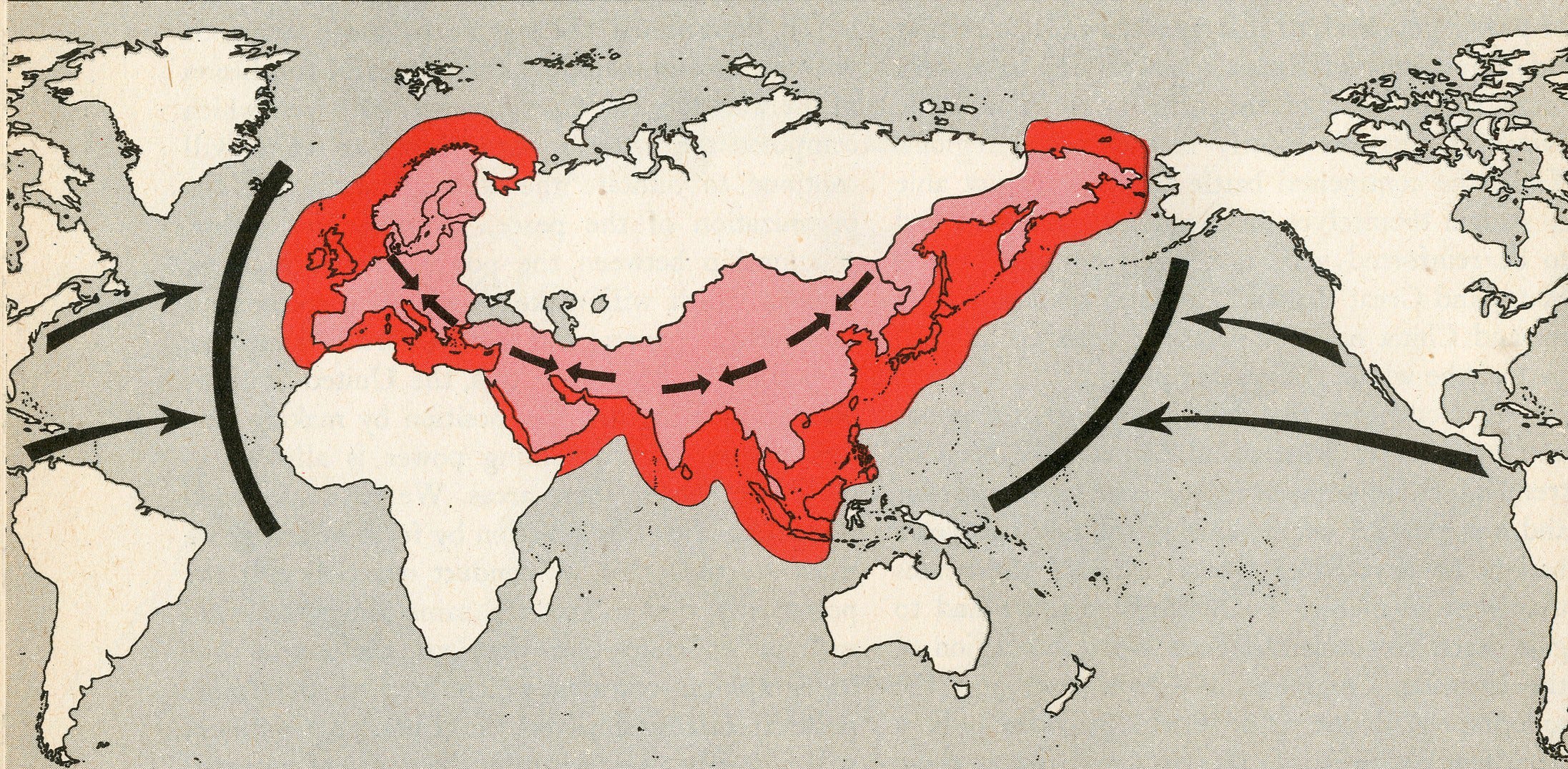
In Russia’s case, its own sphere of influence, less and less solid, arguably still includes the CIS nations, Ukraine with an asterisk, Georgia and North Korea. Russia—in practice the Eurasian Heartland itself as a unified State—remains, as of today, pushed completely out of where it is a geopolitical imperative to have secured: the European Rimland.19
The term “sphere of influence” can be loose—not to be equated with “great space,” which seeks to express a more solid material paradigm, and for that reason remains ingenuous—but it is supposed to designate, without value judgment, the situation in which states involved engage in asymmetric relation (happy or unhappy), consequent of various factors such as military leverage (kinetic or hybrid), trade dependence and, if it develops to such direction, political capture. The sphere of influence of a state is secure and solid in so far as that state is capable of removing centers of unwanted instability from it.
Throughout History, Europe itself manifested the interaction between the opposing impulses and poles of land and sea. Seen from the geostrategic perspective, “the continued existence of a group of independent states on the Rimland of Europe was almost as advantageous to Russia as it was to the United States, since it provided her with a buffer against a possible Anglo-American combination against her.”20 During the Cold War (1945-1991) period, neither of the opposing blocs went through all years completely tightened. If on one side this was demonstrated by the Hungarian Revolution (1956) and the Prague Spring (1968), on the other it was by the deployment of Operation Gladio and the presidency of General Charles de Gaulle from 1959 to 1969. De Gaulle’s rule notably marked France as a sovereign nation in front of the American directive for Atlantic unilaterality. During this period, France developed its nuclear research program, pursued diplomatic independence from the American umbrella by re-establishing friendship with Germany and improving relations with Russia, decreased American military personnel inside under NATO (from the numbers of 50,417 in the year 1958 to 1,491 in 196721) and, of course, built nukes. Charles de Gaulle worked in the opposite way of the “supranational” abstraction of Europe, and towards material coordination between the continental countries — in the examples of the Common Agricultural Policy and the Fouchet Plan — in order for them to become a confederation and, ultimately, a joint third force in the great power politics of the Cold War. A sovereign Pan-European union distinct from the “community” project of Jean Monnet, which necessarily ends up as a colony. De Gaulle had to be ousted.
America is trying to dominate Europe, just as it seeks to dominate Latin America, Southeast Asia. America, whether it wants it or not, has become today an enterprise of global hegemony.
The fact is that when Europe is sovereign, she rapidly turns to continentalist efforts, as demonstrated by the projects of integration and skepticism of Atlanticism, naturally gravitating towards a telluric existence, moving towards her nature, in order to become more like herself through “the holism of the deep continent.” Finally followed by the efforts for friendship towards Russia; that is all because evolving to a Russian-European strategic alliance—through the Moscow-Berlin-Paris axis—is the natural conclusion of the grand politics and economics of this land mass spanning “from Dublin to Vladivostok.” On one hand, in consequence of the imperative for security from outside influences, on the other for the resources, free movement, human capital and the capabilities following Eastern-Western septentrional unification.
The famous maxim from Mackinder summarizes the thalassocratic vision:
The oversetting of the balance of power in favour of the pivot state, resulting in its expansion over the marginal lands of Euro-Asia, would permit the use of vast continental resources for fleet-building, and the empire of the world would then be in sight. This might happen if Germany were to ally herself with Russia.222
Europe unilaterally attached to the transatlantic network of trade, politics and social formation (with the example of its grand narratives) asymetrically conducted by the United States becomes the gravest problem for Russia. But also for the European nations themselves. Looking with an objective pair of eyes at the whole pan-Western space (from the Europeans to the Americans), it becomes clear that their societies are captives under a firm grip of a power-structure working for the opposite of their interests. They are reduced to tools for the project of globalism.23
The poem of Moschus perfectly illustrates:
‘twas then th’ Europa Phoenix had begot
Learned in her high bower of her heavenly lot.
She had a body no man had yet known;
Two women strove to have her as their own.
Each was in fact a land; she saw them spar,
One like a neighbour, one like one from far.
The one from her country held her close pressed,
As her mother who’d fed her at her breast;
But th’ other’s hands of force soon made her yield
The princess dreams of the feminine personifications of two lands fighting for her possession. One is a neighbouring land which cares and provides for her. The other one, far away, in fact gains her possession before the princess wakes up crying for Zeus. This is the struggle for the Rimland. If Europa is later carried West to an island by Zeus disguised as a bull—expressing the historical movement of actualization—that means the other land, the mother, is the East.
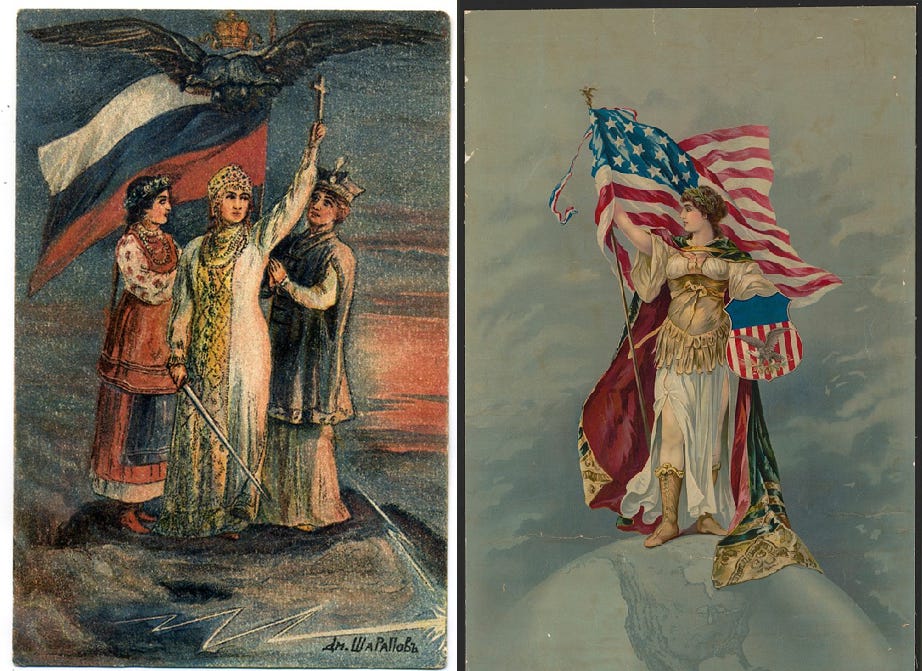
It is not necessary, much less desirable, for this East, this “like a neighbour” land to try and get a grip onto our personage. Prior to any ideology and administrative rotation, in a basic axiom of political geography, a land or any space—or spatial principle—always carries ideas, as it offers material potentialities contributing to the life of the State, making it grow or retreat, adapt or die off.24
The symbolism of the Bull is also important for our purposes. The bull is a quintessencial land animal. In the myth, it represents at the same time Zeus’ virility and divine power, as well as, being often depicted as white, coming in peace and harmlessness. In one instance, the Sky-Father mirrors the Taurus constellation down to our material world, in another, Zeus, now unequivocally associated with telluric principles, is in the shape of the archetypal land animal to carry Europa across the sea. This represents but the convergence of the earth and water elements in the Rimland regions, making up the original fuel of high-civilization as their mixture causes chemical affinities or contrasts.25
Such skills as yours suit but a power divine,
Since bulls suit sea no more than dolphins shore,
While sea is land to you, each hoof an oar.
It may well be you shall full soon be whirred,
Topping grey mists, to soar just like a bird
The European Rimland is not only historically (that is to say: organically) exhausted but its sovereignty remains under direct influence of a foreign rule, a subordination materialized through the transatlantic attachments. Eroding by the active framework of liberalism, at the “social bottom” marching towards becoming a graveyard. Myth, history, and geopolitical practice all converge at the same point to demonstrate that life detached from this “common-land” is the unnatural way to carry its historical existence—whether the ruling or ruled classes are able to see it or not, like it or not.
The Heartland East-wards from the European Rimland, the horizon from where the Sun rises, is in fact the geographical pivot of history but, furthermore, renders an attraction center for the spirit. The soil from where its deep roots emerge. Indeed, the most ancient origins of European civilization are to be found in Russia’s Asian territories. Beginning around 3000 BC, the early Indo-Europeans spread outwards in all directions from the Pontic–Caspian steppes south to the Ural Mountains. Speaking in the purest terms, if “turning away” from this common-land—an actualized historical endeavour—triggers various contradictions, the space of the Heartland becomes the horizon of resolution. For our cycle, it carries a meaning equivalent to the sacred North of ancient times. Dugin described how in the absence of the paleocontinents of North and South, the witnessing of their opposition really is passed to East and West. In the context of sacred geography:
The change of the vertical axis North-South to the horizontal East-West, characteristic of the last stages of the cycle, nevertheless, preserves the logical and symbolic connection between these two sacral-geographical pairs. […] East is horizontal projection of the North downwards. West is horizontal projection of the South upwards. From this transfer of sacred meanings one can easily obtain the structure of continental vision peculiar to Tradition.26
Now, let us resume the aforementioned points and proceed to more concrete terms. For consolidation of long-term national security, the Heartland, as a state, carries the strategic priority to have some degree of management over the Atlantic Ocean, in alignment to the Eurasian Western borders (the aforementioned Moscow-Berlin-Paris axis).27 Throughout the 2000s, the Kremlin pursued a foreign policy directed towards the construction of this ideal, but it has all been artificially aborted before reaching the disastrous and catastrophic current state of affairs.
During those times, Russia and China were mutually suspicious to an accentuated degree, until shifts of paradigms. Curiously, the initial failure to consolidate the Russo-European strategic zone (with countermoves, ultimately resulting in the war in Ukraine) hastened the other paralel processes of the general Eurasian strategy:
Russian foreign policy deepening its ties with China and Iran (as with Belarus and North Korea) and
those actors (but simultaneously other pivot states, such as Turkey and Israel) pursuing further their spheres of influence within each respective regional Rimland.
European politics is not under a multilateral model nor in a bilateral relationship with the US, and it is evident that the current post-Cold War unilaterality does not serve its own interests,28 neither in terms of productivity nor social well-being. Effectively, its existence today serves the sole purpose of acting as a geographical platform for intervention and war against the sovereign Eurasian entities. Therefore, the correction of this framework is in each of those entities’ interest, and good relations with Russia represents an essential step for the development of Pan-Eurasian security. And if it becomes too costly to manage the political system and sabotages of natural moves towards integration, realistically it would be reasonable to simply cripple Europe so badly that it becomes useless as a partner and ally to Russia and China.
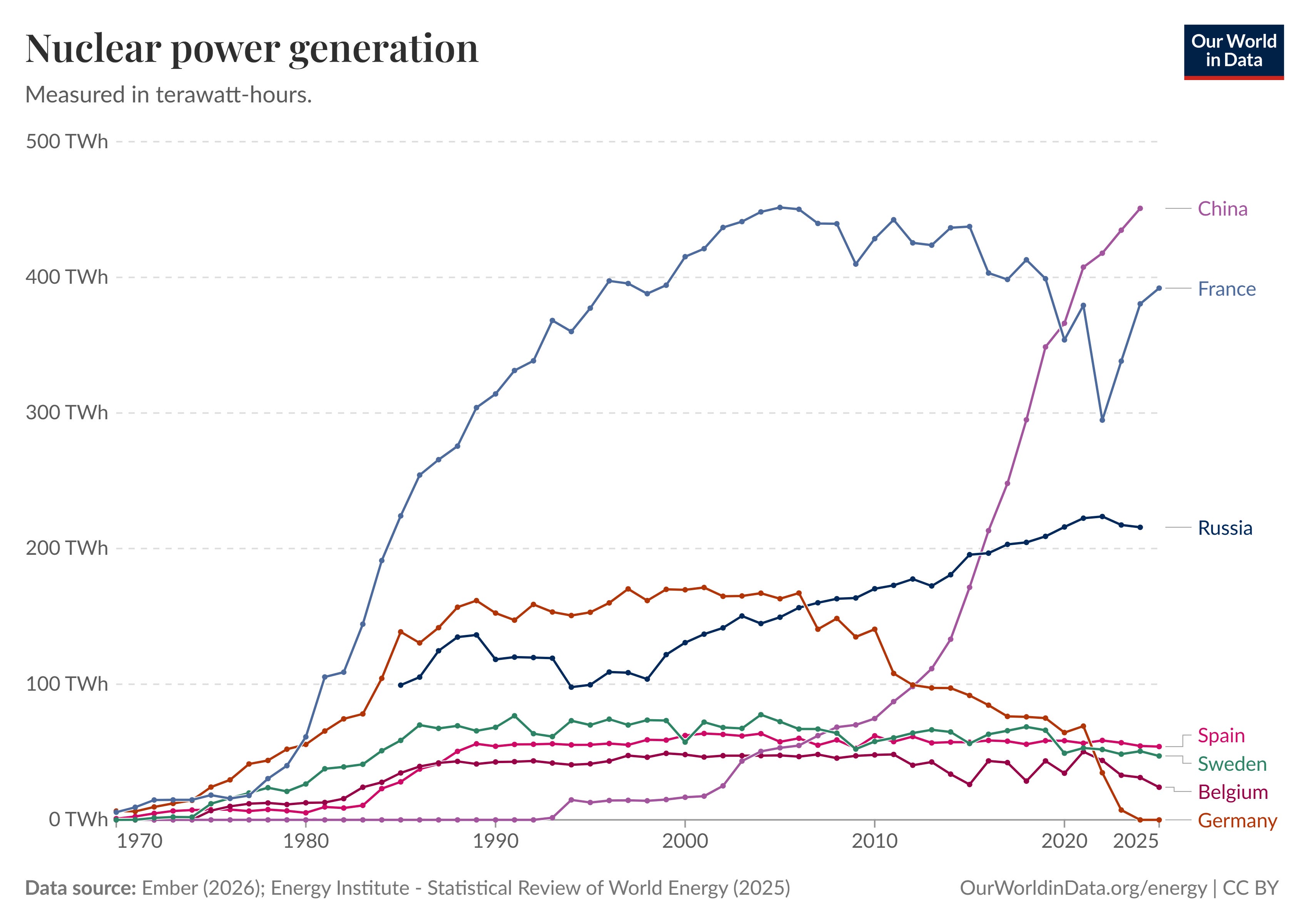
From the standpoint of Anglo-America, Eurasia is visualized as this natural, continental given formation. Consequently, it becomes mandatory for the naval powers to try and prevent its unity, prosperity, to encircle and penetrate into it. Therefore, the foreign policy goals are so embedded in nature that they are rendered immutable. The “synthesis” points to Eurasia, by identifying such a paradigm, forming its own rejoinder alignment of goals and strategies in need of security. We can draw the following:
Completion of world-mapping (Mackinder’s “post-Columbian” age) → Atlanticist Weltpolitik → Eurasianism.
Because these structures of power and strategy do not rest, Europe is bound to the capture of its agency and capacities by a necessarily hostile agent. There can be no long-term survival without a unification of interests beyond the economic sphere; not managed from outside, but exclusively in the case of a complete material split with this power—in its foreign and already domestic aspects: the US and Israel symbiosis, and attachments to a multiplicity of institutions, treaties and strategic models. It is only possible to conceive such a scenario with the support or even initiative from Moscow.
If detached from Russia, the unification of European economies and foreign policy, then defense and politics, remains attached to America’s strategy—it still cannot be an autonomous Eurasian pole. The organization of this entity’s political principles, such as basic relations of friendship and enmity ought to be crystalized somehow. It can only crystalize by being directed towards this or that cardinal direction and against the other one, for they host this or that greater geopolitical entity. This is the reason why the US is able to perniciously support European common defense—it oversees the transition and the results. The European Rimland, geographically trapped, is caught between the crossfire of Russia and America—again, we are reminded of Princess Europa’s dream. The beginnings of the militarization and federalization of the EU does not mean the potential for autonomy from the US, but the gloomy opposite. Its result is a new set of delegated obligations for previously prepared strategic ends, minus America’s obligations. Moreover, if detachment cannot occur by mutual consent, that means it cannot occur gradually. In order to bite the US back, it is imperative to count on the Russian umbrella of intelligence (ISR), military power and outer-space presence.
A functional Europe comes not from the Atlantic to the Urals; rather, it comes from the Pacific to the Atlantic. But for that to happen, action is expected. Europe must inevitably confront its Janus face and choose which path to look at and move forward; there lies a real political task. We have analyzed which way is the most materially necessary, natural and positive—for both Heartland and Rimland poles. At the scale of global alignments, to develop a spatial imagination—in the place of ideology—which recognizes itself as part of Greater Eurasia is the only way to have a future, precisely because it is the way of factual faithfulness. The constants are there, as potentialities waiting to be actualized. Not forms expecting to be filled with content, but instead, content desiring to acquire form. It becomes, we realize, not a question of if but how and when.
On a final note: the inception of the Western and Russian civilizations went through a process of original amalgamation which shared many common elements. If Russian and Western Europe are to form a unity, their cultural-morphological developments will meet in a new way. A dialectical relation also goes on between Russia and America as two metaphysical weights—both similarly distinct from the “old country”, the original Indo-European homeland and the terminal frontier of History—confronting the longer and in ever greater scope and scale (therefore, Russia and the West as a whole, in whichever definition). Is there a solution to this contradiction, which is embedded in Earth’s geography, and is it possible that it lies in the fusion of their Logoi? There, the deep northern forest meets the steppe. The prime-symbol of infinite space merges with the endless horizon. The impulse for verticality (traditionally associated with primary causality) and horizontality (associated with the manifestation of the world). Vertical and horizontal planes, like in the cross, connecting at the converging point of the center. Is a new wholeness to be found there?
Irish Orientalism: A Literary and Intellectual History. Chapter 1, 2. Joseph Lennon (2008)
Land and Sea, Section 3. Carl Schmitt (1942)
Martin D. Mitchell (2020), “Using the principles of Halford J. Mackinder and Nicholas John Spykman to reevaluate a twenty-first-century geopolitical framework for the United States,” Comparative Strategy, 39:5, 407-424, DOI: 10.1080/01495933.2020.1803709
Colin S. Gray (2015), “Nicholas John Spykman, the Balance of Power, and International Order,” Journal of Strategic Studies, 38:6, 873-897
Furthermore: The Geography of Peace. Nicholas John Spykman (1944)
“The Two Faces of Russia and Germany’s Eastern Problems.” Oswald Spengler (1922)
This paragraph defines the first aspect of the “Quaestio Rossica-Europaea.”
Furthermore: The Decline of the West. Oswald Spengler (1918)
“Everyone sees that moral progress follows different paths than technical progress, both among the rulers who plan and make use of modern science, and among the elites and the masses who hope for the great harvest festival of planning.”
“Die Einheit der Welt,” Merkur no. 47. Carl Schmitt (1952)
Concentration of technology is an old phenomenon whose details escape the scope of the present text.
The Impossible Exchange. Jean Baudrillard (1999)
Foundations of Geopolitics, VII. Aleksandr Dugin, Nikolai Klokotov, Leonid Ivashov (1997)
The Birth of Tragedy. Friedrich Nietzsche (1872)
“Is this ‘Western culture’, built on the very principle of temporo-centrism, not a sign of precisely this titanic earthly cycle? If we take into account the materialism and heightened and clearly unhealthy fixation of modern people on things and atomic (and ever more microscopic) phenomena, the reign of quantity over quality, earthly over heavenly, and mechanical over organic, the preponderance of individualist fragmentation, including the aesthetic norms of contemporary art, then the notion that we find ourselves under the rule of the Black Logos seems to be a wholly probable supposition.”
Land and Sea, section 8. Carl Schmitt (1942)
Repackaged in the Cold War.
The Geography of Peace. Nicholas John Spykman (1944)
That sums up the second aspect of the question.
Commentary to Spykman’s Geography of Peace by Frederick Sherwood Dunn (1943)
“France wished to be free to seek its own treaty with the Warsaw Pact countries. […] De Gaulle prohibited NATO nuclear weapons from being stationed in France. His ultimate goal was two-fold. De Gaulle sought to make France independent of the United States and the United Kingdom’s influence and to possess the ability to conduct autonomous negotiations with the USSR should the East Germans move into West Germany. […] In March 1966, De Gaulle removed all French armed forces from NATO control and told the United States (and other NATO military members) to leave France.”
The Geographical Pivot of History. Halford Mackinder (1904)
A non-emancipatory globalism.
Politische Geographie, section 8. Friedrich Ratzel (1897)
Land and Sea, section 2. Carl Schmitt (1942)
Foundations of Geopolitics, VI. Aleksandr Dugin, Nikolai Klokotov, Leonid Ivashov (1997)
Foundations of Geopolitics, 4.2: “Moscow-Berlin, European Empire and Eurasia.” Aleksandr Dugin, Nikolai Klokotov, Leonid Ivashov (1997)
One that, at the geopolitical scale, carries great historical continuity since the 19th century, as we have seen.
