
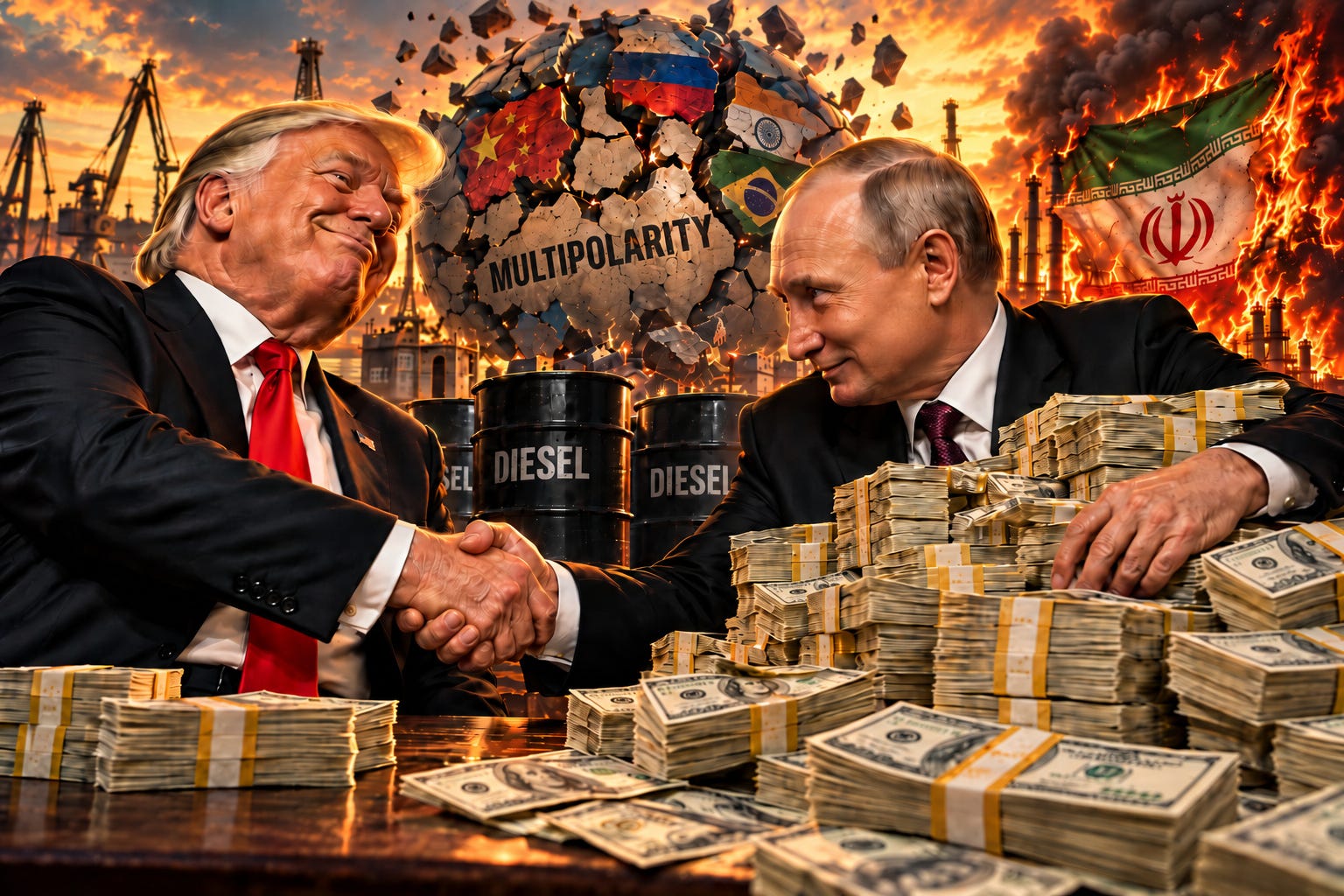
Santander Wallaby exposes another setback for multipolarity as Putin’s diesel deal with Trump raises a disturbing question: Is Russia betraying Iran and surrendering its struggle against American financial supremacy?
The agreement between Donald Trump and Vladimir Putin on Russian diesel supplies marks a disturbing moment in the struggle for a multipolar world. On October 9, 2026, Trump announced that Russia would immediately release more than 300,000 metric tons of diesel to American and international markets, followed by another 500,000 tons in November, one million tons thereafter, and potentially three million additional tons. Washington responded by temporarily easing sanctions on Russian diesel through a Treasury license. What appears to be an ordinary commercial arrangement carries consequences far beyond the energy market. Russia, which has spent years presenting itself as a leading force against Western economic domination, has agreed to help Washington manage an energy crisis caused in large part by America’s own military confrontation with Iran. The timing exposes a contradiction at the heart of Russian foreign policy. Moscow has repeatedly called for an international system free from American coercion, yet Putin now offers economic assistance to the very power responsible for maintaining that system. Trump needs lower diesel prices before the November congressional elections, while Russia seeks revenue and relief from sanctions. Both governments can claim a practical victory. Yet the greater question concerns the political meaning of this transaction. A country that promises to overturn American financial supremacy cannot pursue that goal while helping Washington escape the consequences of its own imperialist decisions. The diesel pact suggests that Russia may be placing immediate commercial interests above the historic struggle it claims to represent.
