
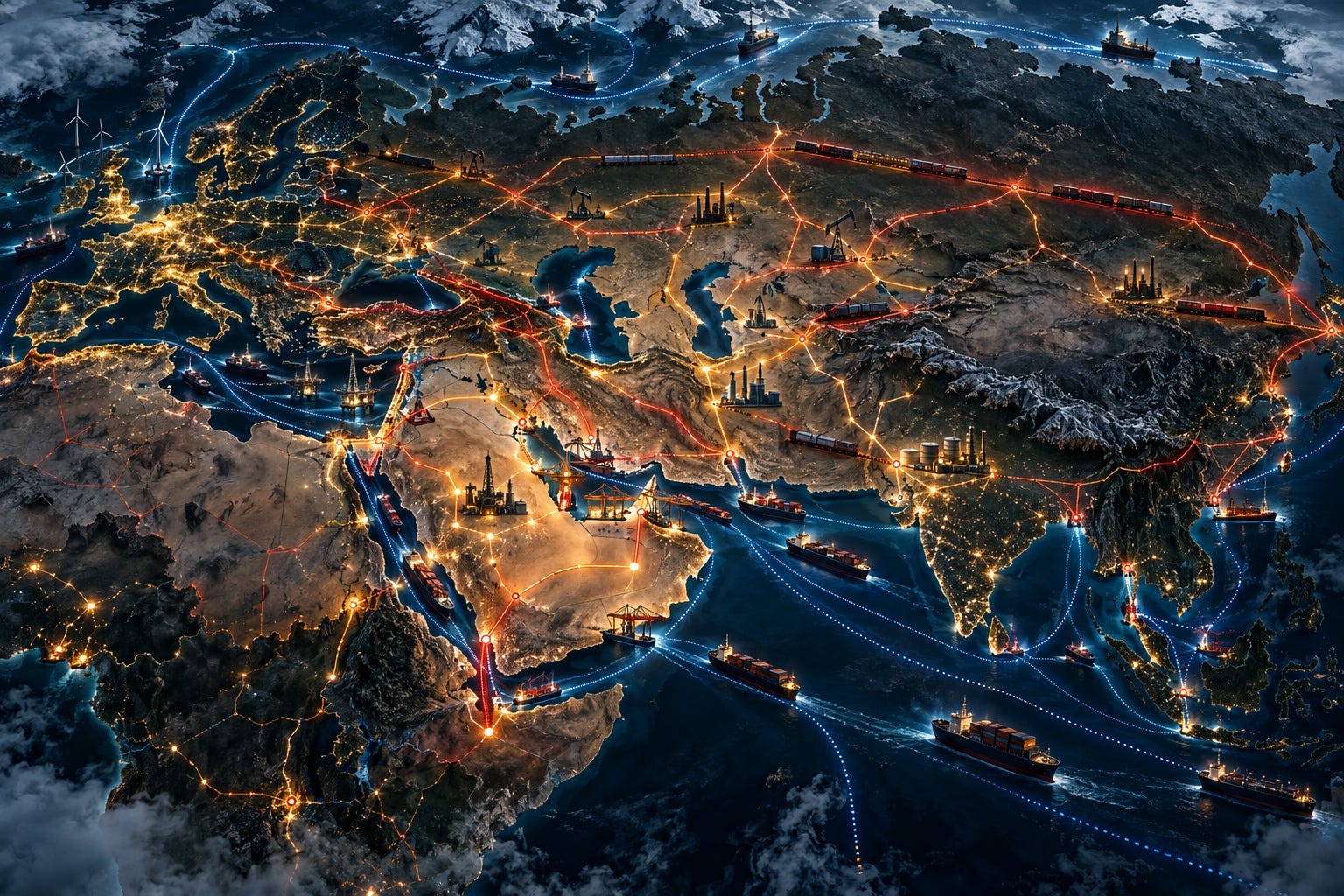
Santander Wallaby explains how the world is being rewired into competing regional systems, each fighting for energy, logistics, and strategic depth.
The events now unfolding from the Red Sea to the Arctic make more sense when viewed as parts of one larger change. Saudi Arabia and the Houthis, Turkey and Israel, Europe’s energy troubles, strains inside NATO, the renewed importance of the Arctic, and the construction of new Eurasian transport corridors may look like separate stories. They are not. They show an international system becoming more regional, more rooted in infrastructure and geography, and more competitive. The old model rested on a dense web of American military guarantees, dollar finance, global shipping, and institutions built during the period of Western predominance. That structure has not vanished, but states are increasingly building alternatives around their own regions. Trade is being reorganized around secure ports and railways. Energy producers are looking for routes that cannot easily be closed by a rival. Governments are seeking payment systems, military suppliers, and markets that leave them less exposed to one center of power. Recent turmoil in the Red Sea and the Gulf has made this brutally concrete: attacks on shipping and energy infrastructure have raised freight costs, endangered oil flows, and forced governments to think again about routes they once treated as permanent. Even the European Union now openly describes Gulf maritime security, export infrastructure, and projects such as the India–Middle East–Europe Economic Corridor (IMEC) as questions of strategic importance rather than mere commerce.
