
Paganism and European Roots
An interview with Alain de Benoist

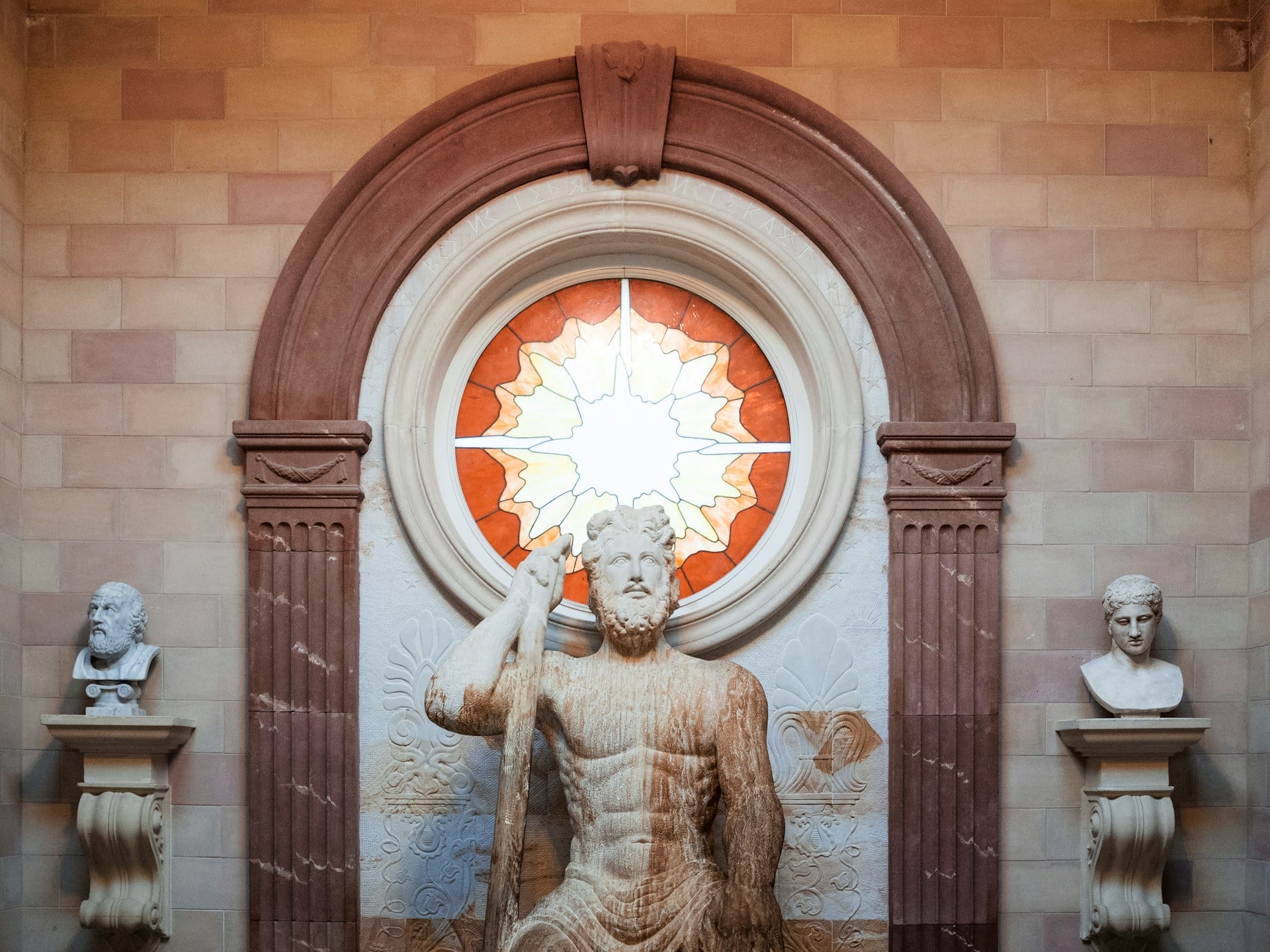
Alain de Benoist interviewed by Alexander Markovics on paganism as Europe’s primordial spiritual horizon, the critique of monotheistic universalism, and the philosophical path towards a new beginning.
The interview was originally conducted in German in the latest issue of the metapolitical journal Agora Europa.
Alexander Markovics: In your understanding, paganism places the human being at the center; it is not fixed on transcendence as in monotheism, nor on nature in itself as in modern ecology. From a pagan point of view, what do you think should be criticized in the theocentric thought of monotheism and in the thought centered on nature in modern ecology?
Alain de Benoist: There is an immanent transcendence that allows us to move beyond a simple opposition between anthropocentrism and theocentrism. I share the critique made by ecologists of anthropocentrism, insofar as I believe that man cannot be apprehended outside the living whole, nor outside of any cosmic perspective.
What I oppose is the founding idea of monotheism: the theological distinction between created being (the world) and uncreated being (God). This distinction, which doubles the real world with a “back-world,” makes it a mere object whose subject is God, identified with the final cause of everything that exists. In this perspective, the world is necessarily emptied of all intrinsic sacrality. There are no longer sacred places, sacred rivers, sacred springs, sacred times, nor sacred geographies, and so on. Christianity replaced the sacred with the holy, two notions that have very little in common (holiness is a moral quality, which the sacred is not). Thus were brought together the conditions for a progressive disenchantment (Entzauberung) of the world, which culminates today with technological and commercial modernity. This is what Heidegger calls the enframing (Ge-stell) or the machination (Machenschaft).
The distinction between created being and uncreated being is also at the origin of all the other dualities that paralyzed thought for centuries: soul and body, body and spirit, being and the ought, nature and culture, materialism and spiritualism, transcendent and immanent, innate and acquired, and so forth. By radicalizing all these relative oppositions, we have unlearned how to understand the complementarity of opposites.
Alexander Markovics: In your conversation with Charles Champetier, you speak of the opposition between the monotheistic tradition as a tradition of heteronomy and the Greek or properly democratic tradition as a tradition of autonomy. Could you explain what this means for the difference between monotheism and paganism? Do you consider Judaism and Christianity here as a Judeo-Christian unity, or do you see significant differences between these two monotheistic religions? Does Islam, which is sometimes regarded in comparative religious studies as the most radical form of monotheism, occupy a particular place in this regard?
Alain de Benoist: The God of the monotheisms enjoys an absolute power that stems from his nature. The model of authority that he tends to propose is that of a power that nothing can limit. This “absolutist” model was long advanced by the papacy in its struggle with the emperor, especially during the Investiture Controversy, and later served as the theological basis for the absolutism of princes and “divine right” monarchs. All this implies a radical heteronomy.
The birth of democracy in Greece, by contrast, marked the first attempt to establish a regime in which sovereignty belonged to the people (or at least to free men). The exercise of this sovereignty is inseparable from what Benjamin Constant called the “liberty of the Ancients”: one is free not when one withdraws into the private sphere, but, on the contrary, when one participates in public life.
In my book On Being a Pagan, published more than forty years ago, I certainly made too intensive a use of the term “Judeo-Christian.” Strictly speaking, the use of this term is justified only in two very precise cases. First, to designate the earliest Jews who recognized Jesus as the Messiah (but not necessarily his divinity), notably the very first community of Jerusalem led by James, the brother of Jesus, as well as the currents that inherited from it, such as the Ebionites or the Elcesaites, who—by contrast with the Pauline current—continued for several centuries to claim Jesus while affirming that they still considered themselves within Judaism (which earned them a double condemnation, on the one hand by the Church of Rome, and on the other by rabbinical and synagogal Judaism). One can also speak, cautiously, of “Judeo-Christianity” in order to designate elements of theology that are common to Christianity and Judaism, for example adherence to a mono-linear conception of history, in opposition to the cyclical conception of the Ancients.
Beyond such comparisons, however, the differences outweigh the similarities. The differences between Judaism and Christianity are considerable and must not be underestimated. Christianity, for example, which is a religion of salvation that is very individualistic (one achieves salvation alone), is not founded upon the notion of election. Judaism, whose entire history is marked by a dialectical tension between a particularist and a universalist pole, holds that Judaism and belonging to the Jewish people necessarily go together.
I do not know whether one can say that Islam constitutes “the most radical form” of monotheism. It doubtless inherited elements from Jewish sects such as the Ebionites, who very likely contributed to its birth. What is certain is that, even though it presents Jesus (‘Īsā ibn Maryam) as a prophet and renders long homage to his mother (who is cited in the Qur’an more often than in the canonical Gospels), the idea that God could have a Son is as foreign to it as it is to Judaism. This is why Muslims accuse Christians of “associating partners with God,” that is, of advancing a concealed form of polytheism. The dogma of the Holy Trinity, whose formation under various influences remains to be clarified, is certainly one of the things most unacceptable from a strictly monotheistic point of view. Within the Church, it was not formulated before the fourth century (it was proclaimed in 381 at the Council of Constantinople).
Alexander Markovics: In your conception of paganism, you speak of monotheism as being at the root of intolerance and modern totalitarianism. To what extent are biblical universalism and the universalism of modern ideologies linked? In your view, did the totalitarian thinking of liberalism and globalization necessarily develop out of monotheism? Do you also see a link between modern totalitarianism and the ancient school of the atomists, with representatives such as Democritus, Epicurus, and Lucretius, who defended early approaches to a materialist, individual-centered thought from a pagan standpoint?
Alain de Benoist: It is obviously not a matter of tracing back to monotheism every form of intolerance and violence, since these simply form part of human nature. What one can say, however, is that universalism—constantly associated in the history of ideas with individualism (humanity being defined as the total sum of individuals)—encourages violence, and often justifies it, when it is borne by an ideology and a belief that presents itself as carrying an absolute truth.
In such a perspective, the enemy is no longer an adversary, but a criminal or a guilty party, a figure of Evil that must be eradicated. The “just wars” that we witness today merely take over from the ancient wars of religion. Of course, this universalism is in reality only a masked ethnocentrism. Whether propagated by missionaries, soldiers, or merchants, the West has always sought to impose upon the entire world values that were its own—“human rights,” for example—by presenting them as “universal values.” From this point of view, modern universalism is indeed not fundamentally distinct from monotheistic universalism, of which it represents only a secularized form (just as the ideology of progress secularizes the old biblical conception of a slow progression towards the City of God).
The very idea of a single God leads one to think that, in the eyes of the Creator, all the differences that distinguish peoples and cultures have only secondary importance or significance. In sound Christian theology, the people of God have no borders. Modern universalism takes up the same idea in affirming that humanity has political and moral value and that we belong to it in an immediate way, independently of our own particular affiliations, whereas in reality we belong to it only indirectly, through the intermediary of a singular culture. The capitalist system, which is above all a system without limits, similarly sees in borders and constraints only obstacles to be eliminated in order to establish a planetary market.
One of the great differences between polytheism and monotheism is that, for the latter, the other gods are not the gods of other peoples, but figures of Evil. The Ancients found it entirely natural that the Greeks should worship Greek gods, the Romans Roman gods, and the Germans Germanic gods. In paganism, there are no dogmas, no heresies, and no crusades. The monotheistic God, who claims to be everywhere and nowhere, is “jealous” of the other gods and seeks by every means to eliminate them. It opens the door to sacred intolerance. In Germany, this phenomenon has been very well described by Jan Assmann.
As for Democritus, Epicurus, and Lucretius, I set them aside, because their philosophies cannot, in my view, be reduced to a “materialist approach centered on the individual.” The atomism of Democritus has nothing to do with individualism, but goes rather hand in hand with skepticism. Epicurus and Lucretius are concerned above all with happiness.
Alexander Markovics: The long history of paganism has produced numerous archetypes that still shape European thought today. One of them is Dionysus, the god of wine and madness, the twice-born, whom scholars of comparative religion interpret as a prefiguration of Jesus. Another is Cybele, the Great Mother, whom researchers such as Bachofen interpret as proof of matriarchal thinking among the pre-Indo-European populations of Europe. What do you think of these two divinities and the archetypes they embody?
Alain de Benoist: You could obviously have cited a thousand other examples: Mars, Hercules, Venus, Minerva, Odin-Wotan, Thor, Freyja, Lug, Teutates, Indra, Agni, and so forth. Over the centuries, the names of the ancient gods and heroes have continually given rise to popular narratives, marvelous tales, archetypes that nourish the cultural imagination, and ever-renewed interpretations. This is one of the proofs that paganism has never completely disappeared.
Dionysus, who plays a major role in Nietzsche’s philosophy, forms with Apollo a highly meaningful pair. But it requires a great deal of imagination to see in him a “prefiguration of Jesus.” His epiphany was celebrated during the night of January 5 to 6, which is why Christians, unable to uproot his popularity, fixed the feast of Epiphany on the same date in the third century. The Nativity of Christ, fixed very late on December 25, similarly replaced the immemorial celebrations of the winter solstice. Like Isis or Astarte, the Phrygian goddess Cybele was often assimilated to Mary, the mother of Jesus (whose cult made it possible to compensate for the cruel absence of a goddess in the monotheistic religions). It is for this reason that Christians imagined that Mary had died at Ephesus, which in Antiquity housed the principal sanctuary of Cybele.
Bachofen’s theses enjoyed immense popularity in his time, notably with Engels. Certain neo-feminists continue to claim him as a reference, but in my view wrongly so. The idea that the most ancient Indo-European culture was a matriarchal culture has been refuted so often that it is better not to take it into account (even if Bachofen’s great book Mother Right [Das Mutterrecht] also has its qualities).
Alexander Markovics: Paganism often appears in contemporary Europe in the form of a “second religiousness”: many Europeans discover polytheism in the form of a “New Age religion” or an “ancient tradition” reinvented in the eighteenth and nineteenth centuries. Why do you think this form of religiousness is gaining ground in the West, and how does it differ from an authentic paganism for the twenty-first century?
Alain de Benoist: I am in favor of a recourse to paganism, but I do not believe in its return as a belief accompanied by a collective orthopraxy. There exist today numerous “neo-pagan” groups, but I have always wondered whether they truly believe in the gods they claim. Some are sympathetic and fairly serious, but the great majority have the characteristics you mention: either they are incapable of claiming an authentic tradition, or they fall into New Age confusion. That is why Spengler spoke of the “Second Religiousness,” an expression that is fully applicable to them.
To be pagan, for me, is not to disguise oneself as a high druid or to make invocations to Wotan. It is, more simply, to become familiar with the spiritual universe of the great European religions, to feel more at ease reading Homer or Marcus Aurelius than reading Saint Paul or Saint Augustine, to meditate on the symbolism of the ancient gods, to admire the ethic of honor of the great heroes—in short, to restore intellectually and spiritually a continuity. I do not believe much, on the other hand, in a “catacomb paganism.” Paganism is a collective religion, not an individual belief. In sacrificing to the gods, one paid homage to the city; one reaffirmed one’s fidelity to the people to whom one belonged. One did not hope for salvation; one believed in will and in destiny.
Alexander Markovics: Since the spread of Christianity, several attempts have been made to reestablish paganism in Europe. One of them was the reign of Emperor Julian II—Julian the Apostate—who sought to impose in the Roman Empire a form of Hellenistic paganism strongly influenced by Neoplatonic philosophy. What do you think of Emperor Julian’s attempt?
Alain de Benoist: It failed, and could only fail. Julian acceded to power in 360 and died in battle as early as 363 (perhaps killed by a Christian soldier), at the battle of Samarra, near Baghdad. His reign therefore lasted only three years, which was far too short to modify the course of events.
His book Against the Galileans, of which we know only fragments, nevertheless remains, together with Celsus’s True Discourse and Porphyry of Tyre’s Against the Christians, one of the most precious testimonies at our disposal for understanding how the great pagan intellectuals argued in their time with Christians.
Yet despite the magnitude of his defeat and the brevity of his reign, Julian—wrongly called “the Apostate”—remains, alongside Frederick of Hohenstaufen, one of the figures who has most fascinated writers and poets, from Montaigne and La Boétie to Ibsen and Alfred de Vigny, and later Jacques Benoist-Méchin and Gore Vidal. Countless books have been devoted to him, and they almost invariably reveal a quiet admiration and an unmistakable nostalgia.
(Translated from the German)
 | A guest post by
|
I never believed nor practiced any religion! I only believe in GOD!
Wrong on so many levels. Whether he likes it or not, we’re modern and post Christian. This means we are highly individuated, dis embedded and mobile — very very far removed from any kind of tribalism; and completely severed from the kind of participating consciousness that characterized paganism. If if he could get in a Time Machine and go back to the fifth century, Anglo-Saxon, England or second century, Norway - language aside – they would make no sense of his ideas and he would make no sense of theirs. That life world is completely inaccessible. And the idea of that Christian monotheism is the root of domination is it best to sleight-of-hand but actually just a great big lie. In pagan societies, there were no free individuals to dominate. Everyone was embedded in the tissue of communitarian tribal obligation, and interdependency. Strangers from another tribe could be killed and enslaved will. The thesis is so stupid — you might as well say the roots of European culture lie in mammoth hunting Paleolithic and gatherers. Our culture and our language are Christian. Our cosmetology. Is Jewish.