
Alessandro Scarani on Belarus-orchestrated migration pressure and Poland’s border defense.
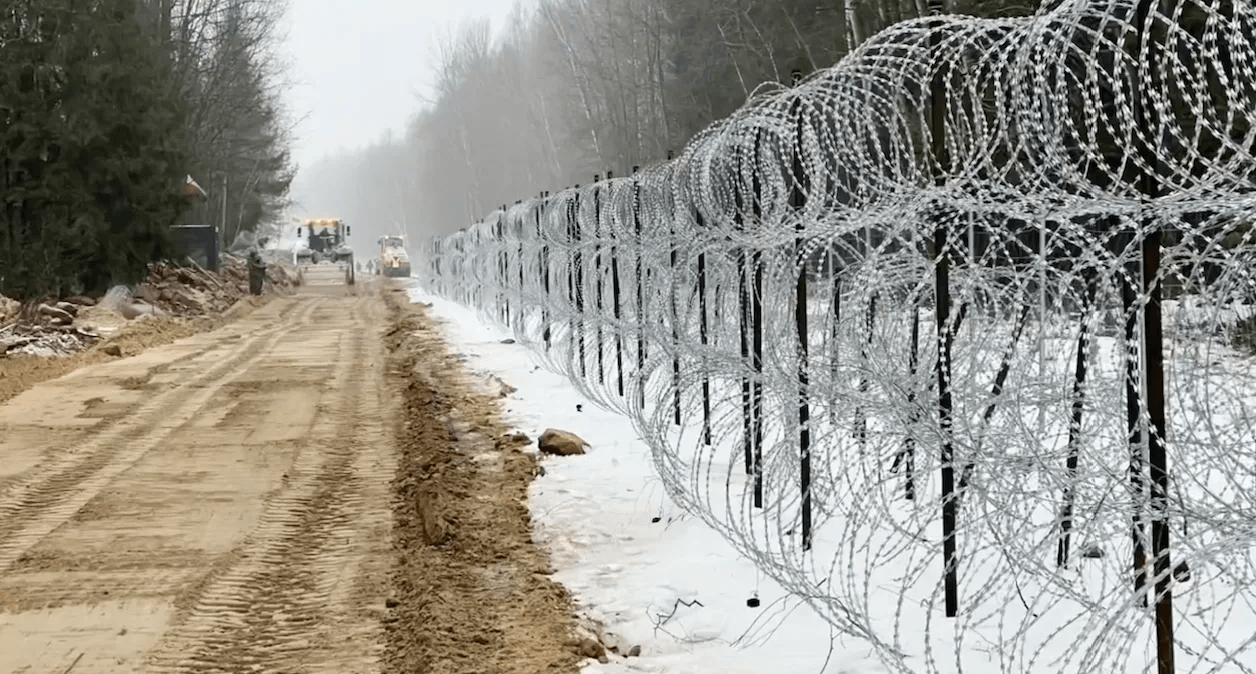
The border barrier between Poland and Belarus stretches for approximately 186 kilometers through the wooded area of the Białowieża Forest.
The structure is a veritable wall, about five meters high, built to protect Poland from large flows of migrants—mainly Afghans and Iraqis—who have been encouraged and, at times, escorted by Belarusian forces towards the border.
This amounts to a genuine hybrid war, within the framework of a strategy that strikes without a conventional military invasion. It is neither an official nor a declared conflict, yet it is fought daily through continuous attempts to breach the barrier, especially during the night and in the early morning hours.
These pressures on the Polish border have very clear objectives: to destabilize Poland politically, culturally, and socially. The strategy of Russia and Belarus appears to be to test Warsaw’s political resolve by forcing it into a confrontation with the European Commission, which has proposed heavy sanctions for every migrant Poland refuses to admit—reportedly €20,000 for each person turned back at the border.
Poland has firmly refused to pay what it considers an unjust penalty that undermines its national sovereignty. The Polish government has sharply criticized the proposed measure, pointing out that it has already taken in more than one million Ukrainians, despite receiving limited support from the EU. At the same time, despite ongoing tensions with Poland, the European Union has also condemned neighboring countries, accusing them of “instrumentalizing” migration flows and using migrants as “human shields” to create instability.
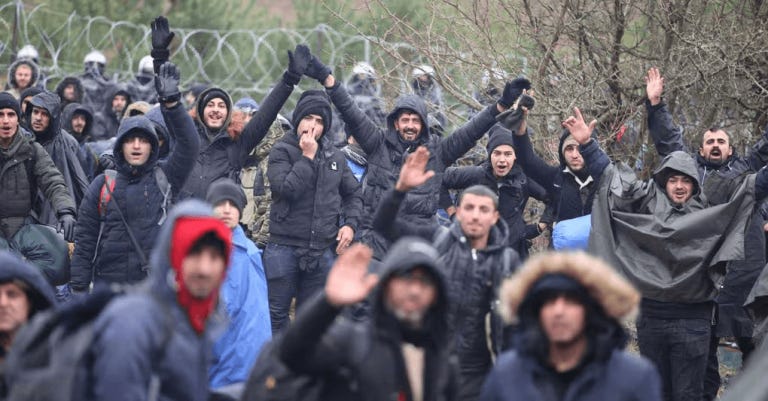
Belarusian authorities have repeatedly facilitated the arrival of migrants from countries such as Syria, Iraq, and Afghanistan by issuing visas and promoting direct flights to Minsk. Once there, migrants were directed towards the EU border, especially towards Poland. Many of those intercepted by Polish authorities reported being misled or pressured by Belarusian forces to attempt the crossing.
Furthermore, the methods by which the alleged “refugees” attempt to enter Poland are varied, and among them there is also the use of stones, sticks, and improvised spears as weapons of a sort. Indeed, Mateusz Sitek, a Polish soldier belonging to the 1st Armored Brigade, had no chance of survival: on June 6, 2024, the twenty-one-year-old serviceman died after a wound became infected. The fatal injury had been inflicted a few days earlier, on May 28, while he was patrolling the border. He was stabbed by a Syrian migrant with a blade coated in excrement, which increased the risk of infection.
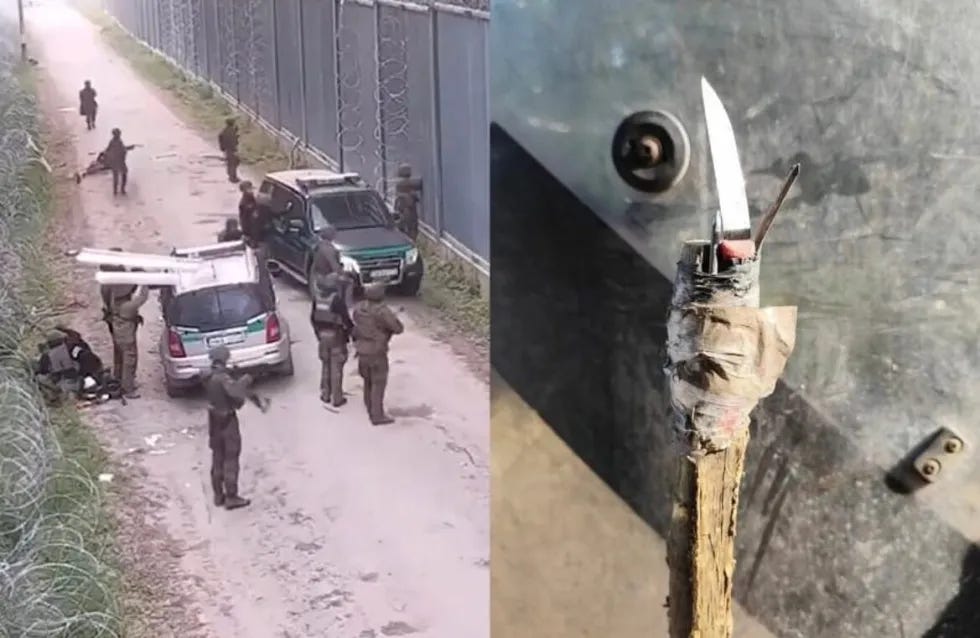
Following this event—a tragedy that deeply shook Polish public opinion—the parliament approved a series of specific legal protections for military units. Among these is a provision authorizing any soldier to use live ammunition in self-defense against anyone attempting an irregular entry.
Since September 2024, officers have fired approximately 1,190 warning shots. However, while the law in Warsaw has been accepted and upheld as a matter of common sense, many international organizations (such as Amnesty International) have expressed indignation at the idea that military personnel may respond with firearms to attacks carried out with bladed weapons. In particular, the Commissioner for Human Rights of the Council of Europe, Michael O’Flaherty, has warned that the law could encourage impunity, discouraging the proportionate use of force by border patrols.
As for Italy, some members of the Democratic Party, such as Cecilia Strada, have also raised parliamentary questions addressed to the High Representative of the European Union, calling for measures against what they consider to be potential human rights violations.
Between July 2021 and November 2024, Polish authorities recorded 110,595 attempts at irregular entry. Of these, 52,000 occurred during the initial peak, after which attempts declined and then began rising again.
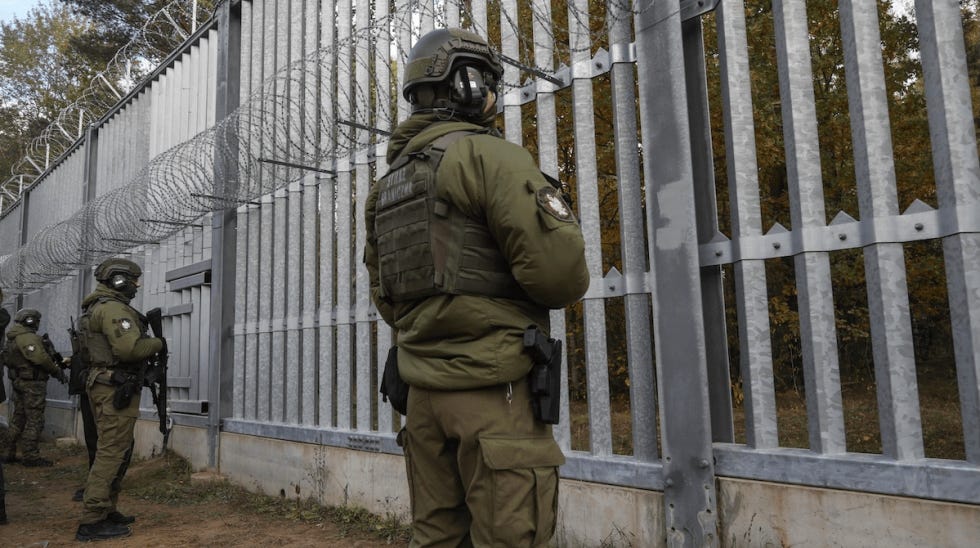
Faced with this passive-aggressive invasion, Poland has chosen not to remain indifferent. EU policies provide for and demand—in line with the preferences of progressive parties—that Poland not only allow in migrants coming from Belarus, but also accept the forced redistribution of flows arriving via the Mediterranean, affecting countries such as Italy, Spain, France, Greece, and Germany, as well as other states that have opted for indiscriminate acceptance, including Britain, Norway, and the staunchly inclusive Sweden (according to a 2018 investigation conducted by the Swedish investigative program Uppdrag Granskning, 75% of rapes involving assault committed on national territory were carried out by individuals born outside Europe).
In short, Poland—which consistently ranks among the safest countries in Europe according to various indices and official statistics—would be expected to follow the “lessons” of the EU, as if the inability of others to manage migration flows should become a burden to be shared, in line with an unhealthy “they fail, we pay” logic. It is clear, however, that taking on problems that other nations have failed to manage and contain is not a solution; on the contrary, it is akin to the mindset of someone who sweeps dirt under the rug, thereby deceiving themselves into believing the house is clean.
Translated from the original Italian version on Identitario.