
Huayra, Huayra: The Echo of Maiquetía and Pariata
by Vicente Quintero
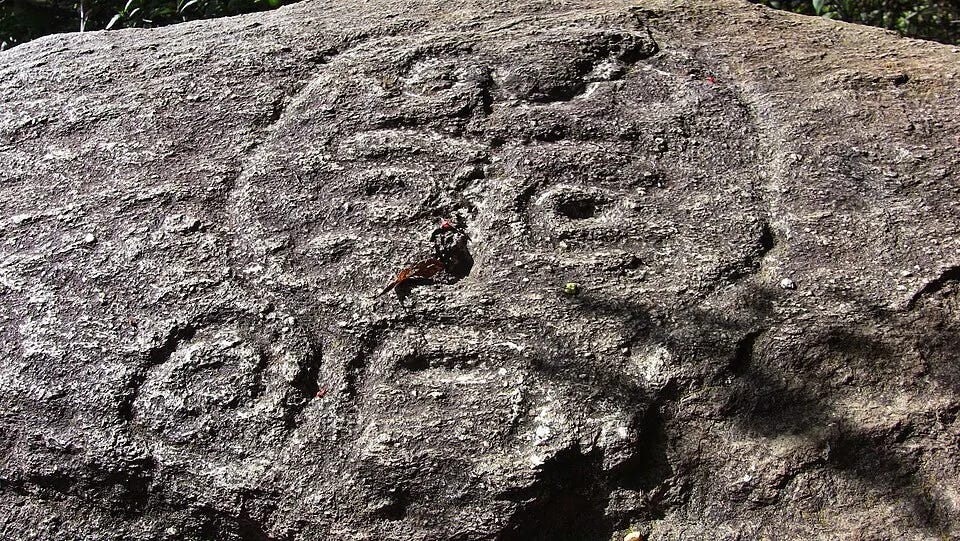
Vicente Quintero uncovers the deep memory of the Venezuelan coastline, where wind, war, and identity became one.
The present territories of the State of La Guaira form the foundation of a rich ethnographic and psychological landscape that extends far beyond what is commonly repeated through a reductionist and port-centered perspective: that of a mere maritime antechamber to Caracas. To understand this coastline as an “antechamber” reflects the error of someone who reads the map through the eyes of a merchant rather than with the rigor of a strategist; the coast is, in the fullest sense, the spiritual lock that regulates the nation’s breath.
Long before provincial rationality sought to inscribe upon these shores the administrative geometry of its ports and fortifications, this coastline served as the seat of a warlike culture deeply conscious of its strategic condition. In those abrupt mountains that descend violently towards the Caribbean, the great Tarma nation arose, heir to ancient Arawakan migrations and later strengthened by the Caribbean imprint, whose character transformed these lands into a natural frontier of resistance. Where avenues stand today, there once existed a sacred geography of sentinels, an original sovereignty that understood that control of the coast meant control of the passage between the oceanic world and the security of the mountains.
It was no coincidence that the chroniclers and memorialists of the province preserved the memory of chiefs such as Guaicamacuto, an emblematic figure of a lineage that early recognized the threat of foreign penetration, alongside Maiquetía and Pariata (one more inclined towards negotiation and conciliation, the other more belligerent and impulsive, one might say), whose legacy remains visible in the nomenclature of the center of Vargas Municipality. Pariata teaches us that in response to the arrival of the conquerors, the indigenous groups of the coast did not act passively; rather, they acted through political and military organization that testifies to a collective consciousness far beyond the caricature of the scattered and even erratic native.
In Macuto, Caraballeda, Naiguatá, and the inlets of the central coast, a defensive tradition took shape whose echo would continue centuries later in La Guaira’s insurrectionary vocation as a matrix of emancipatory conspiracies. That first indigenous belligerence (whose roots possess notable antecedents prior to the consolidated Hispanic presence in the region) was, in essence, the distant prelude to the libertarian will that would transform the port into a political laboratory of Spanish American independence.
The deeper history of the State of La Guaira must therefore be read as a continuity of combative impulses. From the original resistance against dispossession to the successive defenses against corsairs, monopolies, and imperial structures, the coast preserved a character resistant to every form of subjugation. Far from being merely a commercial route, the sea served as a theater of sieges, vigils, and assertions of sovereignty; the mountains, more than a geographic feature, formed the spiritual wall of a people shaped through vigilance and resistance. Within that dialectic between coast and highlands, between oceanic openness and strategic withdrawal, the historical temperament of La Guaira was forged: a temperament in which the echoes of the indigenous arrow, the Tarma sentinel, and the irreducible spirit of those who made these lands a primordial bastion of a militant Venezuelan identity still survive.
That libertarian spirit, which would later erupt in the conspiracy of Gual and España, did not emerge from an abstract Enlightenment vacuum; it drew nourishment from the land itself, from the memory of the arrows, and from the conviction that whoever commands the Huayra (the wind of the coast) commands the destiny of the nation that breathes beyond the mountains.
It is therefore hardly surprising that Arístides Rojas stated that the Port of La Guaira owed its foundation to the sense of dignity and honorable manliness so timely displayed by the inhabitants of Caraballeda, and to the enthusiasm that this spirit generated among the people of the coast, extending even towards Caracas. It was a terrain of immense defensive value for the Port of La Guaira (and for the Caracas coastline), for to the north the waves of the rough sea itself complicated any unexpected landing, while the rocky formations served as a defensive barrier to the south; at the same time, the narrowness of the terrain allowed for rapid defense on both the eastern and western flanks.
From Cabo Blanco and Punta Caraballeda to the slopes and mountain ranges of the Waraira Repano, the indigenous legacy can still be felt in the handicrafts preserved by a few fortunate families, who have had the privilege of retaining curious pre-Hispanic ceramics, adorned on their sides with human faces; others feature quadrupeds with stylized bodies and carefully contoured mouths. More than handicrafts in the decorative sense of the word, however, they could be described as documents of identity, symbolically as powerful as an identity card or a birth certificate.
Their amulets and axes are not the only remnants of their ancient presence; there are also the ruins of their workshops, situated near the remains of Hispanic fortresses. Thus, the coexistence of traces of lithic workshops alongside the ruins of colonial fortifications demonstrates a continuity in the strategic importance of the site. Historically, the State of La Guaira has served as a natural armory. If the port remains calm, the nation breathes easily; if the Huayra roars, the capital must prepare for the storm.
Earthquakes, massive torrential landslides (as in 1999), pirate attacks, and political executions have all left their imprint upon the collective unconscious. Yet trauma here produces no paralysis; instead, it gives rise to a fierce resilience.
It is no isolated fact that Venezuelan archaeology has discovered some of the most advanced and sophisticated weapons in the territory that today occupies the region known as the State of La Guaira (Huayra). Beyond the interpretations that may arise from geography and its influence upon military technique, the reality is that such defensive capacity and disposition—regarded by some as unique to the region—is fascinating. One can imagine how the coastal warrior, descendant of the Caribbean-Arawakan synthesis, grasped the ballistics of verticality on a metaphysical level.
Each face carefully molded into pre-Hispanic clay stands as a challenge to portside forgetfulness and the noise of passing commerce. Within those contoured mouths lives the cry of the phallic impulse of a people thirsting for war, a people that saw itself as a free port of its own will. In that sense, the local chiefdoms had already mapped firing angles and ambush routes linking the breakers of the coast to the cloud-covered forests; the axes and projectile points suggest as much, as do the granite maces—some measuring as much as 23 centimeters in length and 14 in diameter—which have themselves given rise to numerous questions and debates.
Although Maiquetía and Pariata are often presented simply as place names that survived dispossession, an analysis of indigenous power structures shows that these figures represented both the nodes of a defensive intelligence network and a system of values and strategy for relating to the Other. Their legacy survives not merely in the names of airports and avenues, but also in the belated recognition of the strategic vision—however rudimentary—of the ancient lords of the coast. The narrowness of the coastline did not burden the people of La Guaira with suffocation; instead, it tempered their spirit through the psychology of the sentinel: a vigilance that never sleeps because it understands that the horizon is always either a promise or a threat.
Maiquetía and La Guaira are not merely Venezuela’s principal gateway; they are the bastions that determine who enters and under what terms. Within that distinction lies the true psychological history of Pariata, Maiquetía, and the untamable spirit of the central coastline; the very utterance of the word Huayra becomes a declaration of atmospheric and warrior principles. The wind itself is a political actor: the messenger of the mountains and the herald of the storm.
After witnessing landslides, hurricanes, earthquakes, floods, epidemics, battles, pirate incursions, prisons, wars of extermination, tortures, and decapitations, the phallic impulse of La Guaira rises again like a phoenix from its ashes, embodied in the heirs of its chiefs, Maiquetía and Pariata.
The mentality of today’s people of La Guaira, often interpreted as irreverent or defensive, is the psychic residue of centuries spent as the first line of battle. The palimpsest of La Guaira must be understood through the vigilance of the sentinel rather than through the passivity of the dock; entry should never be assumed to guarantee exit.
The people of La Guaira serve as the first unconscious filter of Venezuelan identity; their irreverent character is, in reality, a defense mechanism against whatever emerges on the horizon. The phallus of La Guaira is, symbolically, that impulse of resurgence which defies the gravity of landslides and the inertia of siege, reaffirming that the destiny of the nation breathing beyond the mountains is decided first in the face of the fury of the Huayra.
The original Spanish essay was published here.