
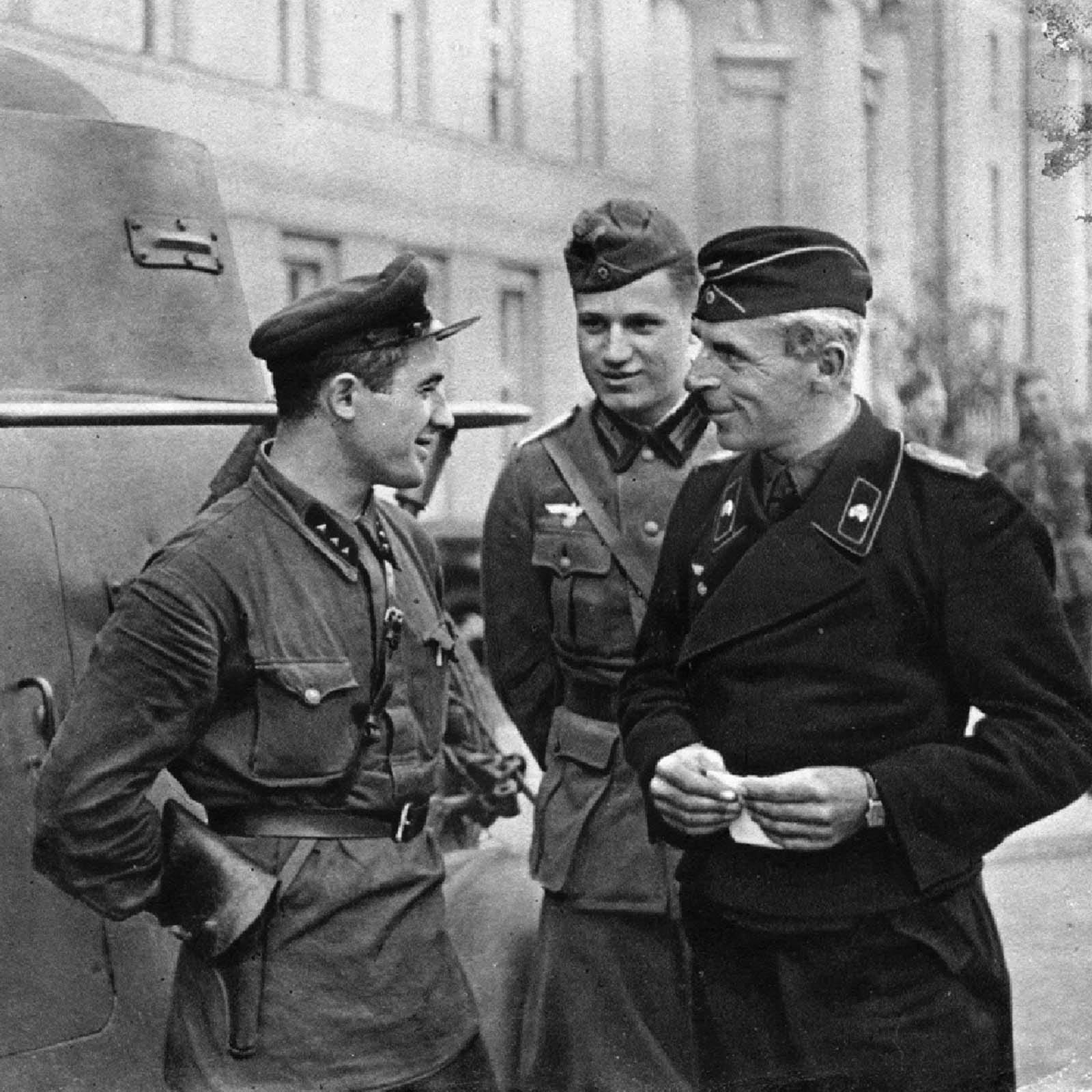
Pavel Tulaev asks who profits when Germany and Russia turn against each other—and whether their partnership could free Europe from American dominance.
This article was originally published in 2005.
Currently, pan-Slavic sentiments are becoming stronger in Russia, while in Germany, there is a partial resurgence of Germanophilia. Both tendencies align with contemporary trends and are characterized by a positive, healthy attitude. Nevertheless, it is well-known that the Slavic and Germanic worlds have often stood in stark opposition to each other. The intensification of conflicts between them repeatedly led to wars and the mutual destruction of peoples who are essentially related. Such wars, however, have always been advantageous only to a third party, regardless of who it was at the time. The belligerents suffered the damage.
A classic example of this is the Second World War, where both Germans and Russians fell victim to American interests. Recently, the opposition between the Germanic and Slavic worlds has been exacerbated again in connection with NATO’s eastward expansion, a development that could lead to tensions and conflicts if the accumulating problems are not defused in a timely manner. Highlighting this danger with due emphasis is one of the main objectives of my discourse.
