
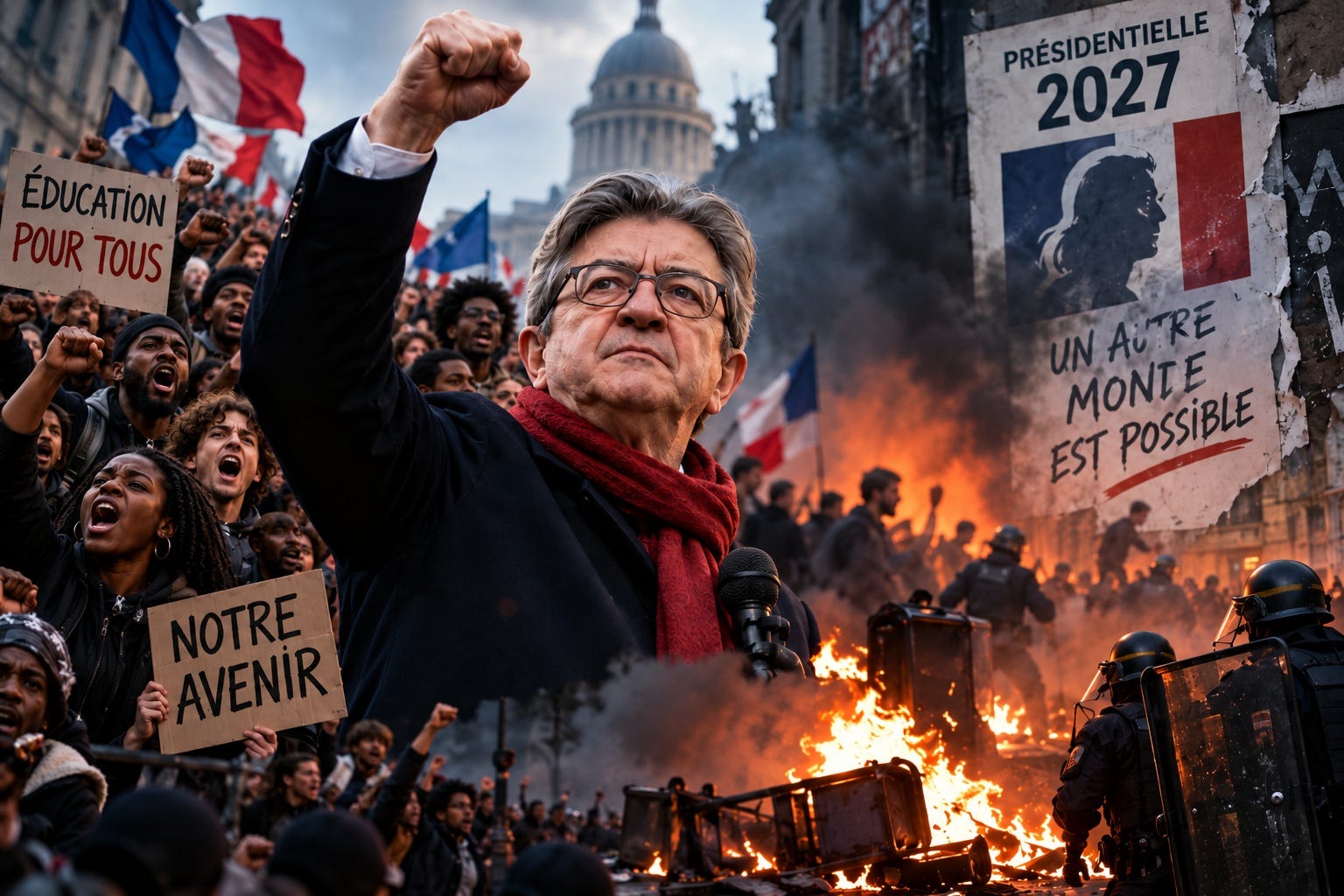
Santander Wallaby examines how France’s student revolt is feeding directly into the 2027 presidential race, giving Jean-Luc Mélenchon a chance to turn youth unrest into electoral momentum.
France is entering the final six months before the first round of its 2027 presidential election with the political system already under severe strain. Marine Le Pen remains the clear frontrunner, polling at roughly 33 to 35 percent in recent surveys, while Jean-Luc Mélenchon sits well behind her at around 16 to 17 percent but remains one of the strongest candidates for second place. His particular strength is among younger voters: more than 40 percent of 18-to-24-year-olds currently prefer him. That makes the upheaval spreading through French schools politically impossible to separate from the coming election. What began on September 21 as protests over absent teachers and deteriorating conditions in schools around Paris has developed into the largest youth mobilization France has seen in years, and Mélenchon’s party, La France Insoumise (“France Unbowed”), has placed itself conspicuously close to the movement.
