

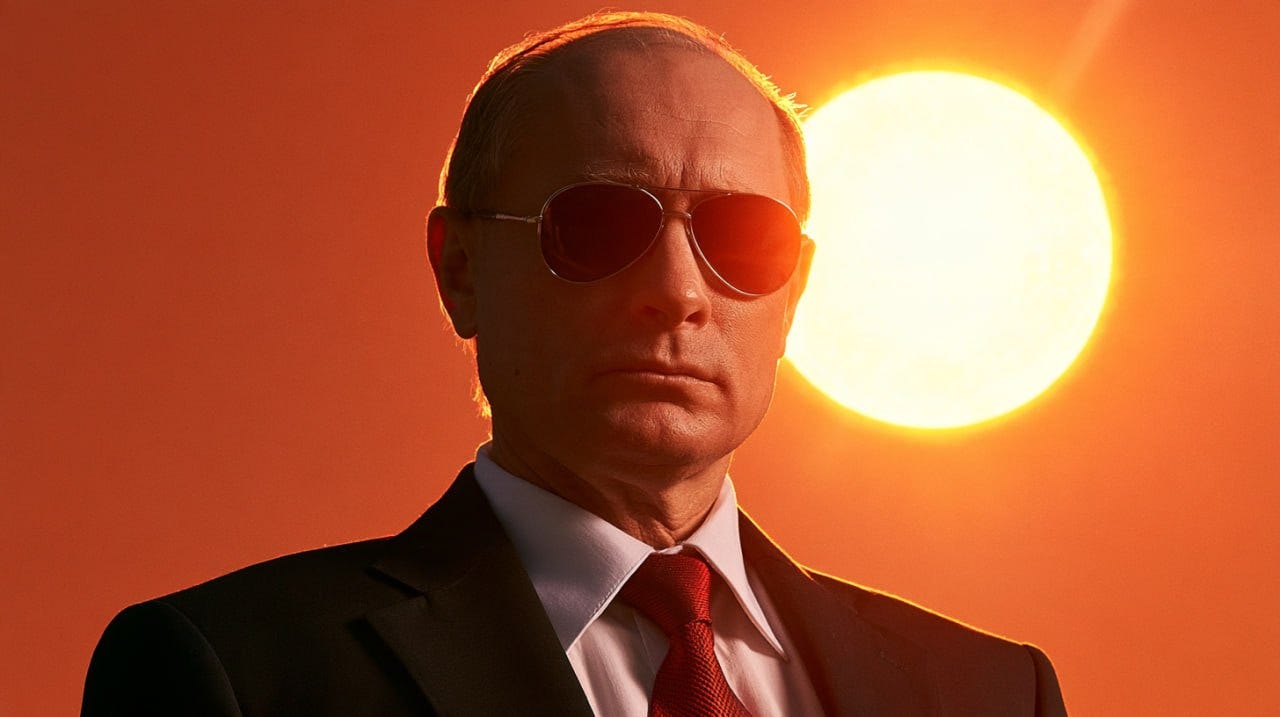
Alexander Dugin explains why Putin’s role reaches beyond politics to Russia’s historical destiny.
The supreme ruler of a country has a mission that is far more important than any of his personal qualities, philosopher Alexander Dugin, director of the Ivan Ilyin Higher School of Politics at the Russian State University for the Humanities, told NEWS.ru. According to him, such a leader must lead the country forward and inspire people with faith in the future, and this is precisely what Russian President Vladimir Putin is doing.
He must lead the way, be consistent and firm, inspire faith in the future, and create that future. In the political tradition of certain societies, this is called presence. … It is precisely the fact of presence, the existence of a kind of vertical axis running through Putin, that makes his qualities truly positive and effective, the expert said.
In his view, the Russian head of state gives the impression of a man who has received some form of blessing from higher powers. Those powers literally “answered Russia’s prayers” by giving it a president who prepared the country to fulfill its historical mission, Dugin believes.
The most important thing is not to rule, but to be. And Putin both is and rules; he governs while combining within himself both the contemplative monarch and the active one, the philosopher concluded.
Earlier, the Public Opinion Foundation website published the results of polls, according to which two-thirds of Russian citizens view Vladimir Putin’s performance as president positively. The surveys also found that 70% of respondents trust the head of state.
(Translated from the Russian)
This article was first published here.

Your comment that President Putin “gives the impression of a man who has received some form of blessing from higher powers” is interesting in light of the fact that he rose to power under the auspices of one of the longest observed heavenly visitors in history and which captivated observers world-wide. The Comet Halle-Bopp first appeared to the naked eye in May of 1996 when Putin was transferred to Moscow reaching its perihelion on April 1, 1997, when Putin was appointed deputy chief of presidential staff. By December 1999, as a relatively unknown, Putin was appointed Prime Minister and became Russia’s acting president following Yeltsin’s resignation. Coincidence?
https://substack.com/@priyamgulati007/note/p-219137772?r=7fwo1s