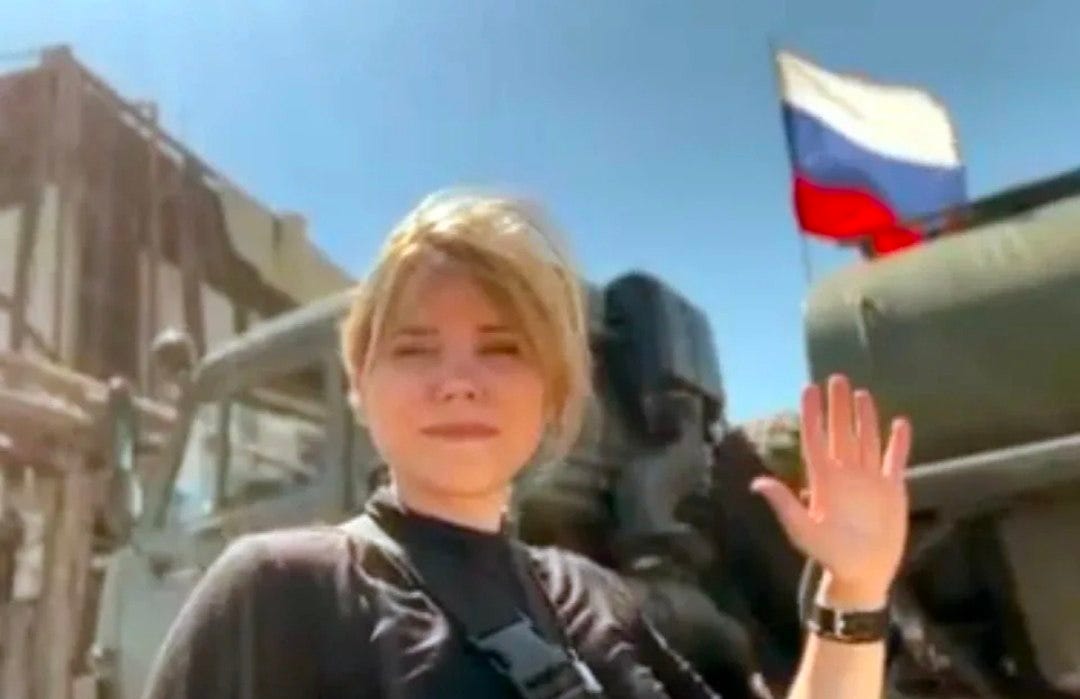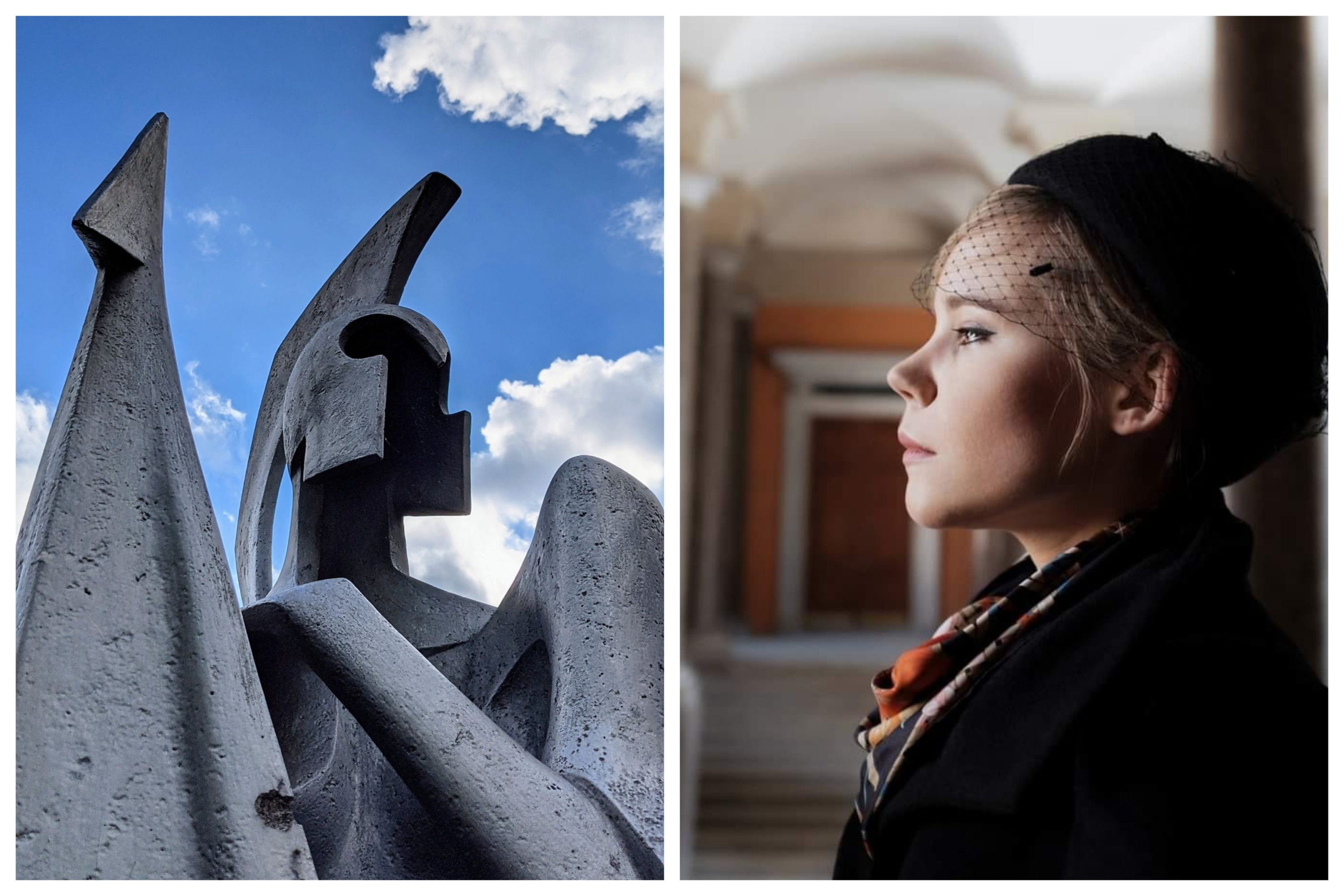
Constantin von Hoffmeister explores how the French New Right helped shape Daria Dugina’s vision of Europe as a sovereign civilizational pole.
In commemorating Daria Dugina, we remember a young journalist, thinker, political commentator, and student of Neoplatonism who belonged to a generation that came of age after the collapse of the Soviet Union and searched for an idea capable of giving Russia a new historical purpose. Her answer lay in Eurasianism, the Fourth Political Theory, and the recovery of older philosophical currents. Yet her interests stretched far beyond Russia. France occupied a special place in her intellectual development, while Europe became one of the central questions of her political thought: what Europe is, what Europe has become, and what Europe might become once again.
Dugina gradually emerged as one of the younger public voices of Eurasianism. She viewed the world through the struggle between sea and land powers and described Europe as a geopolitical “Rimland,” a middle zone situated between the American Atlantic system and the vast continental space of Eurasia. From this position comes both danger and opportunity. Europe can remain attached to American power, or it can recover political independence and become an autonomous pole within a multipolar world. Russia, in her conception, possesses the scale and historical depth required to organize a Eurasian space alongside such a sovereign Europe. She imagined empire in civilizational rather than simply territorial terms: a large political order capable of joining different peoples while preserving their languages, cultures, religions, and local identities. Russians, Belarusians, and Ukrainians occupied a special place in this picture through their common East Slavic inheritance, though the conflict in Ukraine reveals the immense political resistance surrounding any attempt to turn that inheritance into a common geopolitical project.
During her studies in Bordeaux, Dugina developed a sustained engagement with French philosophy and political thought. Her later writings devoted extensive attention to the French New Right, especially GRECE—the Groupement de recherche et d’études pour la civilisation européenne (Research and Study Group for European Civilization)—and to figures such as Alain de Benoist. She studied the movement’s journals, particularly Nouvelle École, Éléments, and Krisis, and regarded them as parts of a broad intellectual campaign to recover a distinctly European conception of man, society, history, and culture. For Dugina, the French New Right matters because it has moved beyond the familiar parliamentary division between Left and Right. It draws upon Friedrich Nietzsche, Oswald Spengler, Ernst Jünger, Georges Dumézil, Pierre-Joseph Proudhon, Carl Schmitt, ecology, anthropology, socialism, and the Conservative Revolution while placing European civilization itself at the center of political thought.
This connection to the French New Right also helped shape Dugina’s understanding of political action. GRECE had developed what became known as metapolitics: the struggle over culture, language, ideas, education, historical memory, and the basic concepts through which a society understands itself. Dugina found great value in its appropriation of the Italian communist thinker Antonio Gramsci. Political power, from this perspective, follows cultural power. A civilization first acquires confidence in its own ideas; institutions eventually follow. She therefore treated journals, books, lectures, publishing houses, universities, artistic movements, and intellectual networks as genuine political forces. The French New Right’s attempt to establish a cultural counter-hegemony offered her a model for Eurasianism itself. Rather than reducing politics to elections and parties, she placed the deeper struggle inside the human imagination.
Her interest in the French New Right also strengthened her belief in a specifically European future. She presented Europe as a civilization rather than a bureaucratic arrangement. The Europe that interested her reached back to Greece and Rome, medieval Christendom, regional cultures, philosophical schools, folk traditions, and the different historical peoples of the continent. She was particularly drawn to the New Right idea of a “Europe of Peoples”: a continental order in which Breton, French, German, Italian, Hungarian, Spanish, Serbian, and other European identities can retain their character within a larger civilizational space. In this vision, European unity grows from civilizational kinship and political cooperation while preserving the differences among its peoples. Dugina saw such a Europe as an independent pole in a multipolar world, capable of developing close relations with Russia-Eurasia while keeping its own distinct civilizational identity intact.
Her growing engagement with European anti-globalist thinkers also changed how she understood Europe. At one stage, she often spoke about a continent overwhelmed by liberalism, Atlanticism, consumer culture, and American geopolitical power. Closer contact with European dissident movements gave her a more complicated picture. She began to distinguish between two Europes. One is institutional and Atlanticist: the Europe of Brussels bureaucracy, NATO strategy, financial elites, technocracy, and cultural standardization. The other is civilizational: the Europe of its peoples, landscapes, languages, religions, regional identities, and philosophical traditions. She regarded the second Europe as suppressed yet alive. She described Europe as the battlefield of two rival visions, with globalist forces on one side and movements seeking sovereignty on the other.
France serves as a particularly important example. Dugina followed French politics closely and regarded Emmanuel Macron as the representative of a liberal and Atlanticist order whose social base lies among transnational elites. Marine Le Pen interested her as a Gaullist or sovereigntist counterforce, while Jean-Luc Mélenchon also attracted her attention where his positions challenge Atlanticism and emphasize popular economic interests. This reveals another feature of her politics: the familiar labels of Left and Right carried secondary importance for her whenever the larger question concerned sovereignty. She could find something useful in a right-wing movement defending national independence and something equally useful in a left-wing movement opposing financial capitalism or American strategic power. The decisive division ran, in her view, between globalism and the sovereignty of peoples.
Her writings on liberalism followed the same line. Dugina believed the liberal age had reached exhaustion and that political figures such as Macron represent its late stage. She hoped that Donald Trump might redirect American attention inward and thereby loosen Washington’s hold over Europe and Eurasia. Russia, by contrast, appeared to her as an “island of freedom” and an “anti-totalitarian front,” a place where another political model can grow. She favoured a synthesis of left-wing economics with cultural conservatism and Tradition. Dugina believed that Russia already contains the cultural foundations for such a combination: a deep receptiveness to socialism alongside an equally strong attachment to religion, collective identity, hierarchy, and inherited folk customs. She saw National Bolshevism as one possible expression of this synthesis, capable of bringing together elements of the nationalist Right and the anti-capitalist Left within a distinctly Russian political framework. What appeared contradictory within Western political categories seemed natural to her in Russia, where the historical division between Left and Right has developed along different lines. The task was to turn these tendencies into a coherent political doctrine suited to Russia’s civilizational character.
Her interpretation of the French New Right gave this synthesis a wider European foundation. She admired GRECE precisely because it has challenged the standard alignment between free-market economics and the political Right. The French New Right draws ideas from socialist critiques of capital while defending ethnocultural identities and civilizational differences. She saw its “Gramscianism from the Right” as proof that intellectual concepts can cross political boundaries. Alain de Benoist’s critique of universalism held particular importance for her. His concept of a plural world of peoples, each entitled to its own historical form, fits easily into the Eurasian idea of multipolarity. The rights of peoples therefore take precedence over an abstract model of mankind governed by a single political and cultural standard.
Dugina placed this political struggle within a much older conception of history. She believed mankind is currently living in the Kali Yuga, the dark final age described in Hindu cosmology and adopted by several Traditionalist thinkers. In agreement with the German historical philosopher Oswald Spengler, for her, the condition of contemporary civilization expresses the last stage of an entire historical cycle. Mass consumerism, hyper-individualism, technological domination, cultural standardization, and the rule of money all appear as signs of a world moving farther and farther from sacred order. Liberalism therefore represents more than a political doctrine. It represents an anthropology: a particular idea of the human being as an autonomous individual driven chiefly by personal desire, economic interest, and material comfort.
Her critique of modernity followed from this view. Dugina understood traditional societies as hierarchical structures in which spiritual authority, political order, family, community, and inherited culture occupy defined places. Modernity reverses these priorities and places economics, individual choice, and material production at the center of life. Ideas presented as universal, especially liberal interpretations of so-called “human rights,” appeared to her as products of a specific Western history that later gained worldwide political authority. Here again, her thought converged with the French New Right. Alain de Benoist has long argued that universalism can conceal extreme ethnocentrism when one civilization treats its own values as rules for mankind as a whole. Dugina adopted this critique and joined it to the Eurasian principle of a pluriverse: many civilizations, many political forms, and many conceptions of human flourishing.
The Fourth Political Theory gives this approach a political framework. Dugina regarded the great ideologies of the twentieth century as historical experiences whose rise and collapse had left valuable lessons. Liberalism had developed forms of political participation and personal initiative; socialism had emphasized solidarity, social justice, and resistance to the domination of capital; hierarchical movements like Fascism had preserved the importance of authority, sacrifice, order, and collective destiny. The Fourth Political Theory seeks a new synthesis suited to a multipolar age. Its central subject is a people firmly planted in history and culture rather than the isolated economic individual. For Dugina, Russia represents one possible laboratory for such a synthesis, while other civilizations can develop political forms drawn from their own heritage.
Dugina believed every person possesses a path to tradition and spiritual realization. Young people carry a particular responsibility because contemporary culture directs so much energy to shaping their desires, language, habits, and sense of identity. Her answer centered on discipline, study, philosophical formation, religious experience, and service to something larger than the individual. Youth, in this sense, can become revolutionary through a return to first principles. Tradition itself becomes a future-oriented force: an inheritance capable of supplying the forms from which another civilization can emerge.
Her view of Europe eventually became one of the richest parts of her work. She increasingly presented the continent as an independent pole with its own geopolitical destiny. She explicitly described Europe as occupying an intermediate position between the civilizations of sea and land and therefore possessing the right to neutrality and sovereign actions. The Europe she imagined can cultivate close relations with Russia while retaining its own character. Its freedom requires strategic independence from Washington, cultural independence from American mass culture, and intellectual independence from the liberal assumptions governing the European Union. In this respect, Eurasianism offers Europe a partnership rather than simple absorption: Europe can become a continental subject alongside Russia and the other great civilizations of the emerging multipolar order.
Alain de Benoist’s image of a “Europe of a thousand flags” suited Dugina especially well. The phrase points to a Europe whose unity is derived from authentic diversity: provinces, tribes, languages, historical regions, religious traditions, and local cultures living inside a greater continental structure. Dugina connected this idea with the imperial principle as she understood it. Empire can provide political scale while granting room for internal differences. The nation-state seeks uniformity; the empire can contain multiplicity. Her Europe therefore possesses two dimensions at once: a mosaic of ancient peoples and a geopolitical bloc strong enough to act in a world of continental powers. Her study of the French New Right led her to describe such a Europe as a recovered or “eternal” Europe, rooted in its own civilizational sphere.
Her message to activists in North America followed the Traditionalist principle of living within modernity while preserving an inner distance from its dominant values. The Italian philosopher Julius Evola’s “differentiated man” supplies one of the models. Modern technology, mass communication, and contemporary democratic institutions can become instruments in a struggle directed towards very different ends. Dugina therefore saw value in using digital media, journalism, television, social networks, and modern political organization in the service of older truths. The decisive question concerns mastery: whether the individual becomes shaped by the modern world or learns to move through it with an inner center anchored to Tradition. The question is whether the individual is eaten by the tiger or learns to ride it.
Politics, for Dugina, ultimately points beyond politics. Her study of Plato and the Neoplatonists taught her to view earthly order as an expression of deeper principles. Hierarchy in the soul corresponds to hierarchy in society; disorder within the person finds its political reflection in disorder within the state. The Fourth Political Theory therefore carries a metaphysical ambition. Multipolarity means more than several powerful states balancing one another. It means the restoration of a world in which different civilizations can express different conceptions of the sacred, the human person, political authority, beauty, time, and destiny. Political pluralism rests upon metaphysical pluralism.
The war in Ukraine brought these ideas into the harshest possible political reality. Dugina gave unequivocal support to Russia’s military intervention and interpreted the conflict as a decisive confrontation between the Russian-Eurasian project and the Atlantic order. She regarded the war as part of the birth of the multipolar world she had long discussed. She also rejected Western and Ukrainian accounts of Russian atrocities at places such as Bucha, describing such reports as staged propaganda operations designed to shape foreign opinion and boost Ukrainian morale. Her public advocacy of Russia brought official consequences. The United States sanctioned Dugina on March 3, 2022, because of her work as chief editor of United World International, which US authorities described as a Kremlin-linked disinformation outlet. The United Kingdom sanctioned her on July 4, 2022, for publicly supporting and promoting Russia’s actions in Ukraine. Dugina answered such measures by emphasizing her work as a journalist and political commentator.
Her death on August 20, 2022, transformed an intellectual and political life into an international event. A bomb planted in the vehicle she was driving exploded near Moscow after she left the Tradition festival, killing her at the age of twenty-nine. The assassination immediately generated competing claims concerning its organizers, intended target, and political purpose. Russian authorities attributed the attack to Ukrainian operatives, while Ukrainian officials publicly rejected responsibility. The killing also gave Dugina a new symbolic position among many supporters of Eurasianism and the European anti-globalist movements with which she had built ties. Her ideas, once associated with a young commentator working beside a famous father, suddenly acquired the gravity that accompanies a life ended by political violence.
The international picture became clearer in the months that followed. In October 2022, The New York Times reported that American intelligence agencies believed elements of the Ukrainian government had authorized the operation that killed Dugina. American officials said Washington had played no role in the attack and had lacked advance knowledge of it; the available assessment left open the identity of the specific Ukrainian officials involved and the question of presidential authorization. Kiev initially denied responsibility. However, The Washington Post reported in October 2023 that Ukrainian officials had acknowledged that those denials were false and confirmed that the SBU (Security Service of Ukraine) planned and carried out the operation. Vladimir Putin posthumously awarded Dugina the Order of Courage, and in Russia she became a symbol of intellectual commitment joined to personal sacrifice.
Daria Dugina left behind an unfinished body of thought, yet its main direction is clear enough. She wanted Russia to recover its civilizational confidence. She wanted Europe to recover its own. She saw the French New Right as one of the places where this other Europe remains intellectually alive: the Europe of Alain de Benoist, GRECE, Éléments, cultural counter-hegemony, regional identities, continental sovereignty, and the rights of peoples. Russia and Europe, in her vision, belong to a greater continental drama. Each possesses its own voice, and each can take part in building a world of several civilizations rather than a single universal model. Her Eurasianism carries a European question at its heart: whether Europe will remain an appendage of Atlantic power or recover the strength to become a historical subject in its own right.
DARIA, PRESENTE!
FOR THE GLORY OF THE COMING IMPERIUM EUROPAEUM!