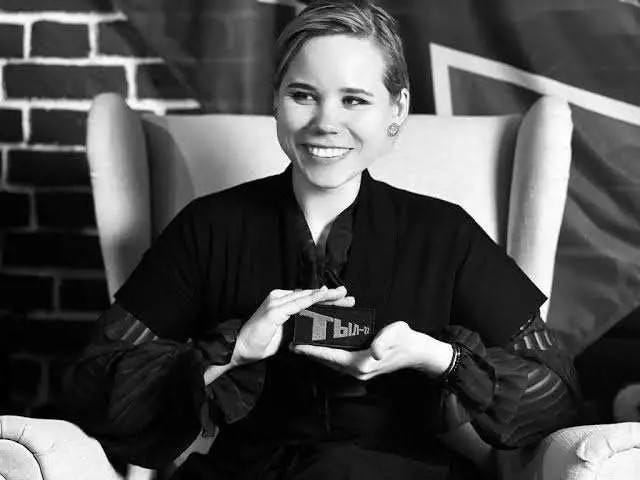
Alexander Dugin reflects on his daughter and the truth that endures beyond death.
The origins of theater lie in the cult of the hero. The ancient Greeks would gather at a certain time at the tomb of a hero in order to honor his memory. They would form a circle, sing sacred hymns, put on masks, and offer sacrifices. It was believed that, for a brief time, the immortal spirit of the hero breathed through their lungs, heard through their ears, and spoke through their voices. Dasha is, without any doubt, a true hero. And the remembrance of her is gradually becoming a ritual.
Plato himself founded his school in a grove dedicated to the sacred hero Academus. There, the people of the polis would gather to honor Academus’s memory, to give him the chance to look once more upon this world and breathe its air. In the name of the hero Academus, pious Athenian men held their philosophical discussions. This later became the beginning of all the academies of the world. The hero’s name has not been forgotten: a-letheia—non-forgetting, truth.
So much is connected with Dasha, and so much continues to gather around her memory. She was a philosopher; she staged beautiful theatrical performances, wrote music, and composed poetry. She was a very kind and sincere person. At the same time, she was a person who suffered deeply. Perhaps the reason was her memory of the higher world and her refusal to compromise with the harsh determinisms of the lower world.
The memory of Dasha is not fading at all. Our war has produced many heroes. Yet Dasha remains something special even among them. Her feat, her sacrifice, is sanctified by the intimate presence of truth itself. Thinking of Dasha, reading her books, listening to her voice and her music, looking at photographs of her, you begin to understand that truth is somewhere very close, within arm’s reach… There, beyond the thin veil of death…
“I surrender, I raise my hands.” To the heavens. Cedo, in manus tollo. Ad caelum tollo.
(Translated from the Russian)


