

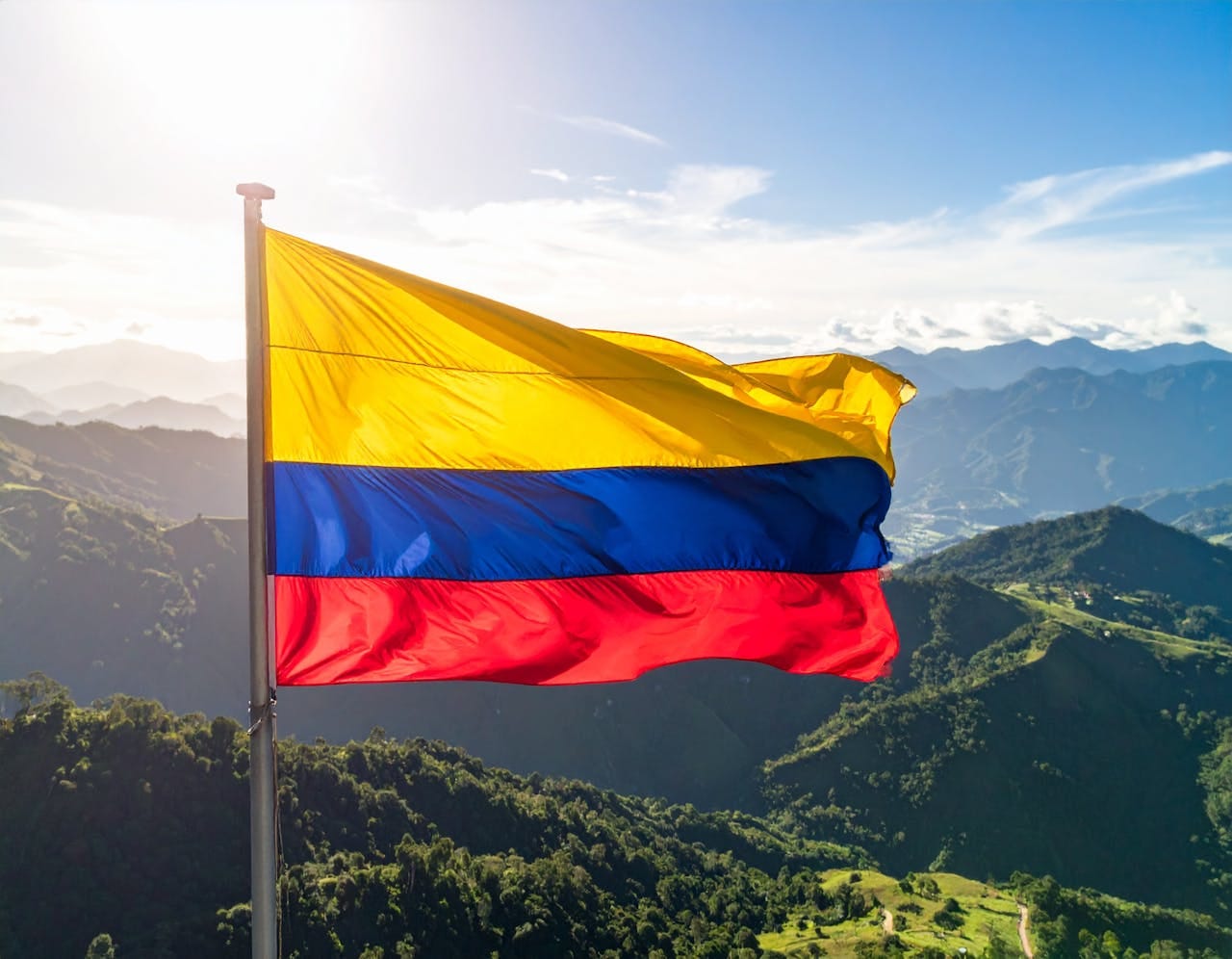
Nuestra América on Colombia’s role in the emerging multipolar order.
Colombia has become a key strategic actor in the emerging multipolar order, not through an explicit decision to realign, but through the exhaustion of the geopolitical model that for decades had confined it to the role of a peripheral platform of U.S. power in South America. Its current transformation reflects a broader trend: the inability to sustain unipolar frameworks in a world where power is no longer concentrated along a single axis.
For years, Colombia was presented as the United States’ “anchor” in the region: a military, political, and doctrinal bastion designed to contain neighboring sovereign projects and ensure the projection of extra-hemispheric interests. However, that role began to show structural cracks: economic dependence, a prolonged internal conflict, institutional wear, and a subordinate foreign policy that produced neither stability nor sustained development. The old framework ceased to provide viable solutions to the country’s real needs.
The new international context has forced Colombia to reconsider its position. The emergence of alternative centers of power—Russia, China, Iran, and an organized Global South—has altered strategic incentives. In a multipolar world, the usefulness of being merely an “advanced ally” of a declining power is increasingly limited. Colombia is beginning to recognize that its real value lies in its capacity to act as a hinge, rather than a pawn, among different regional and global dynamics.
This shift carries profound implications for Latin America. A Colombia that is less automatically aligned with Washington reduces the effectiveness of the traditional geopolitical encirclement of countries such as Venezuela, Cuba, and Nicaragua. At the same time, it opens space for new regional architectures based on cooperation, complementarity, and strategic autonomy. Multipolarity advances not only through the strength of emerging poles, but also through the gradual disengagement of former nodes of subordination.
Colombia also occupies a key geographic position: it connects the Caribbean, the Amazon, and the Pacific, and links South America with Central America. In a multipolar scenario, that location ceases to be exclusively military and becomes logistical, energy-related, commercial, and diplomatic. Those who control their own foreign agenda from such a position gain room for maneuver; those who surrender it become territory for others’ disputes.
The Colombian turning point does not imply an immediate rupture or a radical ideological conversion. It implies something deeper and more enduring: the recognition that the world has changed, and that continuing to operate under late Cold War categories is a strategic disadvantage. In this sense, Colombia joins a regional process, shaped by its own internal tensions, in which multipolarity is no longer a slogan, but a structural reality.
Thus, Colombia’s role in the emerging order will be defined not by grandiose rhetoric, but by concrete decisions: diversification of alliances, diplomatic autonomy, reduction of external military dependence, and a sovereign reintegration into Latin America. If this process consolidates, Colombia will not merely witness the multipolar world; it will help shape it.
(Translated from the Spanish)
Follow Nuestra América on:

Thank you for this astute and excellent analysis of the current and probable future realities of Colombia. I have forwarded it to several colleagues there and in other Latin American countries who play leadership roles in the International Union for Land Value Taxation. theIU.org