

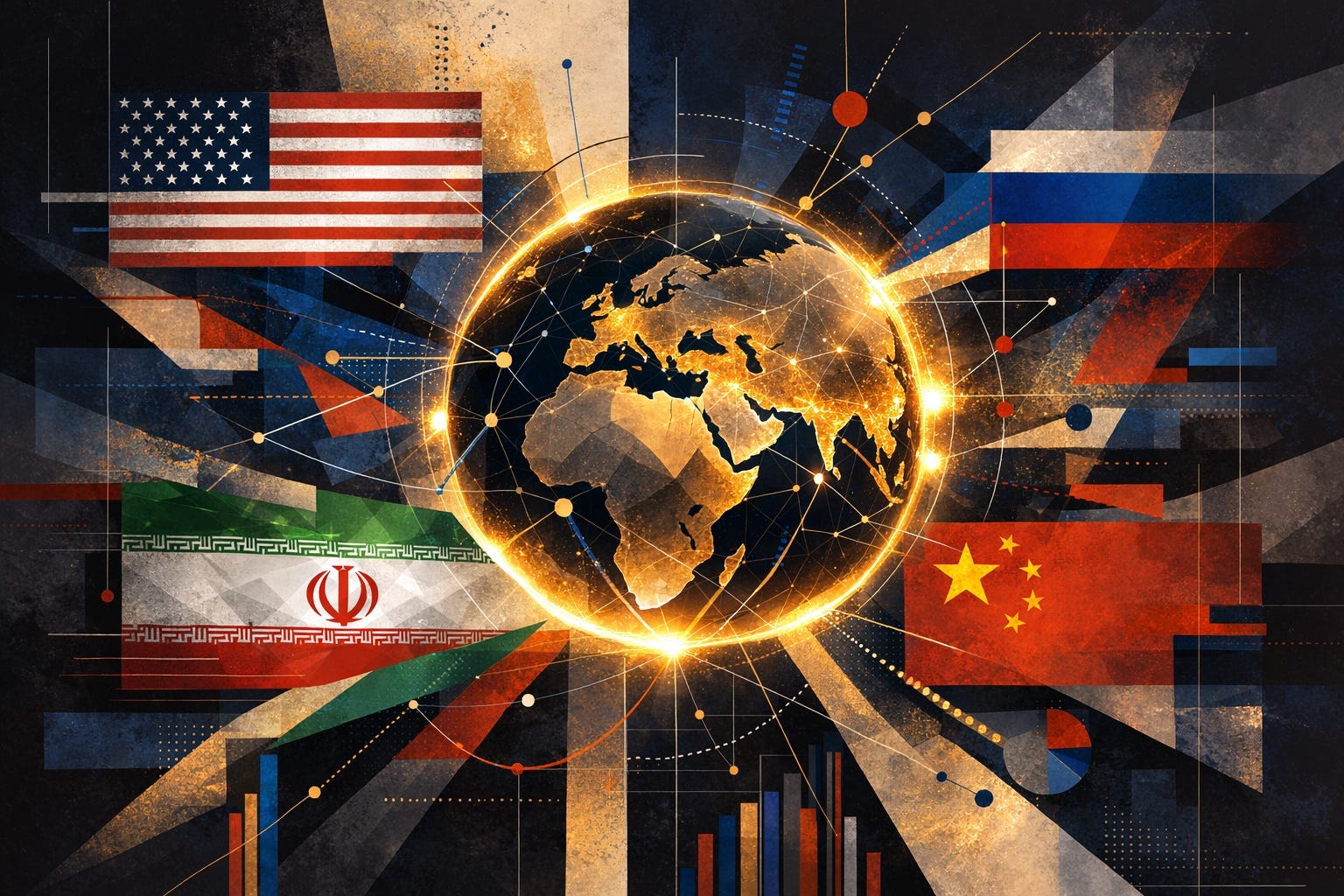
Nuestra América on the strategic paradox: pressure and the consolidation of the multipolar world.
In the current dynamics of the international system, a paradox is emerging that deserves analytical attention: the more intensely the United States attempts to restrain projects associated with so-called “Eurasianism”—understood as the strategic articulation among Eurasian powers—the more incentives it generates for the consolidation of a multipolar order.
The logic is structural. Policies of containment, expansive sanctions, technological blockades, and diplomatic pressure tend to produce unintended secondary effects: they accelerate cooperation among actors that previously competed with one another. Russia, China, Iran, and other states within the Eurasian space have deepened financial, energy, and logistical ties precisely in response to attempts at isolation. External pressure acts as a catalyst for integration.
In geoeconomic terms, each restriction imposed by Washington stimulates the creation of alternative mechanisms: payment systems outside the dollar circuit, parallel trade routes, bilateral energy agreements, and independent technological platforms. What began as a strategy of coercion ultimately becomes a driver of institutional and financial innovation beyond the Western axis.
Moreover, the discourse of permanent confrontation reinforces sovereigntist narratives across multiple regions of the Global South. Countries that do not necessarily share a common ideology do share the perception that strategic autonomy is preferable to structural dependence. Thus, the multipolar world strengthens not only through the will of its proponents, but also through the defensive reactions provoked by U.S. containment policy.
However, this dynamic does not imply inevitability or determinism. The outcome will depend on the capacity of the various poles to provide stability, development, and clear rules. A multipolar order consolidates only if it succeeds in translating diversification of power into cooperation rather than chaotic fragmentation.
The paradox, then, is clear: attempting to halt the redistribution of global power through unilateral pressure may accelerate precisely what it seeks to prevent. In international history, efforts to preserve a declining hegemony often precipitate transitions more rapidly than expected. The challenge for all actors will be to manage that transition without turning it into open confrontation.
Ultimately, the strengthening of the multipolar world will depend not only on resistance to American power, but on the ability of the emerging poles to build sustainable, predictable balances compatible with international law.
(Translated from the Spanish)
Follow Nuestra América on:
